 Add to Chrome
 Add to Firefox
 Add to Edge
LLM Optimization Unlocks Real-Time Pairwise Reranking
Paper and Code
Nov 10, 2025
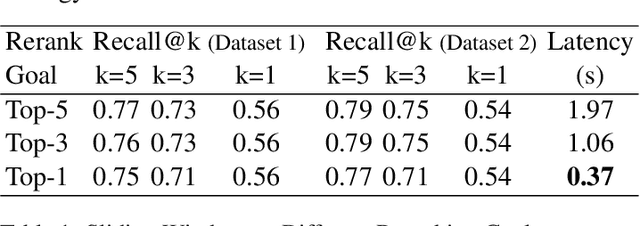
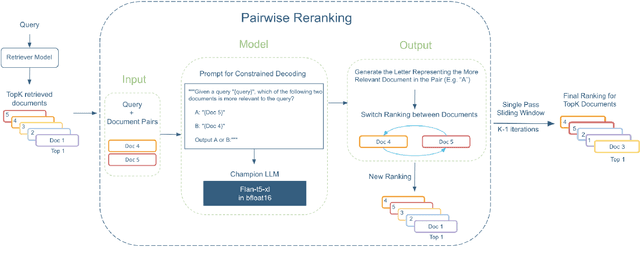
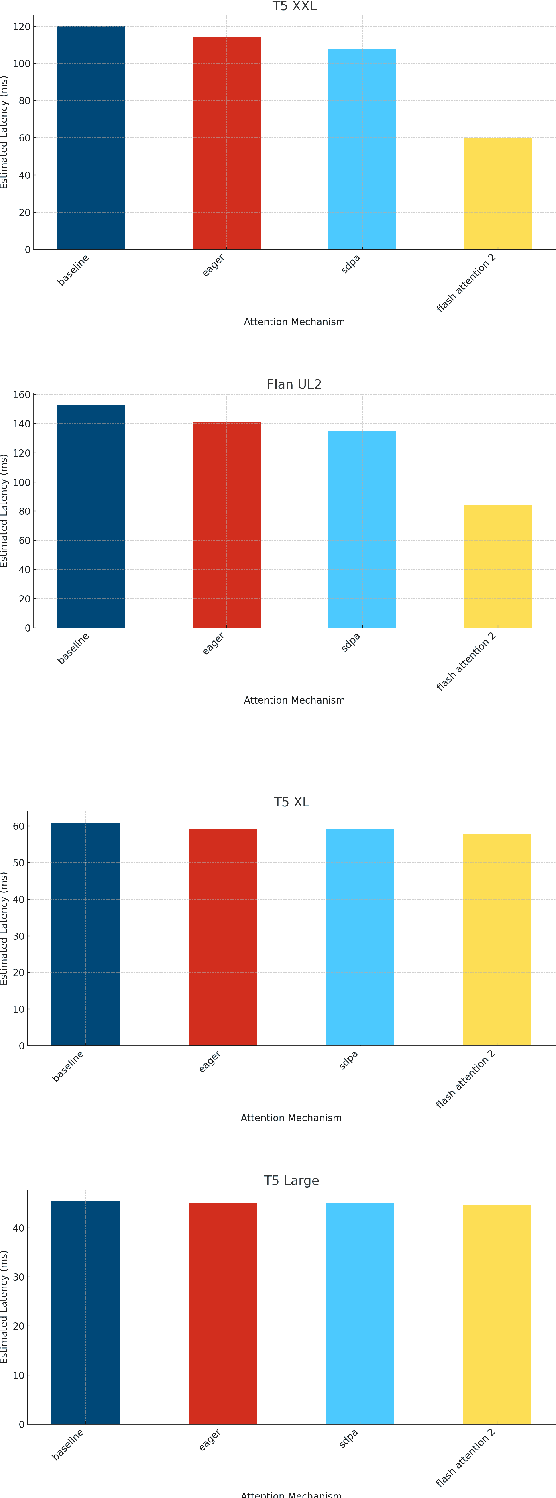
Efficiently reranking documents retrieved from information retrieval (IR) pipelines to enhance overall quality of Retrieval-Augmented Generation (RAG) system remains an important yet challenging problem. Recent studies have highlighted the importance of Large Language Models (LLMs) in reranking tasks. In particular, Pairwise Reranking Prompting (PRP) has emerged as a promising plug-and-play approach due to its usability and effectiveness. However, the inherent complexity of the algorithm, coupled with the high computational demands and latency incurred due to LLMs, raises concerns about its feasibility in real-time applications. To address these challenges, this paper presents a focused study on pairwise reranking, demonstrating that carefully applied optimization methods can significantly mitigate these issues. By implementing these methods, we achieve a remarkable latency reduction of up to 166 times, from 61.36 seconds to 0.37 seconds per query, with an insignificant drop in performance measured by Recall@k. Our study highlights the importance of design choices that were previously overlooked, such as using smaller models, limiting the reranked set, using lower precision, reducing positional bias with one-directional order inference, and restricting output tokens. These optimizations make LLM-based reranking substantially more efficient and feasible for latency-sensitive, real-world deployments.
