 Add to Chrome
 Add to Firefox
 Add to Edge
Multimodal Learning for MIMO Beam Prediction Based on Variational Inference
May 14, 2026
Accurate beam prediction is essential for mitigating signalling overhead and latency in integrated sensing and communication-enabled massive multi-input multi-output systems. With the aid of multimodal learning, the prediction accuracy can be enhanced by leveraging the complementary information from other existing sensors, but the practical deployment is often constrained by the high cost of acquiring semantically aligned multimodal datasets. This paper proposes a variational-inference-based multimodal framework that decouples the optimization problem into modular feature extraction and cross-modal semantic alignment. Specifically, we develop a two-stage training strategy where the model utilises abundant unimodal data for representation learning before performing refined alignment on limited multimodal samples. This design enhances data efficiency and ensures robust feature fusion under sensing uncertainties. Experimental results on the DeepSense6G dataset demonstrate that the proposed framework achieves competitive beam prediction accuracy and maintains high reliability, while only requiring 20% of the multimodal training data compared to conventional end-to-end benchmarks.

Integrating E-Commerce and Data Mining: Architecture and Challenges
Jul 14, 2000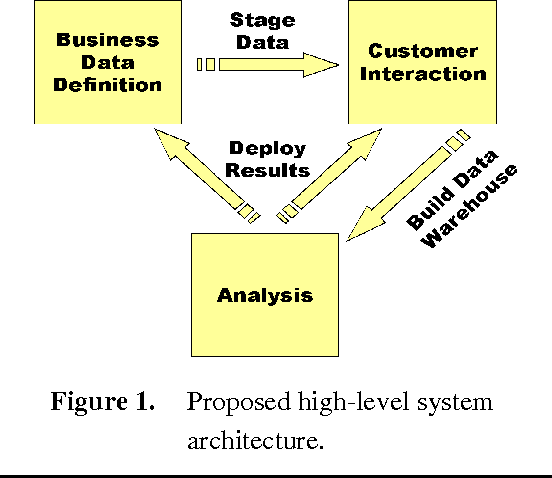
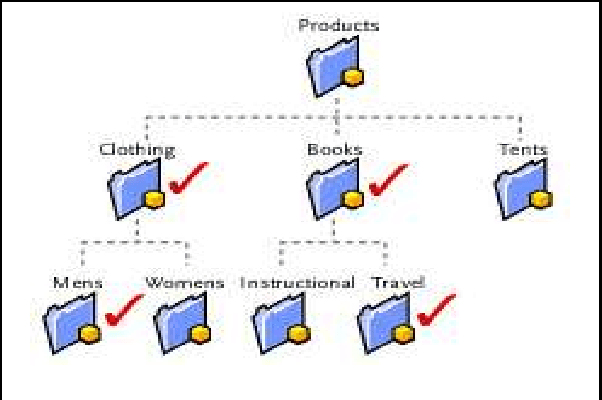
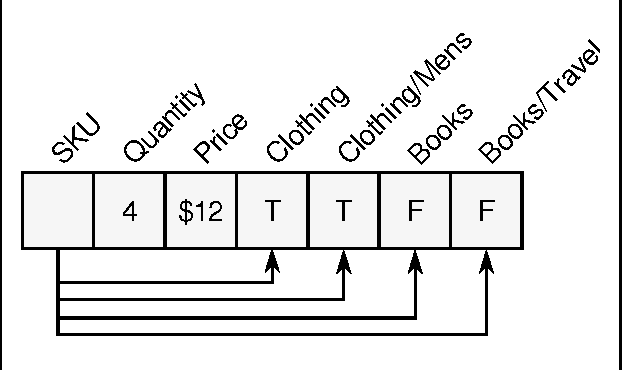
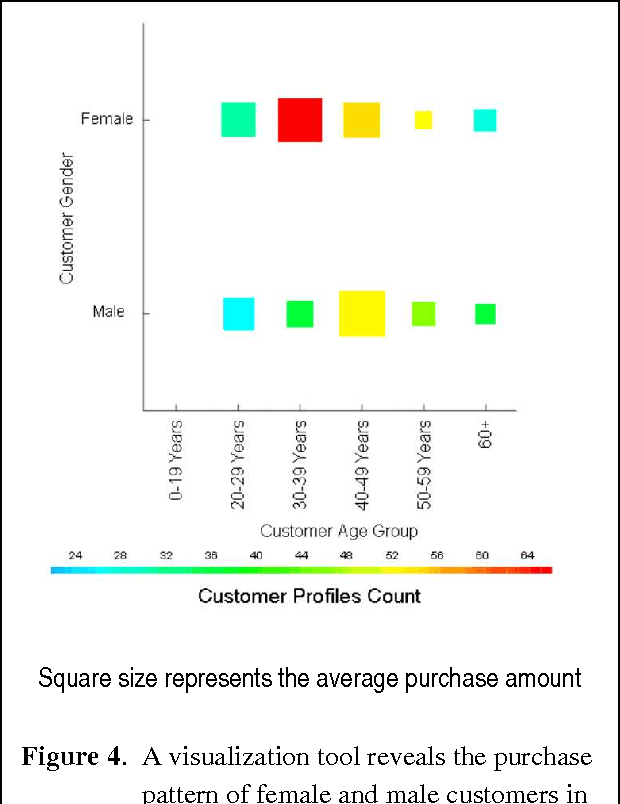
We show that the e-commerce domain can provide all the right ingredients for successful data mining and claim that it is a killer domain for data mining. We describe an integrated architecture, based on our expe-rience at Blue Martini Software, for supporting this integration. The architecture can dramatically reduce the pre-processing, cleaning, and data understanding effort often documented to take 80% of the time in knowledge discovery projects. We emphasize the need for data collection at the application server layer (not the web server) in order to support logging of data and metadata that is essential to the discovery process. We describe the data transformation bridges required from the transaction processing systems and customer event streams (e.g., clickstreams) to the data warehouse. We detail the mining workbench, which needs to provide multiple views of the data through reporting, data mining algorithms, visualization, and OLAP. We con-clude with a set of challenges.
* KDD workshop: WebKDD 2000