 Add to Chrome
 Add to Firefox
 Add to Edge
Mismatch-Aware Adaptive Constraint Tightening for Bicycle-Model Trajectory Optimization
May 10, 2026
Trajectory optimization for autonomous vehicles usually relies on the kinematic bicycle model because of its computational simplicity. However, when the planned trajectory is executed under the true vehicle dynamics, which include lateral slip, tire stiffness and yaw-lateral coupling, safety constraints can be violated owing to the model mismatch. In this paper, we make three theoretical contributions. First, we derive a characteristic speed $v_c=\sqrt{C_αL/M}$ which separates two different mismatch regimes: below $v_c$ the dynamic bicycle initially oversteers inward (safe); above $v_c$ it understeers outward (safety-critical). Second, we prove that the peak outward deviation $\varepsilon^*$ follows a $T^2$ horizon scaling whose coefficient transitions between a transient bound $\frac{1}{2}(v^2-v_c^2)κ$ and a steady-state bound. Third, we obtain a simulation-free analytical coefficient $a_2^{\mathrm{anal}}=\frac{1}{2}(1-v_c^2/v_{\max}^2)T^2$ that is computable from vehicle parameters and the planning horizon alone. Putting these together, we propose Mismatch-Aware Adaptive Constraint Tightening (MACT), $ε(v,κ)=a_2 v^2|κ|$, which replaces a fixed worst-case margin by a state-dependent one that is large at high speed/curvature but nearly zero on gentle paths. Eight numerical experiments confirm the scaling laws. MACT reaches 100% safety with 84% less wasted margin than a fixed-margin baseline on the 2-DOF vehicle, extends to a nonlinear leaning bicycle, and in a closed-loop direct-shooting MPC comparison it cuts the applied margin by 34% compared with tube MPC while keeping the same safety.

On the Emergence of Pendular Structure in Multi-Contact Locomotion
May 07, 2026LIPM is everywhere in legged-locomotion control, but almost always as a modeling choice rather than as something the controller's cost actually prefers. This note tries to make that link more explicit. Working from a small centroidal OCP that penalizes the rate of angular momentum, we look at what its optimum tends to look like. Three things come out. With full-rank stance, the optimum drifts toward a pendular force pattern at a rate determined by the SVD of the moment Jacobian; the constant is set by foot-span geometry and matches the experiments to within 16%. With N=2 stance, as in trot, the friction cone introduces a lower bound on $\|\dot{H}_G\|$ that no amount of weight tuning fixes; we also see a non-smooth feasibility kink at a critical horizontal acceleration that we can write in closed form. Adding a task term that asks for a nonzero $\dot{H}_G$ moves the optimum off the pendular set in a predictable way. None of this is far from the classical ZMP/DCM picture. We test these claims on a point-mass quadruped and on the Unitree Go1 in MuJoCo (open-loop QP and a torque-level closed-loop controller), and we note where the asymptotic story stops being a good description of what the closed loop actually does.
RecoverFormer: End-to-End Contact-Aware Recovery for Humanoid Robots
Apr 24, 2026Humanoid robots operating in unstructured environments must recover from unexpected disturbances-a capability that remains challenging for end-to-end control policies. We present RECOVERFORMER, a fully end-to-end humanoid recovery policy that learns when and how to switch among recovery behaviors-including compensatory stepping, hand-environment contact, and center-of-mass reshaping-while maintaining robust performance under model mismatch. The architecture combines a causal transformer over a 50-step observation history with two novel heads: a latent recovery mode that enables smooth transitions among distinct recovery strategies, and a contact affordance head that predicts which environmental surfaces (walls, railings, table edges) are beneficial for stabilization. We evaluate RECOVERFORMER on the Unitree G1 humanoid in MuJoCo. Trained only on open floor, RECOVERFORMER transfers zero shot to walled environments, achieving 100% recovery success across 100-300 N pushes and across wall distances from 0.25-1.4m. Under zero-shot dynamics mismatch, RECOVERFORMER reaches 75.5% at plus +25% mass, 89% under 30 ms latency, 91.5% at low friction, and 99% under compound friction, latency and mass perturbation. The learned latent modes specialize across force regimes without mode-level supervision, validated by t-SNE analysis of 300 episodes. Taken together, these results show that a single end-to-end policy can deliver multi-modal, contact aware humanoid recovery that generalizes across perturbation magnitude, contact geometry, and dynamics shift.
Analyzing Public Reactions, Perceptions, and Attitudes during the MPox Outbreak: Findings from Topic Modeling of Tweets
Dec 19, 2023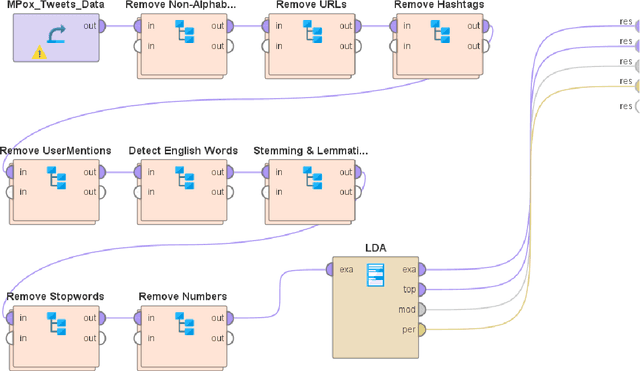
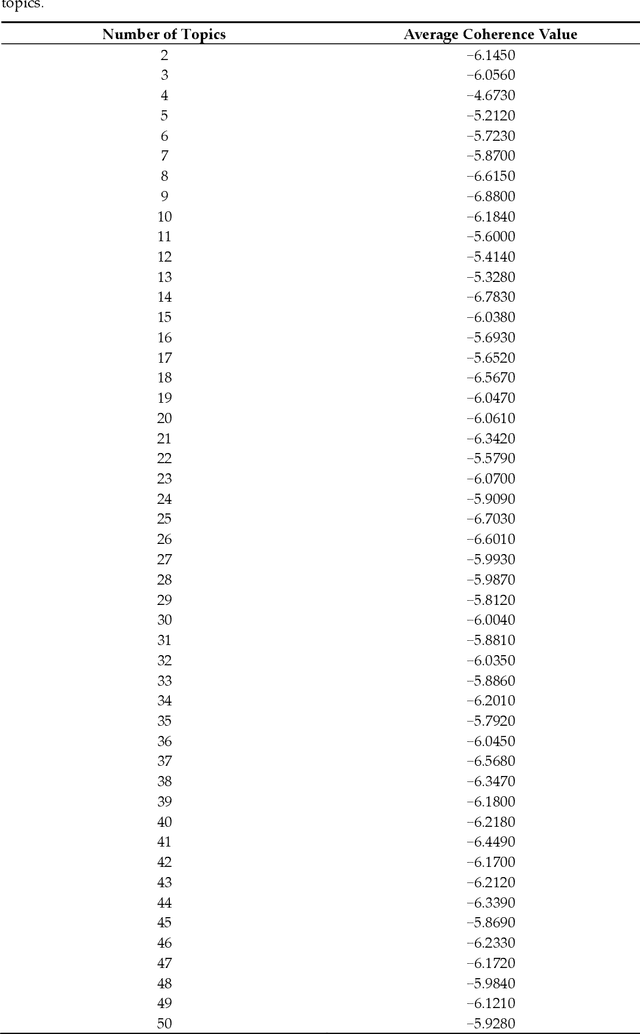
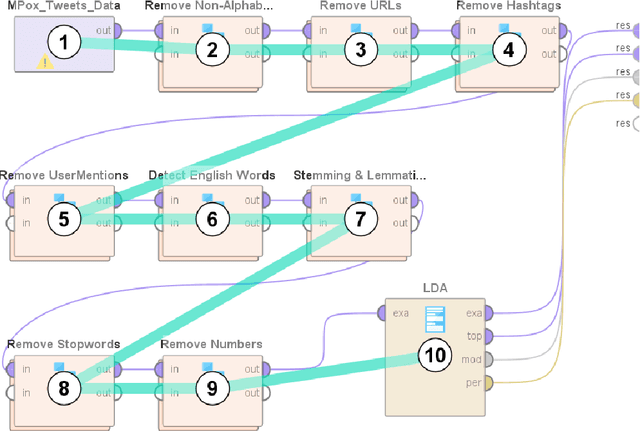
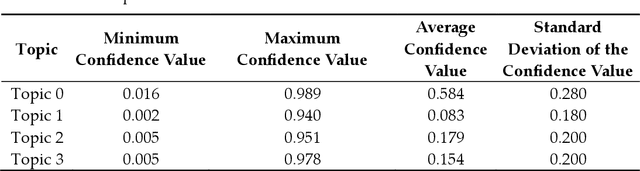
The recent outbreak of the MPox virus has resulted in a tremendous increase in the usage of Twitter. Prior works in this area of research have primarily focused on the sentiment analysis and content analysis of these Tweets, and the few works that have focused on topic modeling have multiple limitations. This paper aims to address this research gap and makes two scientific contributions to this field. First, it presents the results of performing Topic Modeling on 601,432 Tweets about the 2022 Mpox outbreak that were posted on Twitter between 7 May 2022 and 3 March 2023. The results indicate that the conversations on Twitter related to Mpox during this time range may be broadly categorized into four distinct themes - Views and Perspectives about Mpox, Updates on Cases and Investigations about Mpox, Mpox and the LGBTQIA+ Community, and Mpox and COVID-19. Second, the paper presents the findings from the analysis of these Tweets. The results show that the theme that was most popular on Twitter (in terms of the number of Tweets posted) during this time range was Views and Perspectives about Mpox. This was followed by the theme of Mpox and the LGBTQIA+ Community, which was followed by the themes of Mpox and COVID-19 and Updates on Cases and Investigations about Mpox, respectively. Finally, a comparison with related studies in this area of research is also presented to highlight the novelty and significance of this research work.