 Add to Chrome
 Add to Firefox
 Add to Edge
SCDA: School Compatibility Decomposition Algorithm for Solving the Multi-School Bus Routing and Scheduling Problem
Apr 10, 2018
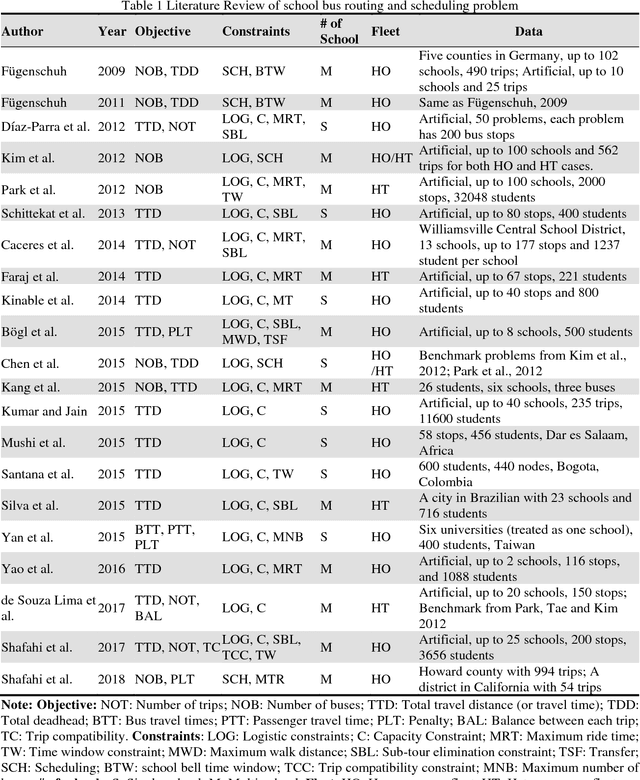
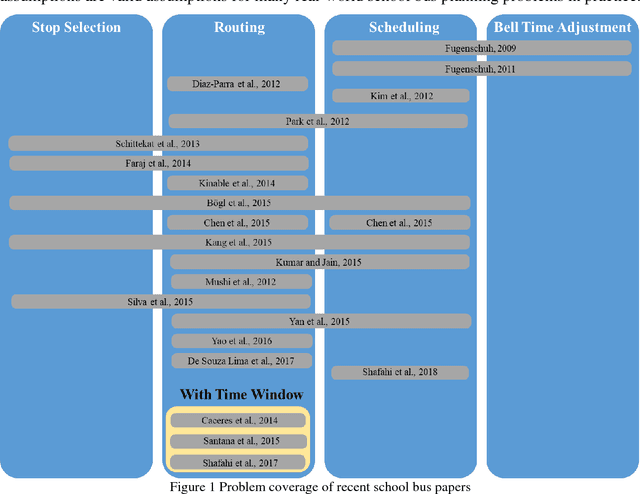
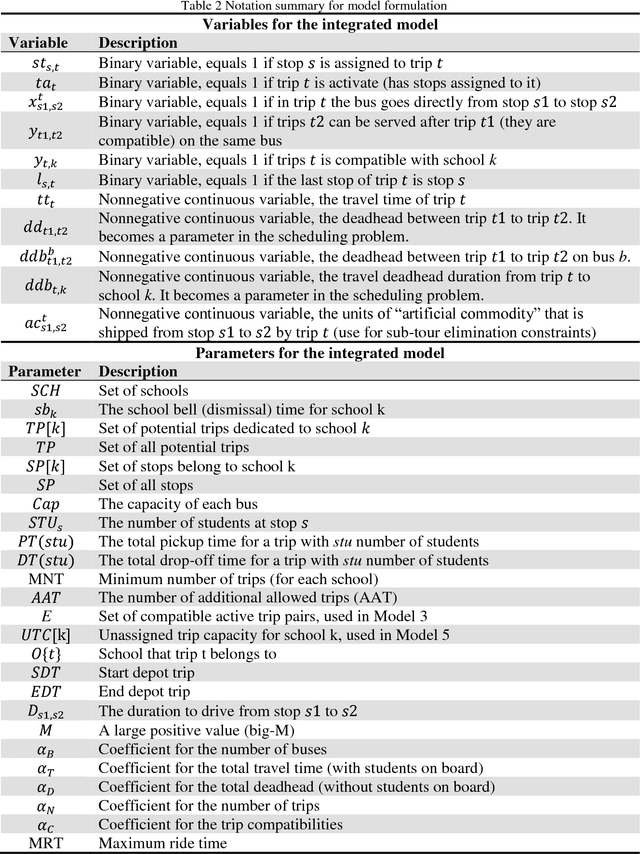
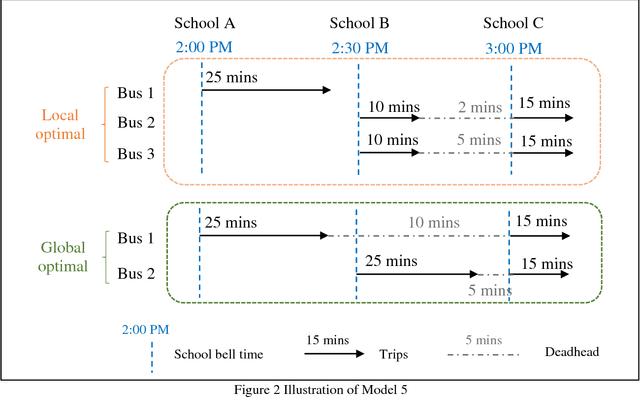
Safely serving the school transportation demand with the minimum number of buses is one of the highest financial goals of school transportation directors. To achieve that objective, a good and efficient way to solve the routing and scheduling problem is required. Due to the growth of the computing power, the spotlight has been shed on solving the combined problem of the school bus routing and scheduling problem. We show that an integrated multi-school bus routing and scheduling can be formulated with the help of trip compatibility. A novel decomposition algorithm is proposed to solve the integrated model. The merit of this integrated model and the decomposition method is that with the consideration of the trip compatibility, the interrelationship between the routing and scheduling sub-problems will not be lost in the process of decomposition. Results show the proposed decomposed problem could provide the solutions using the same number of buses as the integrated model in much shorter time (as little as 0.6%) and that the proposed method can save up to 26% number of buses from existing research.

School bus routing by maximizing trip compatibility
Nov 14, 2017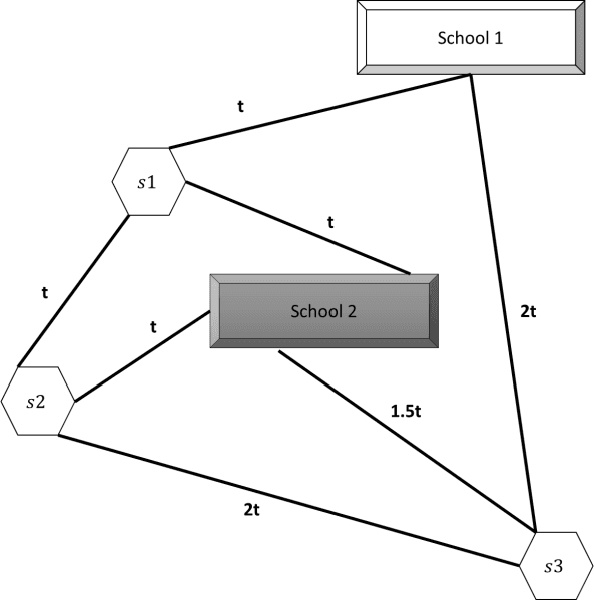
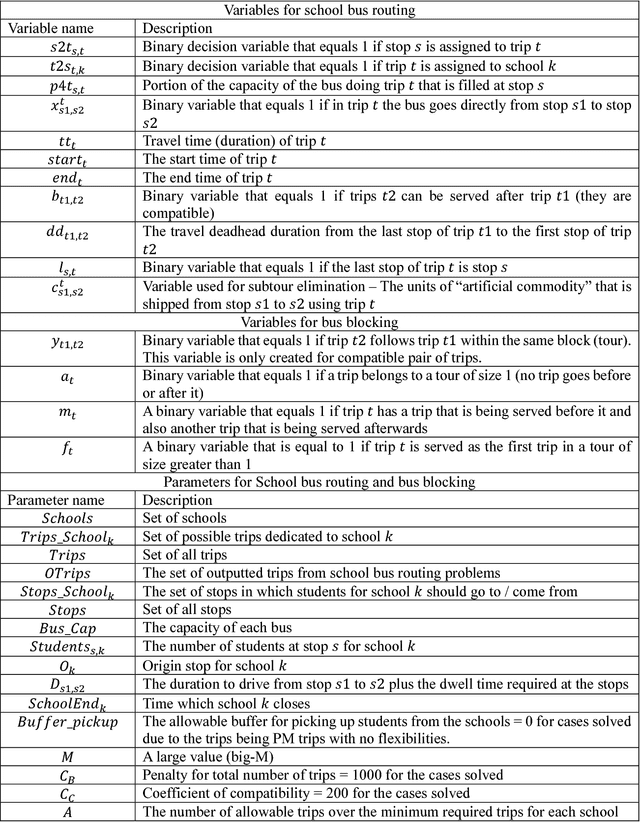
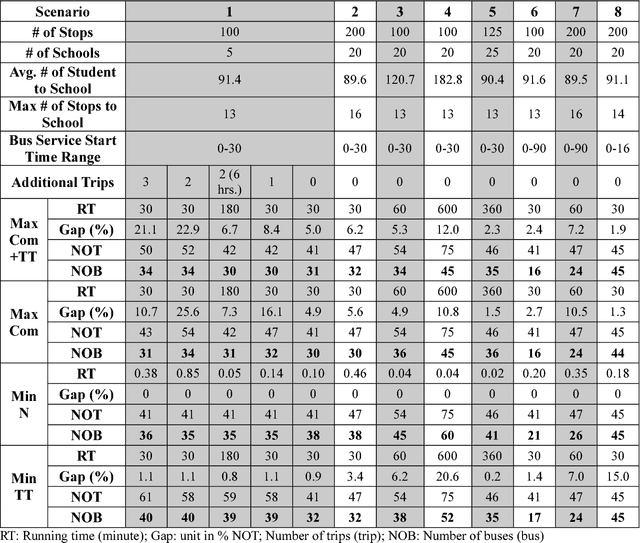
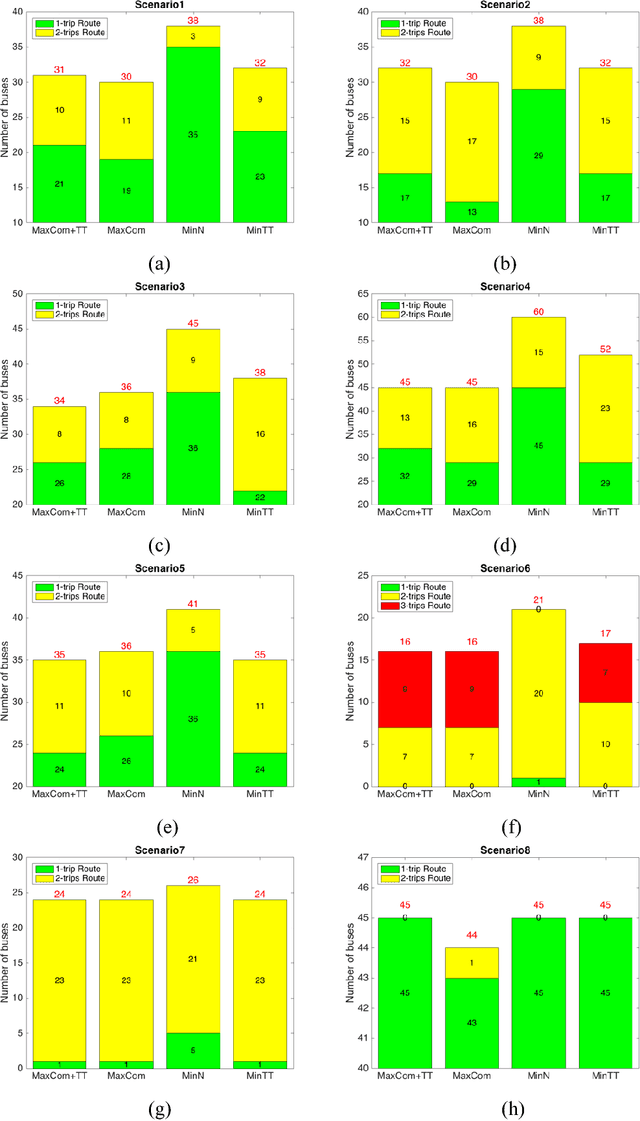
School bus planning is usually divided into routing and scheduling due to the complexity of solving them concurrently. However, the separation between these two steps may lead to worse solutions with higher overall costs than that from solving them together. When finding the minimal number of trips in the routing problem, neglecting the importance of trip compatibility may increase the number of buses actually needed in the scheduling problem. This paper proposes a new formulation for the multi-school homogeneous fleet routing problem that maximizes trip compatibility while minimizing total travel time. This incorporates the trip compatibility for the scheduling problem in the routing problem. Since the problem is inherently just a routing problem, finding a good solution is not cumbersome. To compare the performance of the model with traditional routing problems, we generate eight mid-size data sets. Through importing the generated trips of the routing problems into the bus scheduling (blocking) problem, it is shown that the proposed model uses up to 13% fewer buses than the common traditional routing models.