 Add to Chrome
 Add to Firefox
 Add to Edge
Hylog: A Hybrid Approach to Logging Text Production in Non-alphabetic Scripts
Jan 25, 2026
Research keyloggers are essential for cognitive studies of text production, yet most fail to capture the on-screen transformations performed by Input Method Editors (IMEs) for non-alphabetic scripts. To address this methodological gap, we present Hylog, a novel hybrid logging system that combines analytical keylogging with ecological text logging for a more complete and finer-grained analysis. Our modular, open-source system uses plug-ins for standard applications (Microsoft Word, Google Chrome) to capture both keyboard output and rendered text, which a hybridizer module then synchronizes into a dual trace. To validate the system's technical feasibility and demonstrate its analytical capabilities, we conducted a proof-of-concept study where two volunteers translated a text into simplified Chinese. Hylog successfully captured keypresses and temporal intervals between Latin letters, Chinese characters, and IME confirmations -- some measurements invisible to traditional keyloggers. The resulting data enable the formulation of new, testable hypotheses about the cognitive restrictions and affordances at different linguistic layers in IME-mediated typing. Our plug-in architecture enables extension to other IME systems and fosters more inclusive multilingual text-production research.

BROW: Better featuRes fOr Whole slide image based on self-distillation
Sep 15, 2023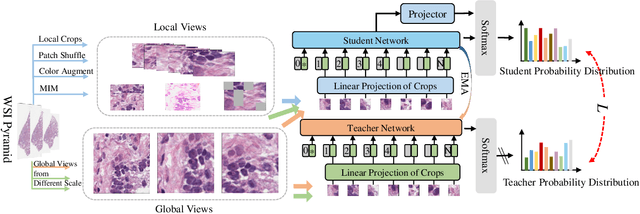
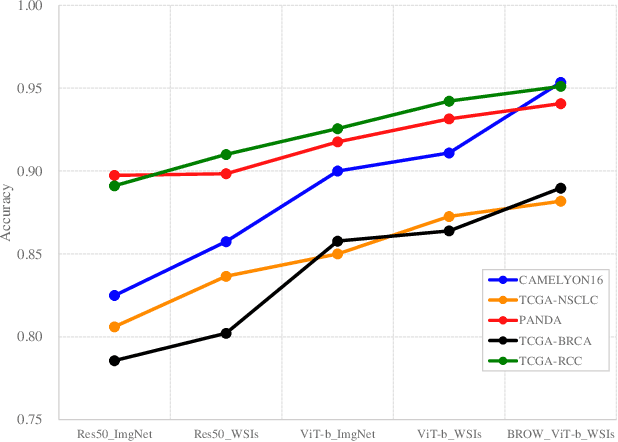
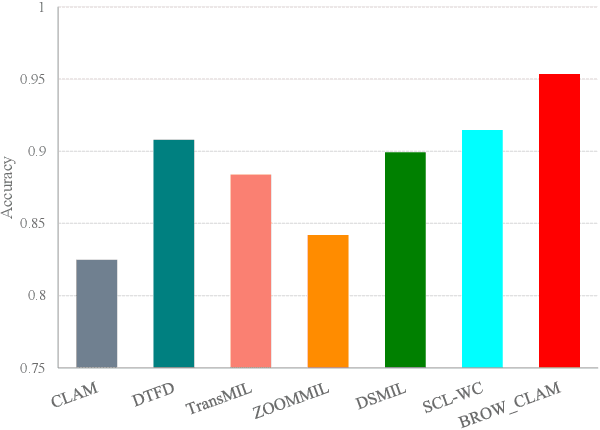
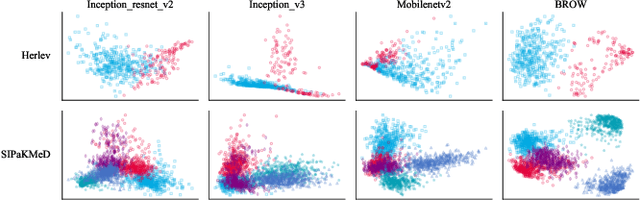
Whole slide image (WSI) processing is becoming part of the key components of standard clinical diagnosis for various diseases. However, the direct application of conventional image processing algorithms to WSI faces certain obstacles because of WSIs' distinct property: the super-high resolution. The performance of most WSI-related tasks relies on the efficacy of the backbone which extracts WSI patch feature representations. Hence, we proposed BROW, a foundation model for extracting better feature representations for WSIs, which can be conveniently adapted to downstream tasks without or with slight fine-tuning. The model takes transformer architecture, pretrained using self-distillation framework. To improve model's robustness, techniques such as patch shuffling have been employed. Additionally, the model leverages the unique properties of WSIs, utilizing WSI's multi-scale pyramid to incorporate an additional global view, thereby further enhancing its performance. We used both private and public data to make up a large pretraining dataset, containing more than 11000 slides, over 180M extracted patches, encompassing WSIs related to various organs and tissues. To assess the effectiveness of \ourmodel, we run a wide range of downstream tasks, including slide-level subtyping, patch-level classification and nuclei instance segmentation. The results confirmed the efficacy, robustness and good generalization ability of the proposed model. This substantiates its potential as foundation model for WSI feature extraction and highlights promising prospects for its application in WSI processing.