 Add to Chrome
 Add to Firefox
 Add to Edge
A Novel Robotic Variable Stiffness Mechanism Based on Helically Wound Structured Electrostatic Layer Jamming
Dec 25, 2025
This paper introduces a novel variable stiffness mechanism termed Helically Wound Structured Electrostatic Layer Jamming (HWS-ELJ) and systematically investigates its potential applications in variable stiffness robotic finger design. The proposed method utilizes electrostatic attraction to enhance interlayer friction, thereby suppressing relative sliding and enabling tunable stiffness. Compared with conventional planar ELJ, the helical configuration of HWS-ELJ provides exponentially increasing stiffness adjustment with winding angle, achieving significantly greater stiffness enhancement for the same electrode contact area while reducing the required footprint under equivalent stiffness conditions. Considering the practical advantage of voltage-based control, a series of experimental tests under different initial force conditions were conducted to evaluate the stiffness modulation characteristics of HWS-ELJ. The results demonstrated its rational design and efficacy, with outcomes following the deduced theoretical trends. Furthermore, a robotic finger prototype integrating HWS-ELJ was developed, demonstrating voltage-driven stiffness modulation and confirming the feasibility of the proposed robotic variable stiffness mechanism.

Design and Validation of an Under-actuated Robotic Finger with Synchronous Tendon Routing
Dec 11, 2025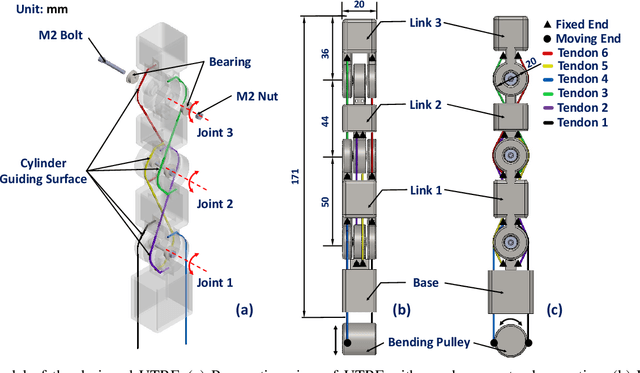
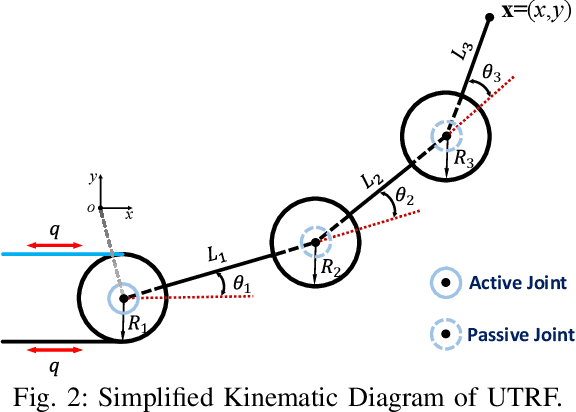
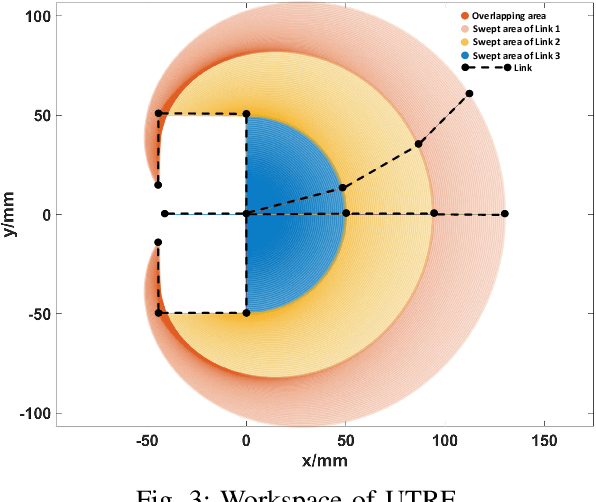
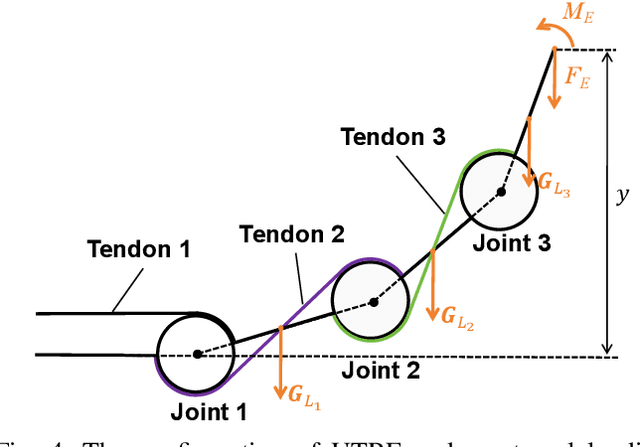
Tendon-driven under-actuated robotic fingers provide advantages for dexterous manipulation through reduced actuator requirements and simplified mechanical design. However, achieving both high load capacity and adaptive compliance in a compact form remains challenging. This paper presents an under-actuated tendon-driven robotic finger (UTRF) featuring a synchronous tendon routing that mechanically couples all joints with fixed angular velocity ratios, enabling the entire finger to be actuated by a single actuator. This approach significantly reduces the number of actuators required in multi-finger hands, resulting in a lighter and more compact structure without sacrificing stiffness or compliance. The kinematic and static models of the finger are derived, incorporating tendon elasticity to predict structural stiffness. A single-finger prototype was fabricated and tested under static loading, showing an average deflection prediction error of 1.0 mm (0.322% of total finger length) and a measured stiffness of 1.2x10^3 N/m under a 3 kg tip load. Integration into a five-finger robotic hand (UTRF-RoboHand) demonstrates effective object manipulation across diverse scenarios, confirming that the proposed routing achieves predictable stiffness and reliable grasping performance with a minimal actuator count.