 Add to Chrome
 Add to Firefox
 Add to Edge
Test-Time Meta-Adaptation with Self-Synthesis
Mar 03, 2026
As strong general reasoners, large language models (LLMs) encounter diverse domains and tasks, where the ability to adapt and self-improve at test time is valuable. We introduce MASS, a meta-learning framework that enables LLMs to self-adapt by generating problem-specific synthetic training data and performing targeted self-updates optimized for downstream performance at inference time. We train this behavior end-to-end via bilevel optimization: an inner loop adapts on self-generated examples while an outer loop meta-learns data-attribution signals and rewards post-update task performance. The synthetic data is optimized with scalable meta-gradients, backpropagating the downstream loss through the inner updates to reward useful generations. Experiments on mathematical reasoning show that MASS learns to synthesize per-instance curricula that yield effective, data-efficient test-time adaptation.

Decoding Large-Language Models: A Systematic Overview of Socio-Technical Impacts, Constraints, and Emerging Questions
Sep 25, 2024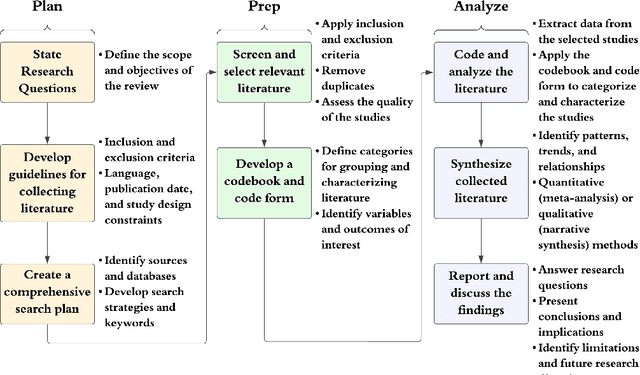
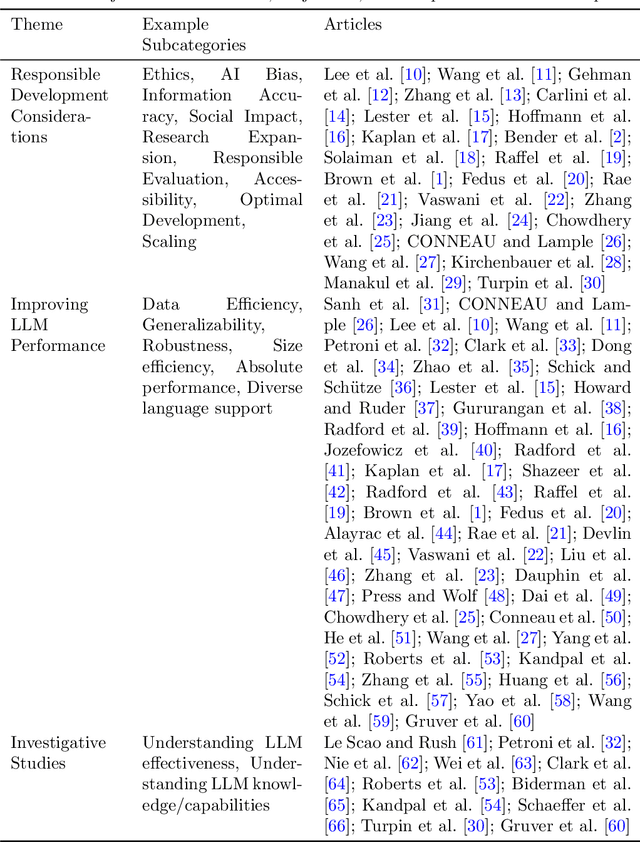
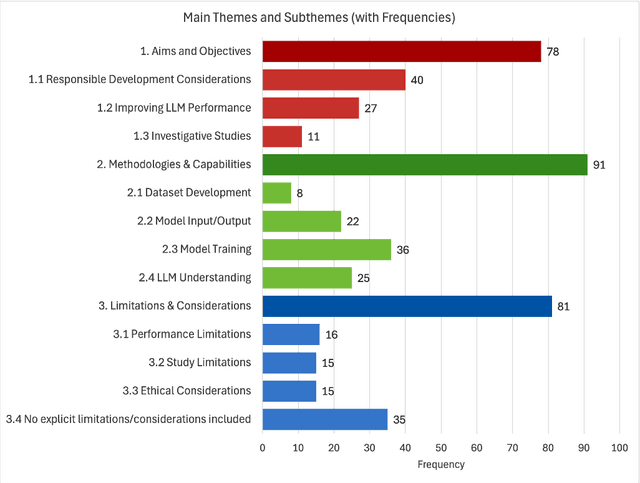
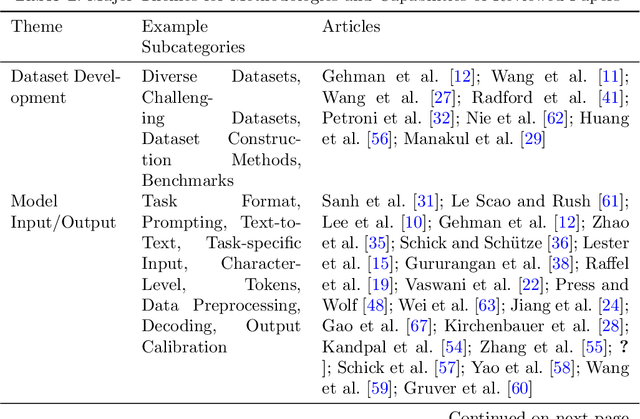
There have been rapid advancements in the capabilities of large language models (LLMs) in recent years, greatly revolutionizing the field of natural language processing (NLP) and artificial intelligence (AI) to understand and interact with human language. Therefore, in this work, we conduct a systematic investigation of the literature to identify the prominent themes and directions of LLM developments, impacts, and limitations. Our findings illustrate the aims, methodologies, limitations, and future directions of LLM research. It includes responsible development considerations, algorithmic improvements, ethical challenges, and societal implications of LLM development. Overall, this paper provides a rigorous and comprehensive overview of current research in LLM and identifies potential directions for future development. The article highlights the application areas that could have a positive impact on society along with the ethical considerations.