 Add to Chrome
 Add to Firefox
 Add to Edge
Deep Learning CNN and Recurrence Analysis for Alpha Gamma EEG Biomarkers in Fragile X Syndrome
Aug 01, 2026
Fragile X Syndrome (FXS) is a neurodevelopmental disorder caused by reduced expression of fragile X mental retardation protein (FMRP), leading to disrupted synaptic plasticity, cortical hyperexcitability, and impaired network synchronization. Electroencephalography (EEG) provides a noninvasive window into these mechanisms and consistently reveals abnormalities in alpha (8 to 12 Hz) and gamma (30 to 100 Hz) oscillations that relate to inhibitory control, sensory processing, and cognition. This paper proposes a multi representation deep learning framework for automated characterization of FXS EEG phenotypes by integrating convolutional neural networks (CNNs), long short-term memory (LSTM) networks, and recurrence plot (RP) analysis. Band limited EEG signals are decomposed into alpha and gamma components and transformed into complementary representations, including temporal feature sequences, time frequency maps, and RP images encoding the nonlinear recurrence structure. CNN modules learn discriminative spatial-spectral and dynamical textures from image based representations, while LSTM modules model temporal modulation of oscillatory activity; a hybrid CNN LSTM architecture jointly captures spatial, temporal, and nonlinear dependencies. Subject-independent evaluation demonstrates that the hybrid model outperforms single modality baselines, with gamma features providing strong discriminative power and alpha gamma integration yielding the best overall performance. These findings support deep learning with nonlinear representations as a scalable approach for EEG biomarker development in FXS, with potential utility for diagnosis, stratification, and treatment monitoring in translational settings.
* 14 pages, 4 figures, conference

FMRP-LEAN: A HIPAA-Compliant AI-Augmented LIMS Architecture for End-to-End Clinical Assay Workflow Optimization
Jul 22, 2026Clinical biomarker workflows in translational research settings often rely on spreadsheet-driven tracking, manual quality control (QC) reconciliation, and loosely integrated systems, resulting in limited state visibility, delayed reporting, and increased operational risk. These challenges are particularly pronounced in multi-day assays such as Luminex-based quantification of Fragile X Messenger Ribonucleoprotein (FMRP), where HIPAA-compliant data governance, deterministic workflow progression, and coordinated communication across laboratory and clinical teams are required. This paper presents FMRP-LEAN, a HIPAA-compliant, AI-augmented Laboratory Information Management System (LIMS) architecture that formalizes biospecimen lifecycle management through a finite-state workflow model with explicit transition guards and dwell-time observability. The system integrates a self-hosted Supabase/PostgreSQL stack deployed within hospital-controlled infrastructure, hybrid edge-internal isolation with encrypted tunneling and loopback-only services, and bi-directional REDCap synchronization. A unified MRN-UUIDv7 identifier framework with QR-based tracking ensures traceable clinical-research linkage under PHI residency constraints. FMRP-LEAN incorporates automated statistical QC pre-screening and a governance-constrained AI operations module that operates exclusively on aggregate projections, with deterministic fallback guarantees. Deployment demonstrates improved workflow observability, reduced QC latency, and enhanced cross-role transparency between laboratory technicians, research coordinators, and patient-facing teams. The architecture provides a reproducible model for secure, state-explicit, and AI-augmented clinical research workflows in regulated healthcare environments.
* 15 pages, 5 figures, conference
Computer Vision Based Neurology Brain Activity Rejection Architecture and Implementation
Jul 22, 2026The electroencephalogram (EEG) is a valuable and widely applied tool for investigating brain disorders and behavioral changes. It offers a minimally restrictive and non-invasive method. However, challenges in using EEG for cognitive development studies include temporal resolution, signal source localization, and EEG artifacts. Careful consideration of these factors is essential for informed application of EEG technology. Independent component analysis (ICA) effectively isolates source generator processes from signals recorded by multiple, adjacent EEG scalp electrodes. Although ICA decomposition requires manual inspection, selection, and interpretation of independent components (ICs), this process is time consuming and demands expertise. Automated IC classification can achieve sufficient accuracy, expediting large scale EEG research and enabling near real time applications in conjunction with brain activity rejection tasks, which are crucial for medical specialists. This study introduces an automated computer vision based ICA rejection labeling tool compatible with widely used software interfaces like ICLabel and EEGLab. By automating the manual task, the proposed system reduces processing time by 7200 fold and achieves an accuracy of 89.45%.
* 7 pages, 10 figures, Conference
Dimensionality Reduction for Cyberattack Classification: A Comparative Evaluation of PCA and Linear Predictive Coding
Jun 04, 2026High-dimensional feature representations are widely used in machine learning-based cyberattack detection systems. However, they increase computational complexity and may hinder deployment in resource-constrained environments. In this paper, we investigate feature compression techniques for cyberattack classification by comparing two dimensionality reduction approaches: Principal Component Analysis (PCA) and Linear Predictive Coding (LPC). Compressed feature representations with varying dimensionalities are generated and evaluated across several classification models. Experimental analysis demonstrates that PCA preserves classification performance even under aggressive compression. On the other hand, LPC provides competitive predictive representations with slightly larger performance degradation. The results show that substantial reductions in feature dimensionality can be achieved with minimal impact on classification accuracy, highlighting the potential of lightweight feature compression for efficient cybersecurity analytics.
Brian Intensify: An Adaptive Machine Learning Framework for Auditory EEG Stimulation and Cognitive Enhancement in FXS
Nov 12, 2025Neurodevelopmental disorders such as Fragile X Syndrome (FXS) and Autism Spectrum Disorder (ASD) are characterized by disrupted cortical oscillatory activity, particularly in the alpha and gamma frequency bands. These abnormalities are linked to deficits in attention, sensory processing, and cognitive function. In this work, we present an adaptive machine learning-based brain-computer interface (BCI) system designed to modulate neural oscillations through frequency-specific auditory stimulation to enhance cognitive readiness in individuals with FXS. EEG data were recorded from 38 participants using a 128-channel system under a stimulation paradigm consisting of a 30-second baseline (no stimulus) followed by 60-second auditory entrainment episodes at 7Hz, 9Hz, 11Hz, and 13Hz. A comprehensive analysis of power spectral features (Alpha, Gamma, Delta, Theta, Beta) and cross-frequency coupling metrics (Alpha-Gamma, Alpha-Beta, etc.) was conducted. The results identified Peak Alpha Power, Peak Gamma Power, and Alpha Power per second per channel as the most discriminative biomarkers. The 13Hz stimulation condition consistently elicited a significant increase in Alpha activity and suppression of Gamma activity, aligning with our optimization objective. A supervised machine learning framework was developed to predict EEG responses and dynamically adjust stimulation parameters, enabling real-time, subject-specific adaptation. This work establishes a novel EEG-driven optimization framework for cognitive neuromodulation, providing a foundational model for next-generation AI-integrated BCI systems aimed at personalized neurorehabilitation in FXS and related disorders.
TemporalAugmenter: An Ensemble Recurrent Based Deep Learning Approach for Signal Classification
Jan 13, 2024Ensemble modeling has been widely used to solve complex problems as it helps to improve overall performance and generalization. In this paper, we propose a novel TemporalAugmenter approach based on ensemble modeling for augmenting the temporal information capturing for long-term and short-term dependencies in data integration of two variations of recurrent neural networks in two learning streams to obtain the maximum possible temporal extraction. Thus, the proposed model augments the extraction of temporal dependencies. In addition, the proposed approach reduces the preprocessing and prior stages of feature extraction, which reduces the required energy to process the models built upon the proposed TemporalAugmenter approach, contributing towards green AI. Moreover, the proposed model can be simply integrated into various domains including industrial, medical, and human-computer interaction applications. Our proposed approach empirically evaluated the speech emotion recognition, electrocardiogram signal, and signal quality examination tasks as three different signals with varying complexity and different temporal dependency features.
CautionSuicide: A Deep Learning Based Approach for Detecting Suicidal Ideation in Real Time Chatbot Conversation
Jan 02, 2024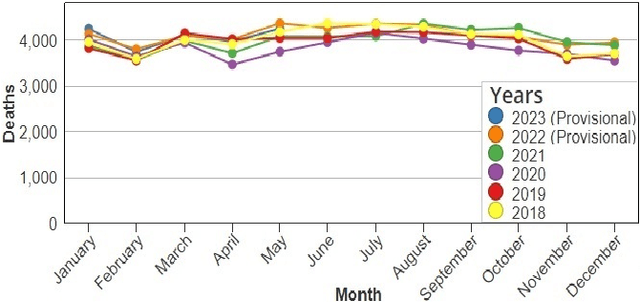
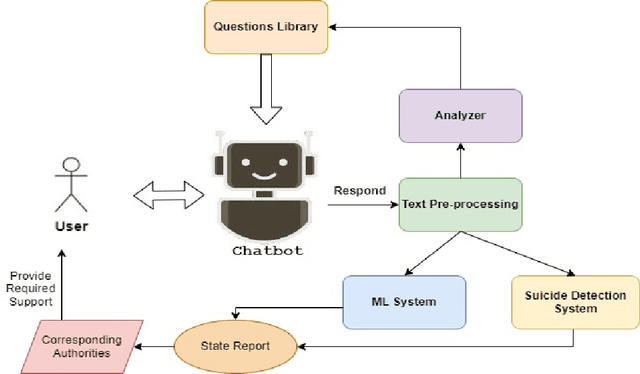
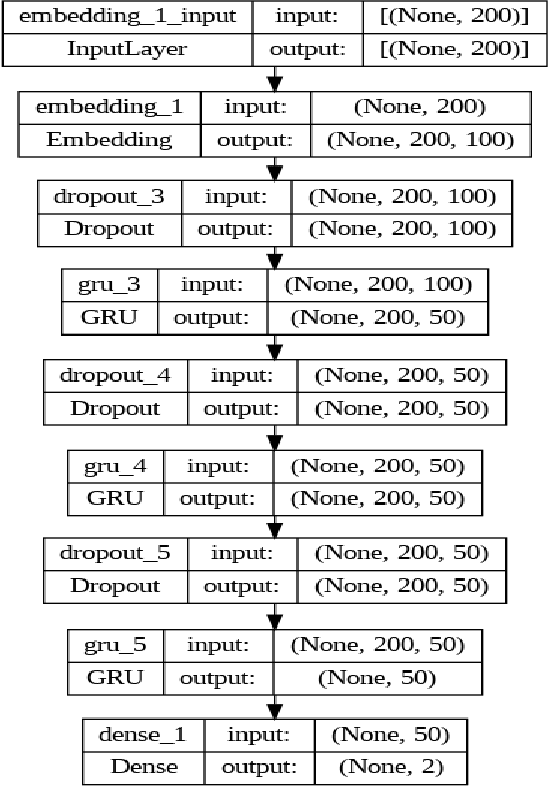
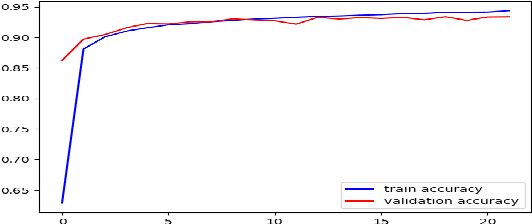
Suicide is recognized as one of the most serious concerns in the modern society. Suicide causes tragedy that affects countries, communities, and families. There are many factors that lead to suicidal ideations. Early detection of suicidal ideations can help to prevent suicide occurrence by providing the victim with the required professional support, especially when the victim does not recognize the danger of having suicidal ideations. As technology usage has increased, people share and express their ideations digitally via social media, chatbots, and other digital platforms. In this paper, we proposed a novel, simple deep learning-based model to detect suicidal ideations in digital content, mainly focusing on chatbots as the primary data source. In addition, we provide a framework that employs the proposed suicide detection integration with a chatbot-based support system.
Epilepsy Seizure Detection: Anatomy and Analysis
May 30, 2023
A seizure tracking system is crucial for monitoring and evaluating epilepsy treatments. Caretaker seizure diaries are used in epilepsy care today, but clinical seizure monitoring may miss seizures. Monitoring devices that can be worn may be better tolerated and more suitable for long-term ambulatory use. Many techniques and methods are proposed for seizure detection; However, simplicity and affordability are key concepts for daily use while preserving the accuracy of the detection. In this study, we propose a versal, affordable noninvasive based on a simple real-time k-Nearest-Neighbors (kNN) machine learning that can be customized and adapted to individual users in less than four (4) seconds of training time; the system was verified and validated using 500 subjects, with seizure detection data sampled at 178 Hz, the operated with a mean accuracy of (94.5%).
A Convolutional-based Model for Early Prediction of Alzheimer's based on the Dementia Stage in the MRI Brain Images
Feb 15, 2023Alzheimer's disease is a degenerative brain disease. Being the primary cause of Dementia in adults and progressively destroys brain memory. Though Alzheimer's disease does not have a cure currently, diagnosing it at an earlier stage will help reduce the severity of the disease. Thus, early diagnosis of Alzheimer's could help to reduce or stop the disease from progressing. In this paper, we proposed a deep convolutional neural network-based model for learning model using to determine the stage of Dementia in adults based on the Magnetic Resonance Imaging (MRI) images to detect the early onset of Alzheimer's.
Deep Learning Approach for Early Stage Lung Cancer Detection
Feb 15, 2023Lung cancer is the leading cause of death among different types of cancers. Every year, the lives lost due to lung cancer exceed those lost to pancreatic, breast, and prostate cancer combined. The survival rate for lung cancer patients is very low compared to other cancer patients due to late diagnostics. Thus, early lung cancer diagnostics is crucial for patients to receive early treatments, increasing the survival rate or even becoming cancer-free. This paper proposed a deep-learning model for early lung cancer prediction and diagnosis from Computed Tomography (CT) scans. The proposed mode achieves high accuracy. In addition, it can be a beneficial tool to support radiologists' decisions in predicting and detecting lung cancer and its stage.