 Add to Chrome
 Add to Firefox
 Add to Edge
MAESTRO: Multi-Agent Evaluation Suite for Testing, Reliability, and Observability
Jan 01, 2026
We present MAESTRO, an evaluation suite for the testing, reliability, and observability of LLM-based MAS. MAESTRO standardizes MAS configuration and execution through a unified interface, supports integrating both native and third-party MAS via a repository of examples and lightweight adapters, and exports framework-agnostic execution traces together with system-level signals (e.g., latency, cost, and failures). We instantiate MAESTRO with 12 representative MAS spanning popular agentic frameworks and interaction patterns, and conduct controlled experiments across repeated runs, backend models, and tool configurations. Our case studies show that MAS executions can be structurally stable yet temporally variable, leading to substantial run-to-run variance in performance and reliability. We further find that MAS architecture is the dominant driver of resource profiles, reproducibility, and cost-latency-accuracy trade-off, often outweighing changes in backend models or tool settings. Overall, MAESTRO enables systematic evaluation and provides empirical guidance for designing and optimizing agentic systems.

Scaling Truth: The Confidence Paradox in AI Fact-Checking
Sep 10, 2025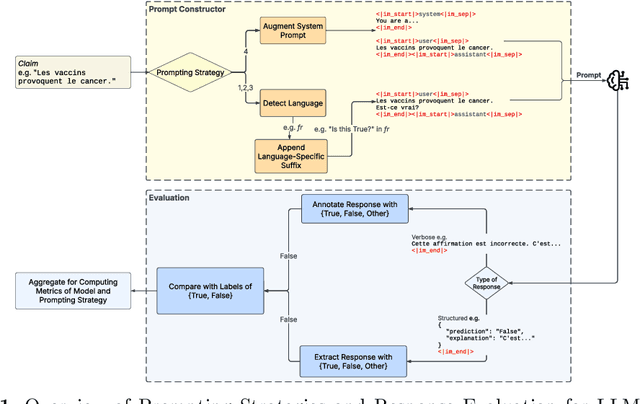
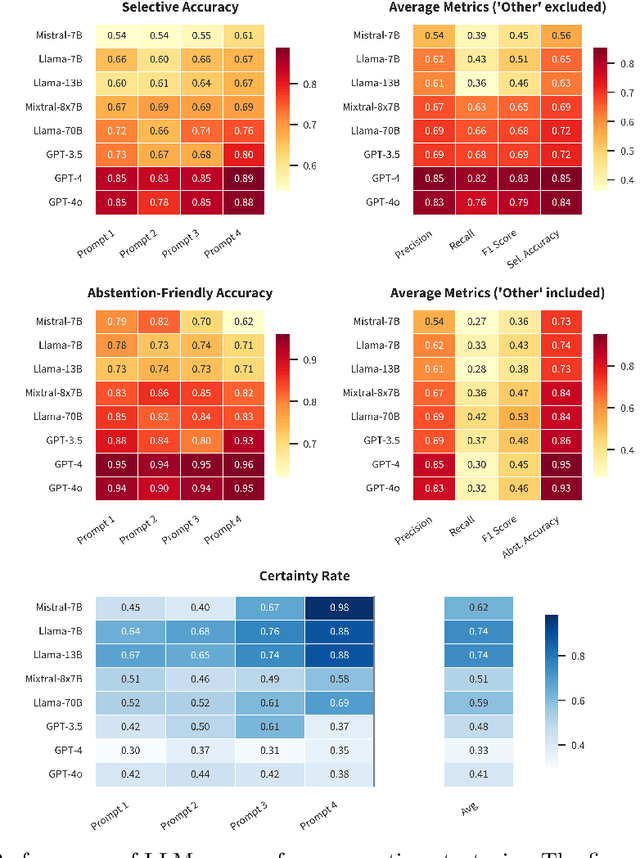
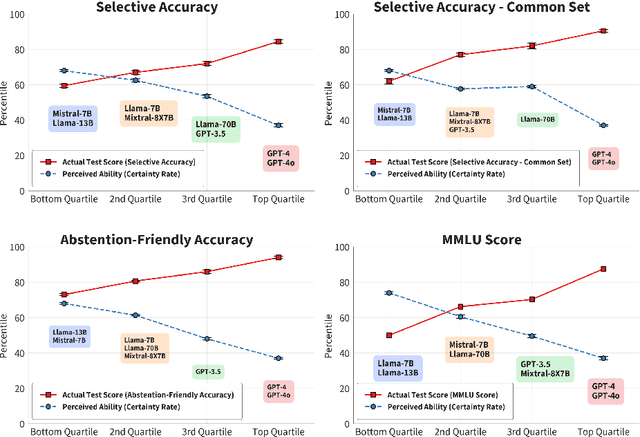
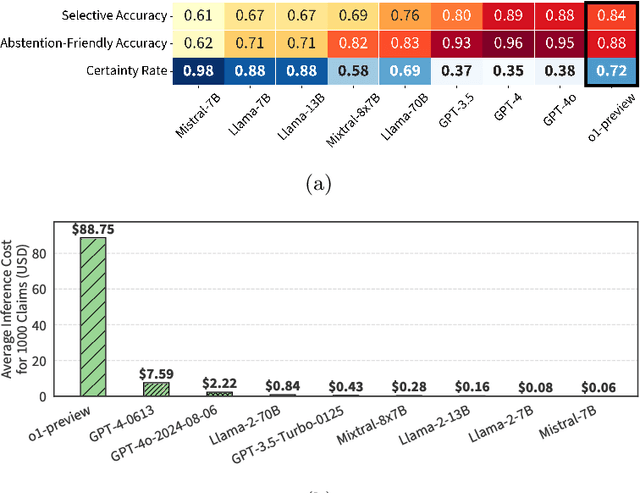
The rise of misinformation underscores the need for scalable and reliable fact-checking solutions. Large language models (LLMs) hold promise in automating fact verification, yet their effectiveness across global contexts remains uncertain. We systematically evaluate nine established LLMs across multiple categories (open/closed-source, multiple sizes, diverse architectures, reasoning-based) using 5,000 claims previously assessed by 174 professional fact-checking organizations across 47 languages. Our methodology tests model generalizability on claims postdating training cutoffs and four prompting strategies mirroring both citizen and professional fact-checker interactions, with over 240,000 human annotations as ground truth. Findings reveal a concerning pattern resembling the Dunning-Kruger effect: smaller, accessible models show high confidence despite lower accuracy, while larger models demonstrate higher accuracy but lower confidence. This risks systemic bias in information verification, as resource-constrained organizations typically use smaller models. Performance gaps are most pronounced for non-English languages and claims originating from the Global South, threatening to widen existing information inequalities. These results establish a multilingual benchmark for future research and provide an evidence base for policy aimed at ensuring equitable access to trustworthy, AI-assisted fact-checking.