 Add to Chrome
 Add to Firefox
 Add to Edge
Split-and-Conquer: Distributed Factor Modeling for High-Dimensional Matrix-Variate Time Series
Jan 16, 2026
In this paper, we propose a distributed framework for reducing the dimensionality of high-dimensional, large-scale, heterogeneous matrix-variate time series data using a factor model. The data are first partitioned column-wise (or row-wise) and allocated to node servers, where each node estimates the row (or column) loading matrix via two-dimensional tensor PCA. These local estimates are then transmitted to a central server and aggregated, followed by a final PCA step to obtain the global row (or column) loading matrix estimator. Given the estimated loading matrices, the corresponding factor matrices are subsequently computed. Unlike existing distributed approaches, our framework preserves the latent matrix structure, thereby improving computational efficiency and enhancing information utilization. We also discuss row- and column-wise clustering procedures for settings in which the group memberships are unknown. Furthermore, we extend the analysis to unit-root nonstationary matrix-variate time series. Asymptotic properties of the proposed method are derived for the diverging dimension of the data in each computing unit and the sample size $T$. Simulation results assess the computational efficiency and estimation accuracy of the proposed framework, and real data applications further validate its predictive performance.

Channel Estimation for Underwater Acoustic OFDM Communications: An Image Super-Resolution Approach
Mar 07, 2021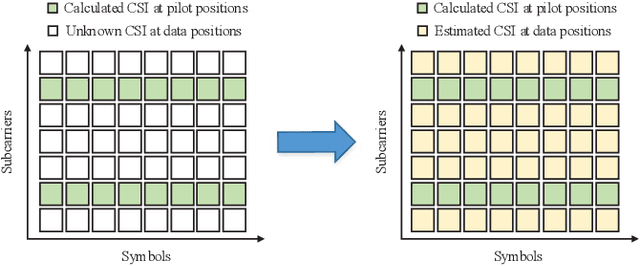
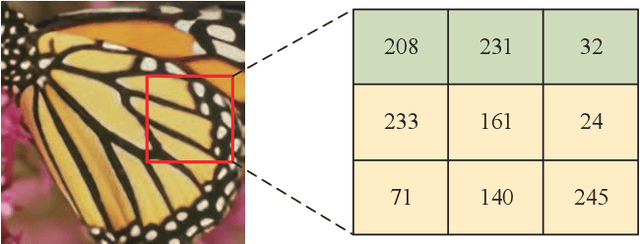
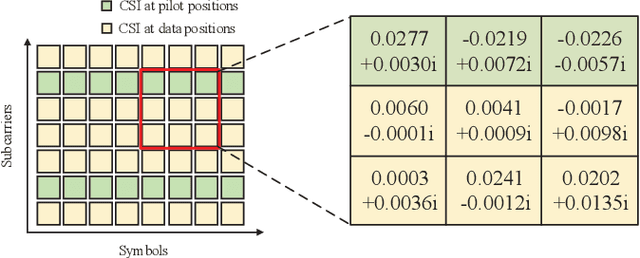
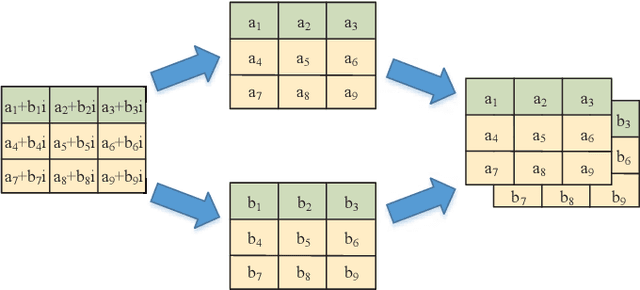
In this paper, by exploiting the powerful ability of deep learning, we devote to designing a well-performing and pilot-saving neural network for the channel estimation in underwater acoustic (UWA) orthogonal frequency division multiplexing (OFDM) communications. By considering the channel estimation problem as a matrix completion problem, we interestingly find it mathematically equivalent to the image super-resolution problem arising in the field of image processing. Hence, we attempt to make use of the very deep super-resolution neural network (VDSR), one of the most typical neural networks to solve the image super-resolution problem, to handle our problem. However, there still exist significant differences between these two problems, we thus elegantly modify the basic framework of the VDSR to design our channel estimation neural network, referred to as the channel super-resolution neural network (CSRNet). Moreover, instead of training an individual network for each considered signal-to-noise ratio (SNR), we obtain an unified network that works well for all SNRs with the help of transfer learning, thus substantially increasing the practicality of the CSRNet. Simulation results validate the superiority of the CSRNet against the existing least square (LS) and deep neural network (DNN) based algorithms in terms of the mean square error (MSE) and the bit error rate (BER). Specifically, compared with the LS algorithm, the CSRNet can reduce the BER by 44.74% even using 50% fewer pilots.
Inter-Carrier Interference Mitigation for Differentially Coherent Detection in Underwater Acoustic OFDM Systems
Mar 07, 2021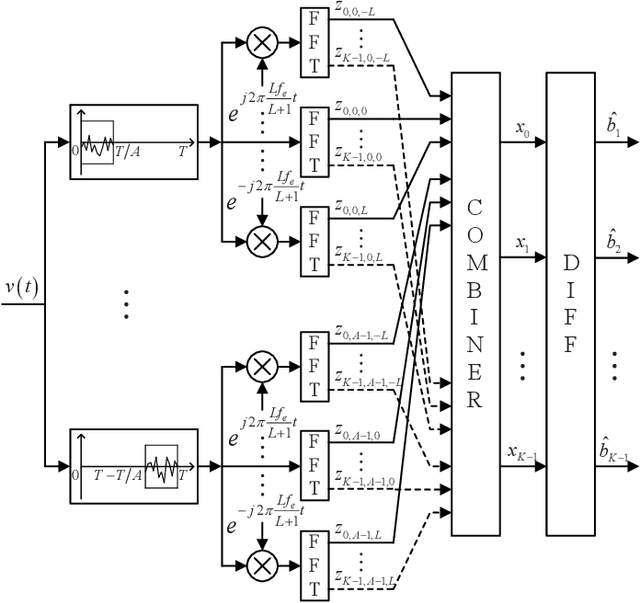
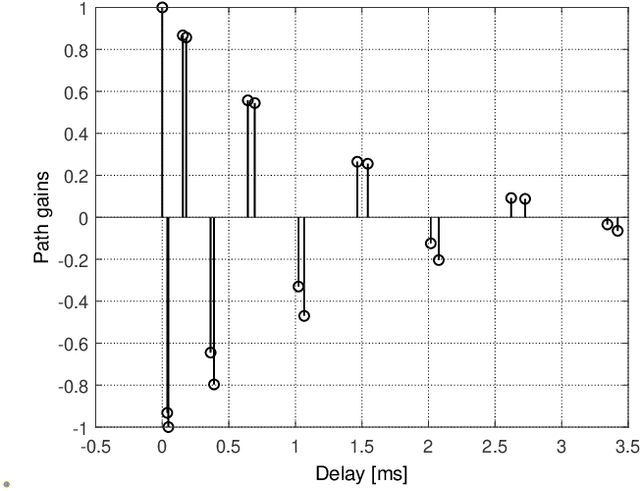
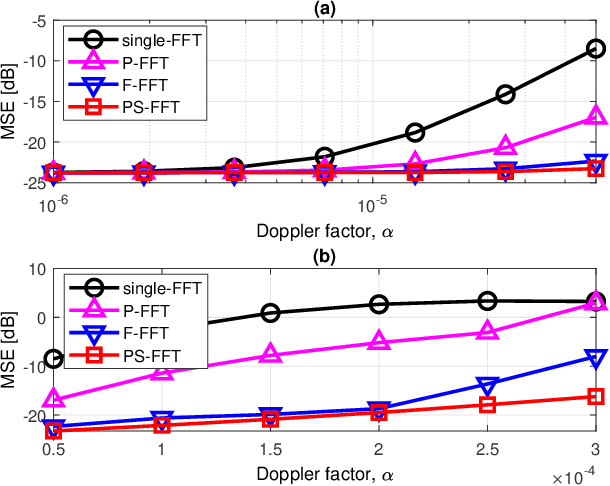
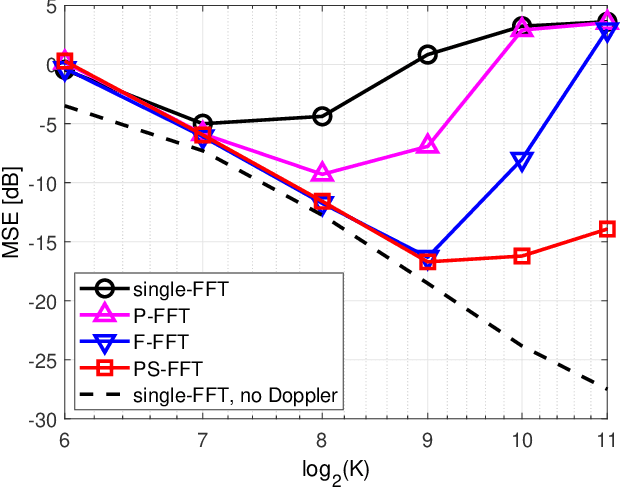
Suppressing the inter-carrier interference (ICI) is crucial for differentially coherent detection in underwater acoustic (UWA) orthogonal frequency division multiplexing (OFDM) systems due to the fact that the UWA channel is inherently violently Doppler-shifted. In this paper, we propose a new ICI suppression method, referred to as the partially-shifted fast Fourier transform (PS-FFT), which eliminates the ICI from both the time and frequency domains. Specifically, the PS-FFT first divides the received signal in the entire block duration into several short non-overlapping ones to reduce the channel variation in the time domain. It then applies the Fourier transform at several predefined frequencies to the received signal in each of these intervals to compensate Doppler shifts in the frequency domain. Finally, it weightedly combines the multiple demodulator outputs at each carrier as one output for symbol detection, with the combiner weights being solved by the stochastic gradient algorithm. Simulation results show that the PS-FFT dramatically outperforms the existing classical methods, the partial fast Fourier transform (P-FFT) and the fractional fast Fourier transform (F-FFT), for both medium and high Doppler factors and large carrier numbers in terms of the mean squared error (MSE). Numerically, the MSE of the PS-FFT is reduced by $\bf{61.83\%-84.89\%}$ compared to that of the F-FFT when the input signal-to-noise ratio (SNR) at the receiver ranges from 10 dB to 30 dB at a Doppler factor of $\bf{3\times 10^{-4}}$ and a carrier number of 1024 where the P-FFT even cannot work.