 Add to Chrome
 Add to Firefox
 Add to Edge
AAVGen: Precision Engineering of Adeno-associated Viral Capsids for Renal Selective Targeting
Feb 21, 2026
Adeno-associated viruses (AAVs) are promising vectors for gene therapy, but their native serotypes face limitations in tissue tropism, immune evasion, and production efficiency. Engineering capsids to overcome these hurdles is challenging due to the vast sequence space and the difficulty of simultaneously optimizing multiple functional properties. The complexity also adds when it comes to the kidney, which presents unique anatomical barriers and cellular targets that require precise and efficient vector engineering. Here, we present AAVGen, a generative artificial intelligence framework for de novo design of AAV capsids with enhanced multi-trait profiles. AAVGen integrates a protein language model (PLM) with supervised fine-tuning (SFT) and a reinforcement learning technique termed Group Sequence Policy Optimization (GSPO). The model is guided by a composite reward signal derived from three ESM-2-based regression predictors, each trained to predict a key property: production fitness, kidney tropism, and thermostability. Our results demonstrate that AAVGen produces a diverse library of novel VP1 protein sequences. In silico validations revealed that the majority of the generated variants have superior performance across all three employed indices, indicating successful multi-objective optimization. Furthermore, structural analysis via AlphaFold3 confirms that the generated sequences preserve the canonical capsid folding despite sequence diversification. AAVGen establishes a foundation for data-driven viral vector engineering, accelerating the development of next-generation AAV vectors with tailored functional characteristics.

DrugGen: Advancing Drug Discovery with Large Language Models and Reinforcement Learning Feedback
Nov 20, 2024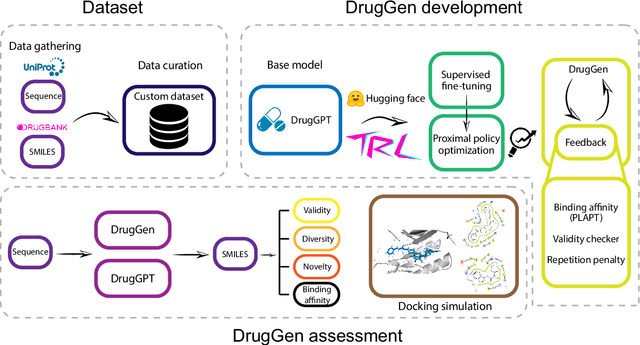
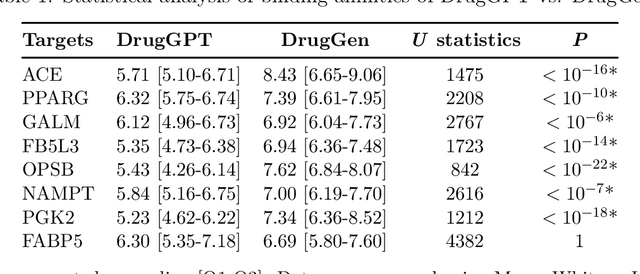
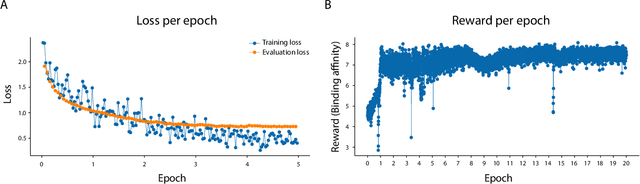
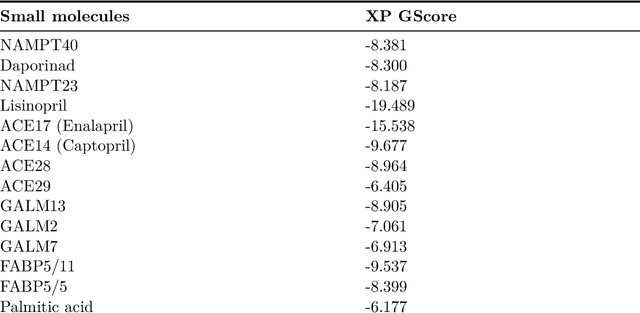
Traditional drug design faces significant challenges due to inherent chemical and biological complexities, often resulting in high failure rates in clinical trials. Deep learning advancements, particularly generative models, offer potential solutions to these challenges. One promising algorithm is DrugGPT, a transformer-based model, that generates small molecules for input protein sequences. Although promising, it generates both chemically valid and invalid structures and does not incorporate the features of approved drugs, resulting in time-consuming and inefficient drug discovery. To address these issues, we introduce DrugGen, an enhanced model based on the DrugGPT structure. DrugGen is fine-tuned on approved drug-target interactions and optimized with proximal policy optimization. By giving reward feedback from protein-ligand binding affinity prediction using pre-trained transformers (PLAPT) and a customized invalid structure assessor, DrugGen significantly improves performance. Evaluation across multiple targets demonstrated that DrugGen achieves 100% valid structure generation compared to 95.5% with DrugGPT and produced molecules with higher predicted binding affinities (7.22 [6.30-8.07]) compared to DrugGPT (5.81 [4.97-6.63]) while maintaining diversity and novelty. Docking simulations further validate its ability to generate molecules targeting binding sites effectively. For example, in the case of fatty acid-binding protein 5 (FABP5), DrugGen generated molecules with superior docking scores (FABP5/11, -9.537 and FABP5/5, -8.399) compared to the reference molecule (Palmitic acid, -6.177). Beyond lead compound generation, DrugGen also shows potential for drug repositioning and creating novel pharmacophores for existing targets. By producing high-quality small molecules, DrugGen provides a high-performance medium for advancing pharmaceutical research and drug discovery.