 Add to Chrome
 Add to Firefox
 Add to Edge
When Should an AI Workflow Release? Always-Valid Inference for Black-Box Generate-Verify Systems
May 13, 2026
LLM-enabled AI workflows increasingly produce outputs through iterative generate-evaluate-revise loops. Each iteration can improve the candidate, but it also creates a release decision: when to stop and output the current result? This raises a statistical challenge because deployment-time evaluator scores are adaptively generated and repeatedly monitored, yet the likelihood models or exchangeability assumptions typically used for calibration are unavailable. We propose an always-valid release wrapper for existing generator-evaluator pipelines. The wrapper builds a hard-negative reference pool of high-scoring failures, calibrates deployment-time evaluator scores against this pool, and accumulates the resulting evidence with an e-process. This separates two roles: the reference pool turns black-box scores into conservative evidence, while the e-process provides validity under optional stopping. In theory, we show that a conservative reference pool yields finite-sample control of the probability of releasing on infeasible tasks, that is, tasks for which the given workflow is not capable of producing a reliable solution. We also characterize conditions under which the same conservative rule still achieves nontrivial release on feasible tasks. In an MBPP+ coding-agent case study, the wrapper reduces premature incorrect release relative to baseline stopping rules while still releasing on tasks for which the workflow repeatedly accumulates moderate supporting evidence.

Privacy-Preserving Dynamic Assortment Selection
Oct 29, 2024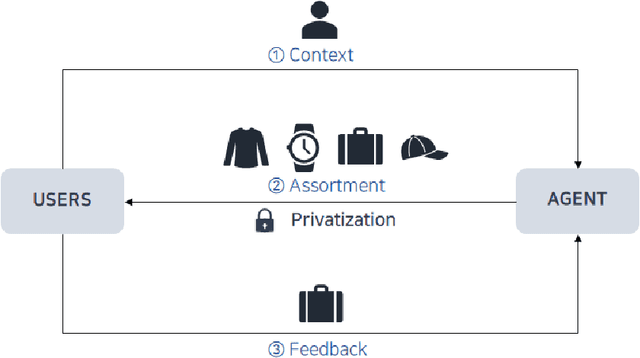
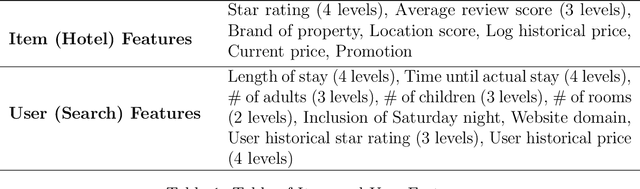
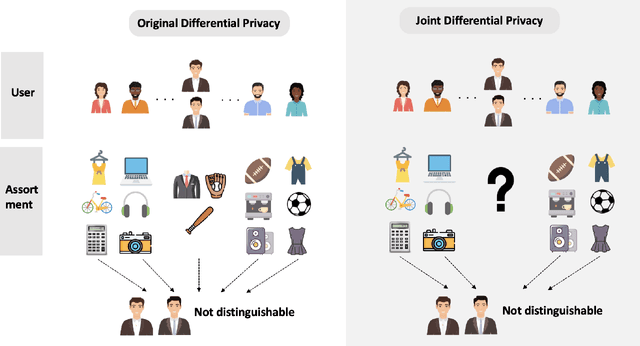
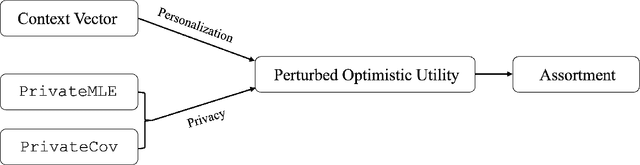
With the growing demand for personalized assortment recommendations, concerns over data privacy have intensified, highlighting the urgent need for effective privacy-preserving strategies. This paper presents a novel framework for privacy-preserving dynamic assortment selection using the multinomial logit (MNL) bandits model. Our approach employs a perturbed upper confidence bound method, integrating calibrated noise into user utility estimates to balance between exploration and exploitation while ensuring robust privacy protection. We rigorously prove that our policy satisfies Joint Differential Privacy (JDP), which better suits dynamic environments than traditional differential privacy, effectively mitigating inference attack risks. This analysis is built upon a novel objective perturbation technique tailored for MNL bandits, which is also of independent interest. Theoretically, we derive a near-optimal regret bound of $\tilde{O}(\sqrt{T})$ for our policy and explicitly quantify how privacy protection impacts regret. Through extensive simulations and an application to the Expedia hotel dataset, we demonstrate substantial performance enhancements over the benchmark method.