 Add to Chrome
 Add to Firefox
 Add to Edge
A Neuromorphic Architecture for Scalable Event-Based Control
Nov 14, 2025
This paper introduces the ``rebound Winner-Take-All (RWTA)" motif as the basic element of a scalable neuromorphic control architecture. From the cellular level to the system level, the resulting architecture combines the reliability of discrete computation and the tunability of continuous regulation: it inherits the discrete computation capabilities of winner-take-all state machines and the continuous tuning capabilities of excitable biophysical circuits. The proposed event-based framework addresses continuous rhythmic generation and discrete decision-making in a unified physical modeling language. We illustrate the versatility, robustness, and modularity of the architecture through the nervous system design of a snake robot.

A Winner-Takes-All Mechanism for Event Generation
Apr 15, 2025We present a novel framework for central pattern generator design that leverages the intrinsic rebound excitability of neurons in combination with winner-takes-all computation. Our approach unifies decision-making and rhythmic pattern generation within a simple yet powerful network architecture that employs all-to-all inhibitory connections enhanced by designable excitatory interactions. This design offers significant advantages regarding ease of implementation, adaptability, and robustness. We demonstrate its efficacy through a ring oscillator model, which exhibits adaptive phase and frequency modulation, making the framework particularly promising for applications in neuromorphic systems and robotics.
Passive iFIR filters for data-driven control
Mar 11, 2024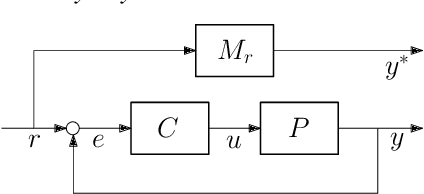
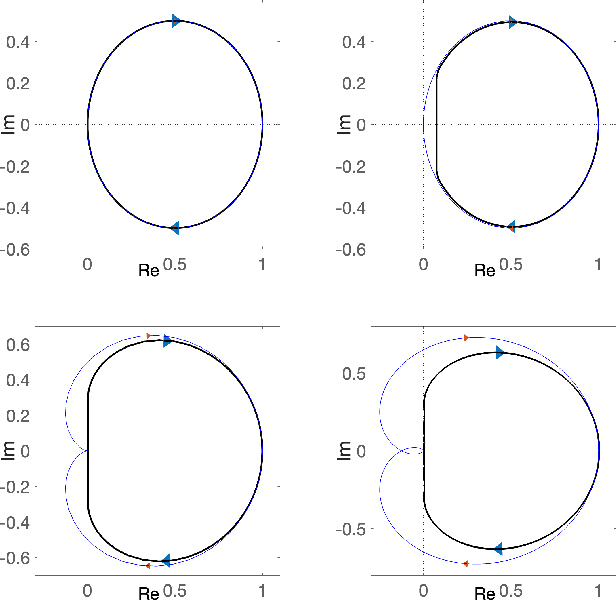
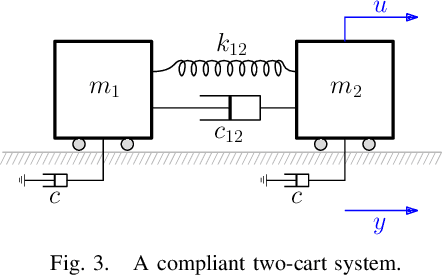
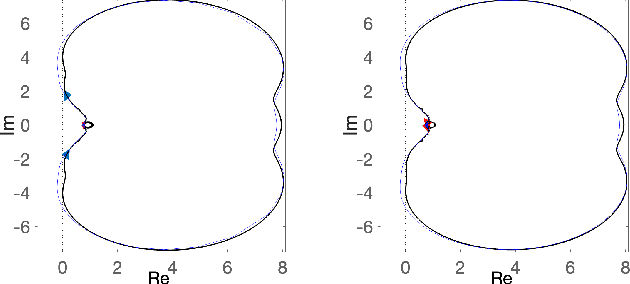
We consider the design of a new class of passive iFIR controllers given by the parallel action of an integrator and a finite impulse response filter. iFIRs are more expressive than PID controllers but retain their features and simplicity. The paper provides a model-free data-driven design for passive iFIR controllers based on virtual reference feedback tuning. Passivity is enforced through constrained optimization (three different formulations are discussed). The proposed design does not rely on large datasets or accurate plant models.