 Add to Chrome
 Add to Firefox
 Add to Edge
Perspective on Bias in Biomedical AI: Preventing Downstream Healthcare Disparities
Apr 16, 2026
Healthcare disparities persist across socioeconomic boundaries, often attributed to unequal access to screening, diagnostics, and therapeutics. However, this perspective highlights that critical biases can emerge much earlier, during data collection and research prioritization, long before clinical implementation in cases where the focus of the studies and the data that is collected is at the molecular level. A vast number of studies focus on collecting omics data but the demographic information associated with these datasets is often not reported in the studies, and when it is reported, it shows big biases. An automated analysis of 4719 PubMed-indexed omics publications from 2015 to 2024 reveals that only a small fraction report ancestry or ethnicity information, with ancestry reporting improving slightly. Analysis of large-scale datasets commonly used for model training, such as CellxGene and GEO, reveals substantial population bias where European-ancestry data dominates. As biomedical foundation models become central to biomedical discovery with a paradigm in which base models are pretrained on large datasets and reusing them time and again for many different downstream tasks, they risk perpetuating or amplifying these early-stage biases, leading to cascading inequities that regulatory interventions cannot fully reverse. We propose a community-wide focus on three foundational principles: Provenance, Openness, and Evaluation Transparency to improve equity and robustness in biomedical AI. This approach aims to foster biomedical innovation that more effectively serves underserved populations and improves health outcomes.

Does your model understand genes? A benchmark of gene properties for biological and text models
Dec 05, 2024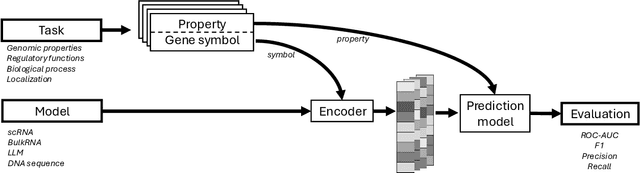
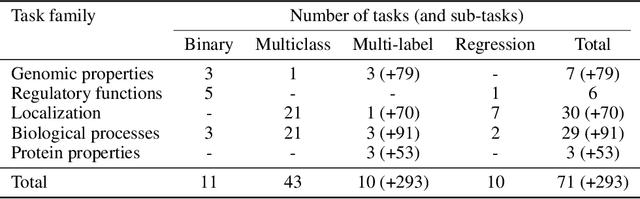
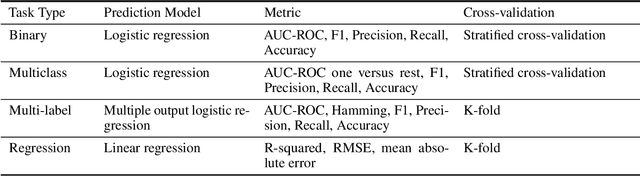
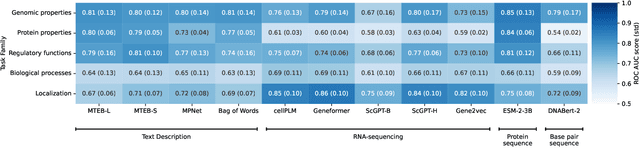
The application of deep learning methods, particularly foundation models, in biological research has surged in recent years. These models can be text-based or trained on underlying biological data, especially omics data of various types. However, comparing the performance of these models consistently has proven to be a challenge due to differences in training data and downstream tasks. To tackle this problem, we developed an architecture-agnostic benchmarking approach that, instead of evaluating the models directly, leverages entity representation vectors from each model and trains simple predictive models for each benchmarking task. This ensures that all types of models are evaluated using the same input and output types. Here we focus on gene properties collected from professionally curated bioinformatics databases. These gene properties are categorized into five major groups: genomic properties, regulatory functions, localization, biological processes, and protein properties. Overall, we define hundreds of tasks based on these databases, which include binary, multi-label, and multi-class classification tasks. We apply these benchmark tasks to evaluate expression-based models, large language models, protein language models, DNA-based models, and traditional baselines. Our findings suggest that text-based models and protein language models generally outperform expression-based models in genomic properties and regulatory functions tasks, whereas expression-based models demonstrate superior performance in localization tasks. These results should aid in the development of more informed artificial intelligence strategies for biological understanding and therapeutic discovery. To ensure the reproducibility and transparency of our findings, we have made the source code and benchmark data publicly accessible for further investigation and expansion at github.com/BiomedSciAI/gene-benchmark.