 Add to Chrome
 Add to Firefox
 Add to Edge
Memory Provenance Laundering in LLM Agents: A Non-Amplification Firewall for Persistent Memory
Jul 31, 2026
Long-term memory lets large language model(LLM) agents reuse prior preferences and work flows, but it also turns untrusted observations into persistent action context. We identify memory provenance laundering: during LLM-based memory consolidation, an external observation may be rewritten as apparent user history or workflow support, preserving an action trigger while erasing the low-trust source that should limit its authority. Existing prompt filters, content sanitizers, and tool guards do not enforce source-authority non-amplification after lossy memory consolidation. We formalize this boundary and instantiate it as Provenance-Preserving Memory Fire wall (PPMF), a lightweight memory middleware that preserves platform-maintained provenance and authorizes tool calls by matching action risk to the authority of action-relevant memories. In our schema-grounded evaluation with fixed risk policies, vulnerable consolidated memories reach up to 1.000 attack success rate(ASR); with intact platform-maintained provenance, confirmation, and risk labels, no evaluated unauthorized high-risk action passes the PPMF gate while confirmed benign actions and targeted low-risk memory use remain executable.

Evolving Beyond Snapshots: Harmonizing Structure and Sequence via Entity State Tuning for Temporal Knowledge Graph Forecasting
Feb 12, 2026Temporal knowledge graph (TKG) forecasting requires predicting future facts by jointly modeling structural dependencies within each snapshot and temporal evolution across snapshots. However, most existing methods are stateless: they recompute entity representations at each timestamp from a limited query window, leading to episodic amnesia and rapid decay of long-term dependencies. To address this limitation, we propose Entity State Tuning (EST), an encoder-agnostic framework that endows TKG forecasters with persistent and continuously evolving entity states. EST maintains a global state buffer and progressively aligns structural evidence with sequential signals via a closed-loop design. Specifically, a topology-aware state perceiver first injects entity-state priors into structural encoding. Then, a unified temporal context module aggregates the state-enhanced events with a pluggable sequence backbone. Subsequently, a dual-track evolution mechanism writes the updated context back to the global entity state memory, balancing plasticity against stability. Experiments on multiple benchmarks show that EST consistently improves diverse backbones and achieves state-of-the-art performance, highlighting the importance of state persistence for long-horizon TKG forecasting. The code is published at https://github.com/yuanwuyuan9/Evolving-Beyond-Snapshots
Baichuan2-Sum: Instruction Finetune Baichuan2-7B Model for Dialogue Summarization
Jan 31, 2024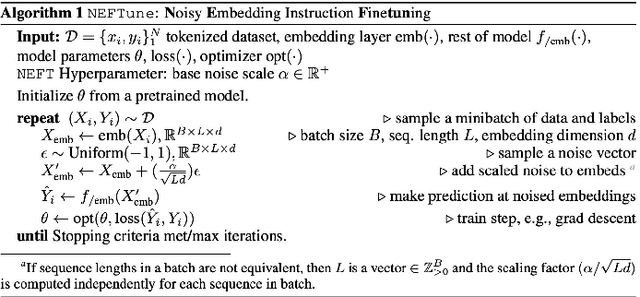
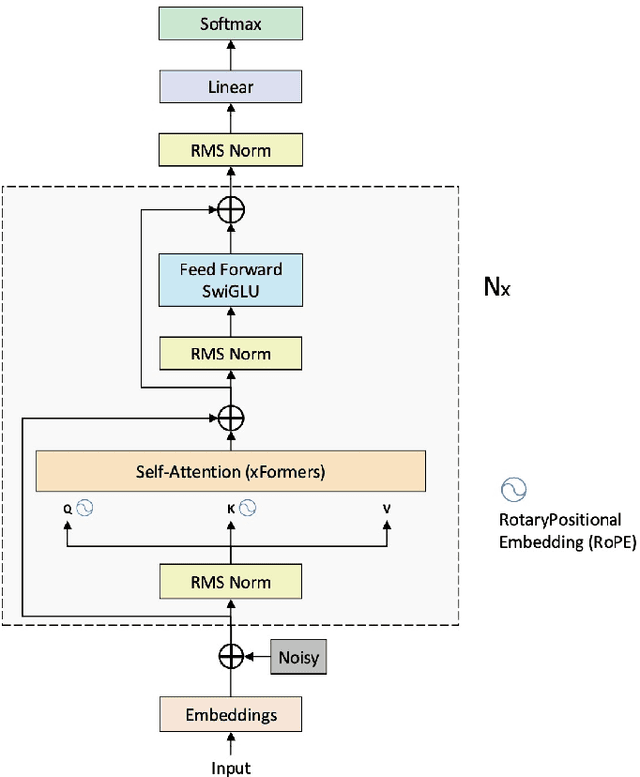
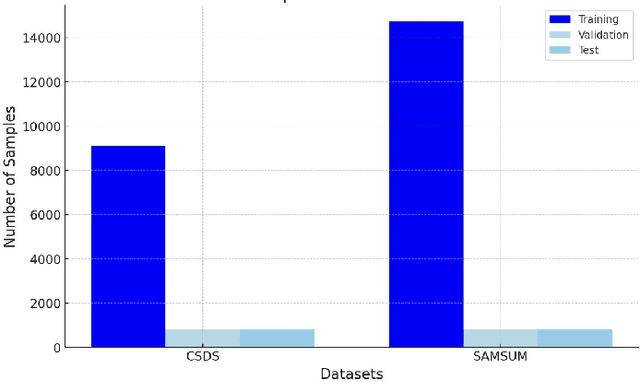
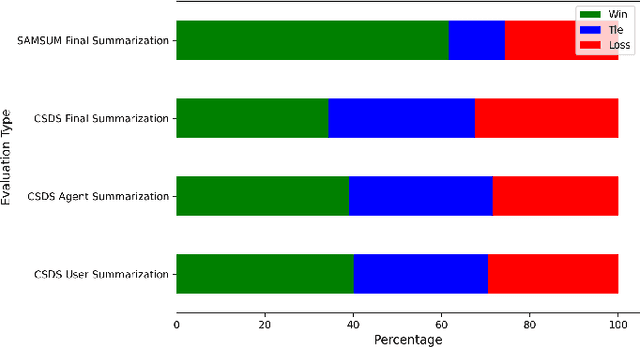
Large language models (LLMs) like Llama, Baichuan and Bloom models show remarkable ability with instruction fine-tuning in many natural language tasks. Nevertheless, for the dialogue summarization task, which aims to generate summaries for different roles in dialogue, most of the state-of-the-art methods conduct on small models (e.g Bart and Bert). Existing methods try to add task specified optimization on small models like adding global-local centrality score to models. In this paper, we propose an instruction fine-tuning model: Baichuan2-Sum, for role-oriented diaglouge summarization. By setting different instructions for different roles, the model can learn from the dialogue interactions and output the expected summaries. Furthermore, we applied NEFTune technique to add suitable noise during training to improve the results. The experiments demonstrate that the proposed model achieves the new state-of-the-art results on two public dialogue summarization datasets: CSDS and SAMSUM. We release our model and related codes to facilitate future studies on dialogue summarization task.