 Add to Chrome
 Add to Firefox
 Add to Edge
MoniRefer: A Real-world Large-scale Multi-modal Dataset based on Roadside Infrastructure for 3D Visual Grounding
Dec 31, 2025
3D visual grounding aims to localize the object in 3D point cloud scenes that semantically corresponds to given natural language sentences. It is very critical for roadside infrastructure system to interpret natural languages and localize relevant target objects in complex traffic environments. However, most existing datasets and approaches for 3D visual grounding focus on the indoor and outdoor driving scenes, outdoor monitoring scenarios remain unexplored due to scarcity of paired point cloud-text data captured by roadside infrastructure sensors. In this paper, we introduce a novel task of 3D Visual Grounding for Outdoor Monitoring Scenarios, which enables infrastructure-level understanding of traffic scenes beyond the ego-vehicle perspective. To support this task, we construct MoniRefer, the first real-world large-scale multi-modal dataset for roadside-level 3D visual grounding. The dataset consists of about 136,018 objects with 411,128 natural language expressions collected from multiple complex traffic intersections in the real-world environments. To ensure the quality and accuracy of the dataset, we manually verified all linguistic descriptions and 3D labels for objects. Additionally, we also propose a new end-to-end method, named Moni3DVG, which utilizes the rich appearance information provided by images and geometry and optical information from point cloud for multi-modal feature learning and 3D object localization. Extensive experiments and ablation studies on the proposed benchmarks demonstrate the superiority and effectiveness of our method. Our dataset and code will be released.

WEM-GAN: Wavelet transform based facial expression manipulation
Dec 03, 2024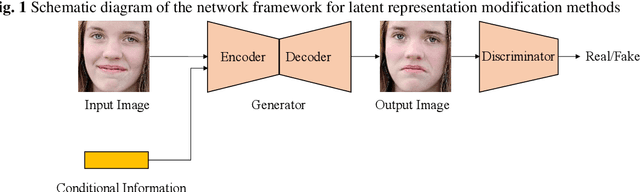
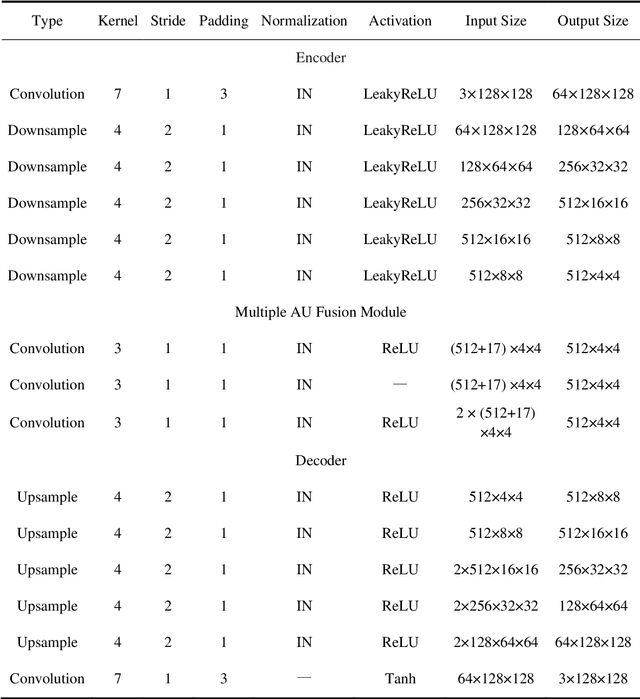
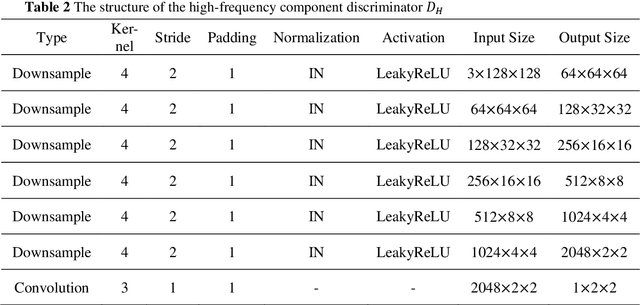
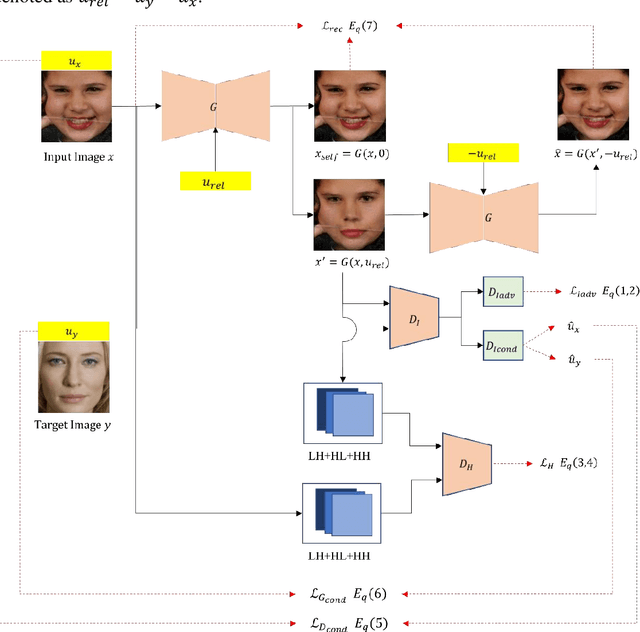
Facial expression manipulation aims to change human facial expressions without affecting face recognition. In order to transform the facial expressions to target expressions, previous methods relied on expression labels to guide the manipulation process. However, these methods failed to preserve the details of facial features, which causes the weakening or the loss of identity information in the output image. In our work, we propose WEM-GAN, in short for wavelet-based expression manipulation GAN, which puts more efforts on preserving the details of the original image in the editing process. Firstly, we take advantage of the wavelet transform technique and combine it with our generator with a U-net autoencoder backbone, in order to improve the generator's ability to preserve more details of facial features. Secondly, we also implement the high-frequency component discriminator, and use high-frequency domain adversarial loss to further constrain the optimization of our model, providing the generated face image with more abundant details. Additionally, in order to narrow the gap between generated facial expressions and target expressions, we use residual connections between encoder and decoder, while also using relative action units (AUs) several times. Extensive qualitative and quantitative experiments have demonstrated that our model performs better in preserving identity features, editing capability, and image generation quality on the AffectNet dataset. It also shows superior performance in metrics such as Average Content Distance (ACD) and Expression Distance (ED).