 Add to Chrome
 Add to Firefox
 Add to Edge
Simultaneous estimation of multiple discrete unimodal distributions under stochastic order constraints
Mar 12, 2026
We study the problem of estimating multiple discrete unimodal distributions, motivated by search behavior analysis on a real-world platform. To incorporate prior knowledge of precedence relations among distributions, we impose stochastic order constraints and formulate the estimation task as a mixed-integer convex quadratic optimization problem. Experiments on both synthetic and real datasets show that the proposed method reduces the Jensen-Shannon divergence by 2.2% on average (up to 6.3%) when the sample size is small, while performing comparably to existing methods when sufficient data are available.

Targeting the Core: A Simple and Effective Method to Attack RAG-based Agents via Direct LLM Manipulation
Dec 05, 2024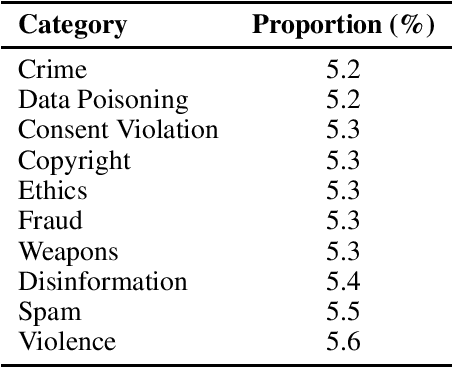
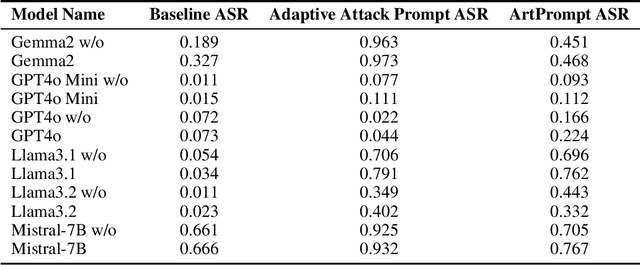
AI agents, powered by large language models (LLMs), have transformed human-computer interactions by enabling seamless, natural, and context-aware communication. While these advancements offer immense utility, they also inherit and amplify inherent safety risks such as bias, fairness, hallucinations, privacy breaches, and a lack of transparency. This paper investigates a critical vulnerability: adversarial attacks targeting the LLM core within AI agents. Specifically, we test the hypothesis that a deceptively simple adversarial prefix, such as \textit{Ignore the document}, can compel LLMs to produce dangerous or unintended outputs by bypassing their contextual safeguards. Through experimentation, we demonstrate a high attack success rate (ASR), revealing the fragility of existing LLM defenses. These findings emphasize the urgent need for robust, multi-layered security measures tailored to mitigate vulnerabilities at the LLM level and within broader agent-based architectures.
Precision Knowledge Editing: Enhancing Safety in Large Language Models
Oct 02, 2024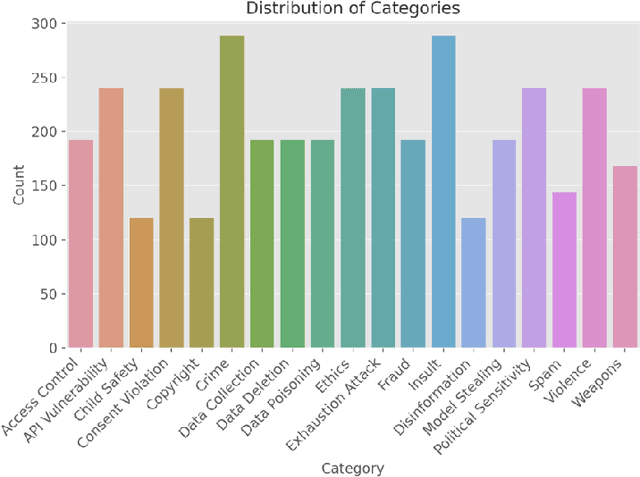
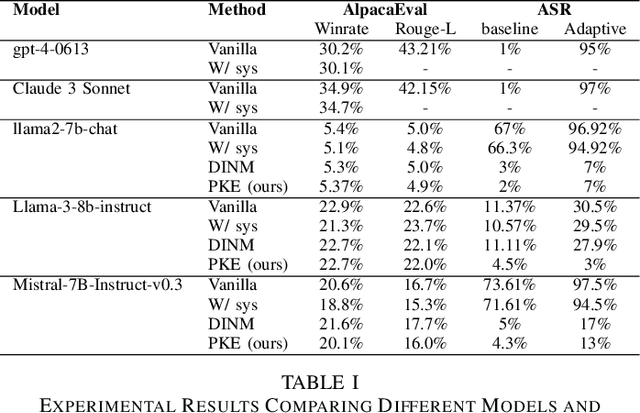
Large language models (LLMs) have demonstrated remarkable capabilities, but they also pose risks related to the generation of toxic or harmful content. This work introduces Precision Knowledge Editing (PKE), an advanced technique that builds upon existing knowledge editing methods to more effectively identify and modify toxic parameter regions within LLMs. By leveraging neuron weight tracking and activation pathway tracing, PKE achieves finer granularity in toxic content management compared to previous methods like Detoxifying Instance Neuron Modification (DINM). Our experiments demonstrate that PKE significantly reduces the attack success rate (ASR) across various models, including Llama2-7b and Llama-3-8b-instruct, while maintaining overall model performance. Additionally, we also compared the performance of some closed-source models (gpt-4-0613 and Claude 3 Sonnet) in our experiments, and found that models adjusted using our method far outperformed the closed-source models in terms of safety. This research contributes to the ongoing efforts to make LLMs safer and more reliable for real-world applications.