 Add to Chrome
 Add to Firefox
 Add to Edge
DACE For Railway Acronym Disambiguation
Dec 20, 2025
Acronym Disambiguation (AD) is a fundamental challenge in technical text processing, particularly in specialized sectors where high ambiguity complicates automated analysis. This paper addresses AD within the context of the TextMine'26 competition on French railway documentation. We present DACE (Dynamic Prompting, Retrieval Augmented Generation, Contextual Selection, and Ensemble Aggregation), a framework that enhances Large Language Models through adaptive in-context learning and external domain knowledge injection. By dynamically tailoring prompts to acronym ambiguity and aggregating ensemble predictions, DACE mitigates hallucination and effectively handles low-resource scenarios. Our approach secured the top rank in the competition with an F1 score of 0.9069.

Role-Playing Evaluation for Large Language Models
May 19, 2025Large Language Models (LLMs) demonstrate a notable capacity for adopting personas and engaging in role-playing. However, evaluating this ability presents significant challenges, as human assessments are resource-intensive and automated evaluations can be biased. To address this, we introduce Role-Playing Eval (RPEval), a novel benchmark designed to assess LLM role-playing capabilities across four key dimensions: emotional understanding, decision-making, moral alignment, and in-character consistency. This article details the construction of RPEval and presents baseline evaluations. Our code and dataset are available at https://github.com/yelboudouri/RPEval
EmoNeXt: an Adapted ConvNeXt for Facial Emotion Recognition
Jan 14, 2025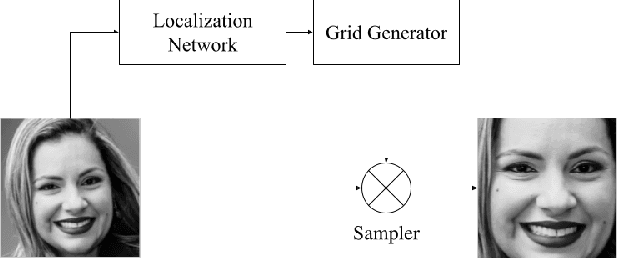
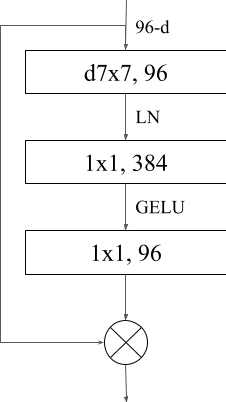
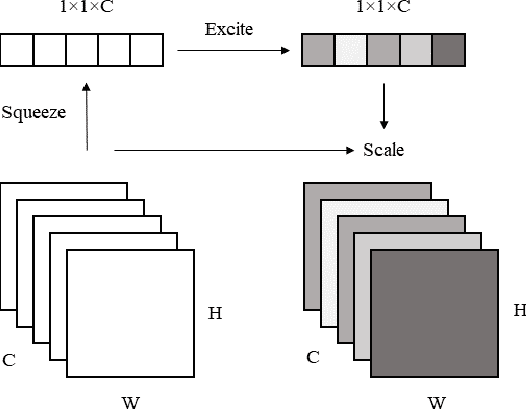
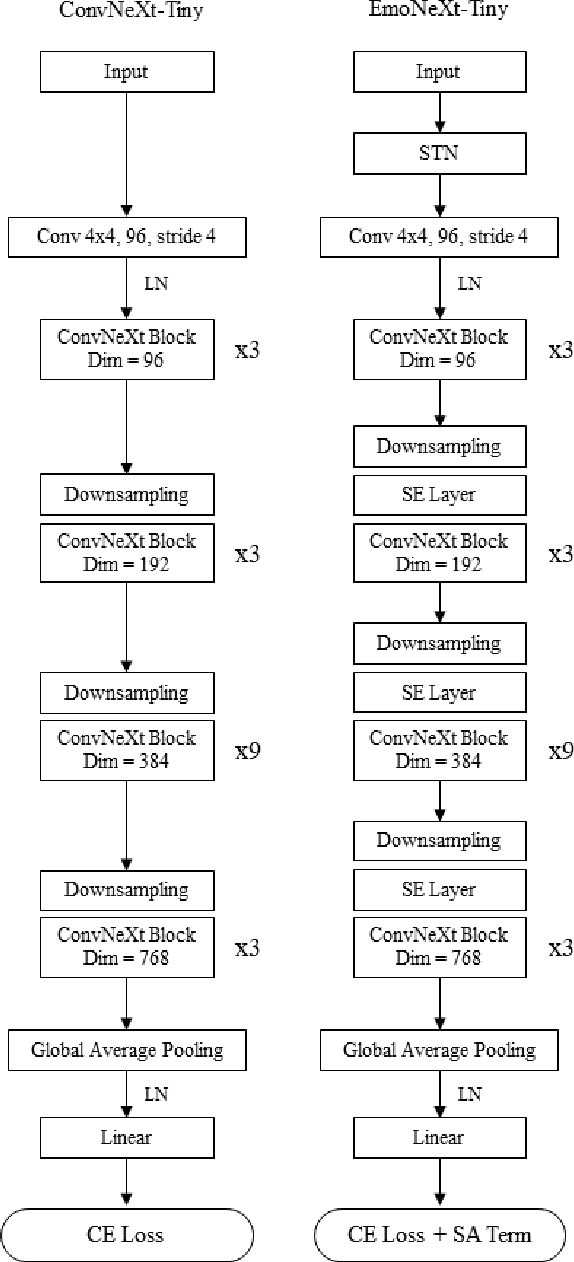
Facial expressions play a crucial role in human communication serving as a powerful and impactful means to express a wide range of emotions. With advancements in artificial intelligence and computer vision, deep neural networks have emerged as effective tools for facial emotion recognition. In this paper, we propose EmoNeXt, a novel deep learning framework for facial expression recognition based on an adapted ConvNeXt architecture network. We integrate a Spatial Transformer Network (STN) to focus on feature-rich regions of the face and Squeeze-and-Excitation blocks to capture channel-wise dependencies. Moreover, we introduce a self-attention regularization term, encouraging the model to generate compact feature vectors. We demonstrate the superiority of our model over existing state-of-the-art deep learning models on the FER2013 dataset regarding emotion classification accuracy.