 Add to Chrome
 Add to Firefox
 Add to Edge
Enhanced Elephant Herding Optimization for Large Scale Information Access on Social Media
Jun 16, 2024
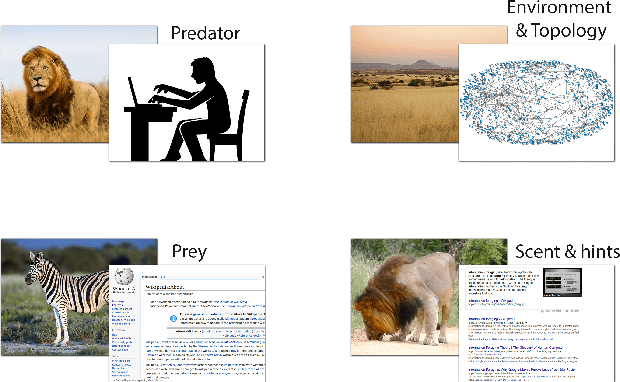
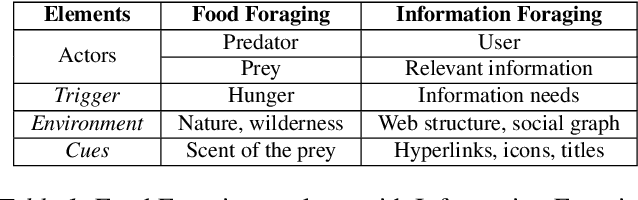
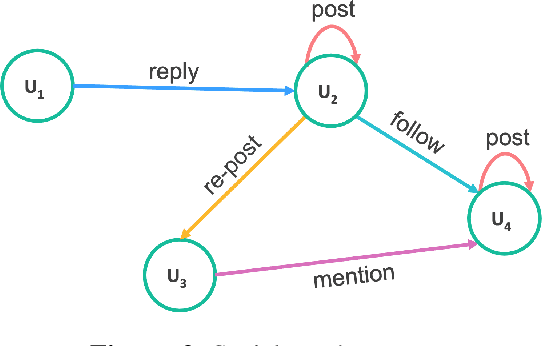
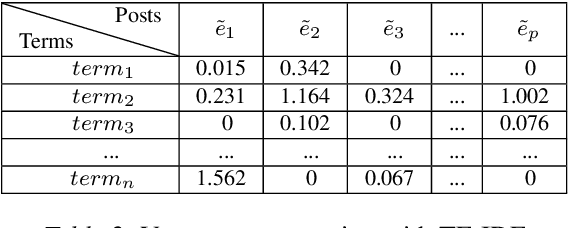
In this article, we present a novel information access approach inspired by the information foraging theory (IFT) and elephant herding optimization (EHO). First, we propose a model for information access on social media based on the IFT. We then elaborate an adaptation of the original EHO algorithm to apply it to the information access problem. The combination of the IFT and EHO constitutes a good opportunity to find relevant information on social media. However, when dealing with voluminous data, the performance undergoes a sharp drop. To overcome this issue, we developed an enhanced version of EHO for large scale information access. We introduce new operators to the algorithm, including territories delimitation and clan migration using clustering. To validate our work, we created a dataset of more than 1.4 million tweets, on which we carried out extensive experiments. The outcomes reveal the ability of our approach to find relevant information in an effective and efficient way. They also highlight the advantages of the improved version of EHO over the original algorithm regarding different aspects. Furthermore, we undertook a comparative study with two other metaheuristic-based information foraging approaches, namely ant colony system and particle swarm optimization. Overall, the results are very promising.

A Three-Phase Artificial Orcas Algorithm for Continuous and Discrete Problems
Feb 17, 2023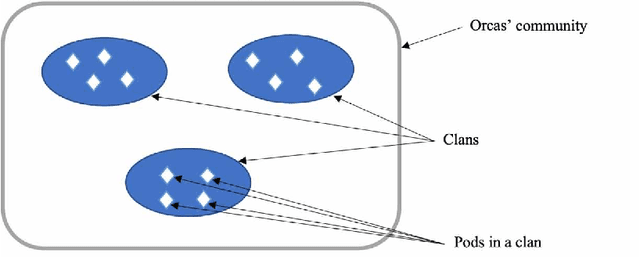
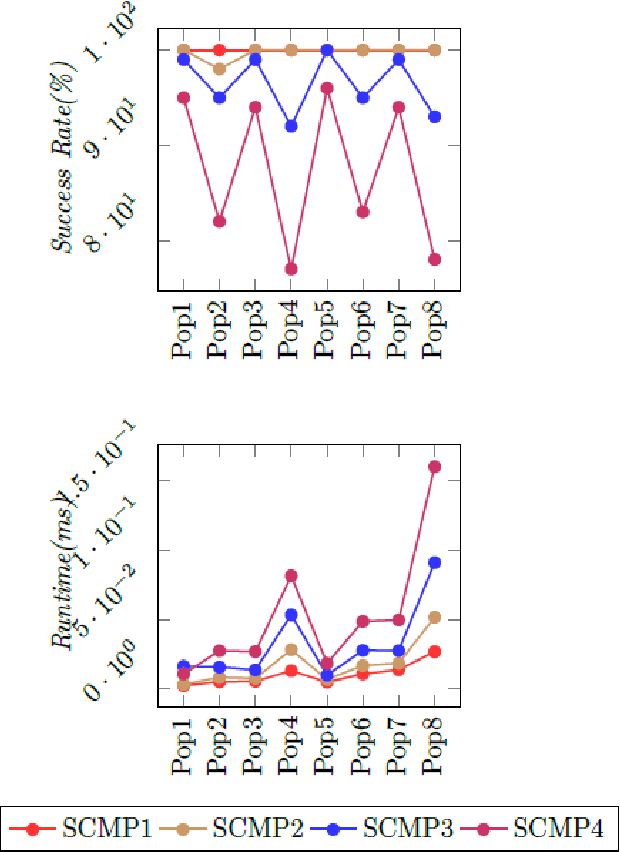
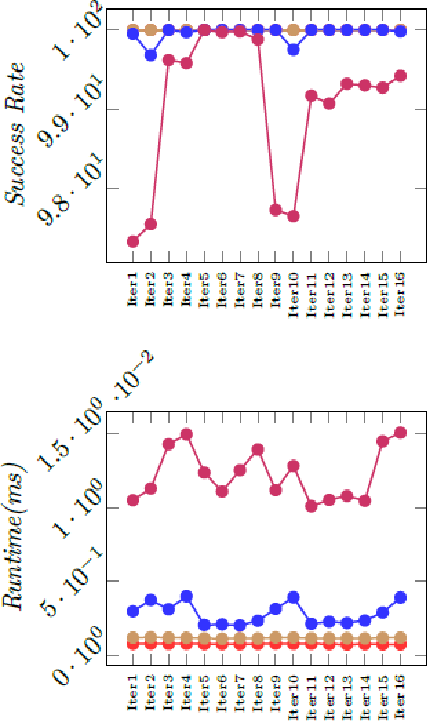
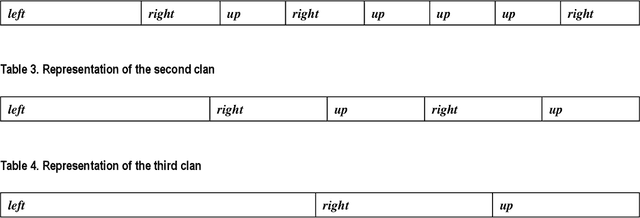
In this paper, a new swarm intelligence algorithm based on orca behaviors is proposed for problem solving. The algorithm called artificial orca algorithm (AOA) consists of simulating the orca lifestyle and in particular the social organization, the echolocation mechanism, and some hunting techniques. The originality of the proposal is that for the first time a meta-heuristic simulates simultaneously several behaviors of just one animal species. AOA was adapted to discrete problems and applied on the maze game with four level of complexity. A bunch of substantial experiments were undertaken to set the algorithm parameters for this issue. The algorithm performance was assessed by considering the success rate, the run time, and the solution path size. Finally, for comparison purposes, the authors conducted a set of experiments on state-of-the-art evolutionary algorithms, namely ACO, BA, BSO, EHO, PSO, and WOA. The overall obtained results clearly show the superiority of AOA over the other tested algorithms.