 Add to Chrome
 Add to Firefox
 Add to Edge
E3: Issue-Level Backtesting for Automated Research Critique
May 26, 2026
We present E3, an automated review assistant that augments reviewers and engineering teams by identifying decision-relevant technical concerns in research papers. For each concern, E3 reports its nature, its location, its bearing on the contribution, and the analysis or evidence that would resolve it, covering unsupported claims, missing ablations, weak baselines, hidden assumptions, threats to validity, and leakage risks. To evaluate E3 without contamination confounds we adopt an issue-level backtesting protocol: the corpus is restricted to papers postdating the training cutoff of every automated source, and for each paper a meta-judge that observes only anonymised reviews labels every issue-source pair as Caught, Partial, or Missed. Applied to 100 ICLR 2026 papers and 4598 judged issue rows, comparing E3 against the ICLR human reviews and two prompt-matched LLM baselines built on gpt-5.4 from OpenAI and claude-opus-4-6 from Anthropic, with meta-judge gpt-5.5, E3 attains the highest recall on every aggregate metric. Partial-inclusive recall reaches 90.2 percent, which is 15.5 points over GPT, 17.1 points over Claude, and 29.2 points over the human reviews, and strict recall preserves the ordering at 65.8 percent. On concerns raised by the human reviewers, E3 recovers 89.6 percent; on concerns the human reviewers missed it surfaces 1635 additional rows admitted into the judged union, 406 above the next-best source. Corpus, baseline prompts, judge prompt template, and evaluation code are released.

FGA: Fourier-Guided Attention Network for Crowd Count Estimation
Jul 08, 2024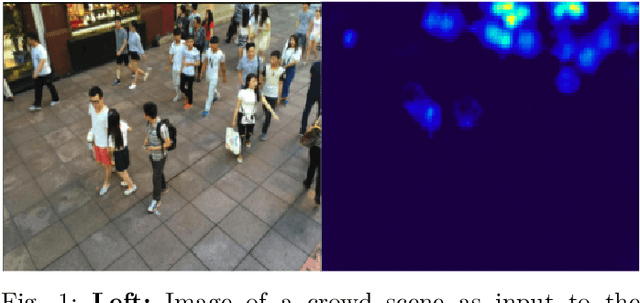
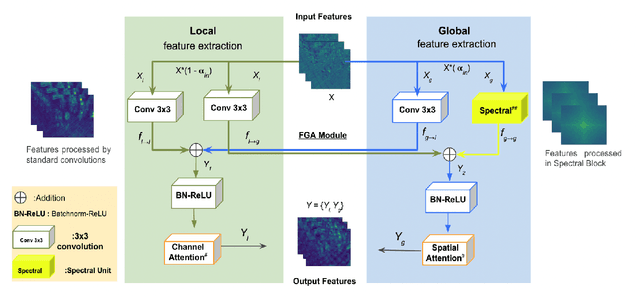
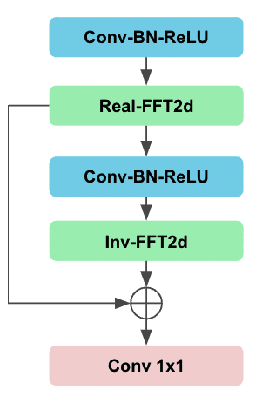
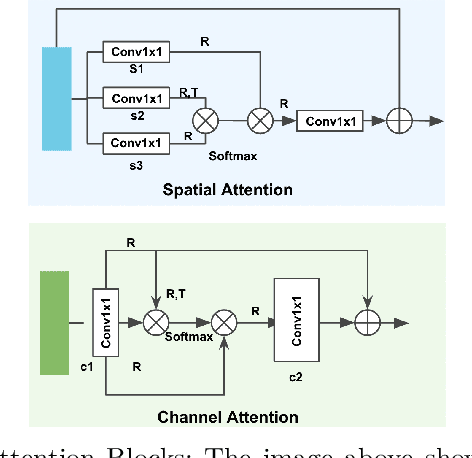
Crowd counting is gaining societal relevance, particularly in domains of Urban Planning, Crowd Management, and Public Safety. This paper introduces Fourier-guided attention (FGA), a novel attention mechanism for crowd count estimation designed to address the inefficient full-scale global pattern capture in existing works on convolution-based attention networks. FGA efficiently captures multi-scale information, including full-scale global patterns, by utilizing Fast-Fourier Transformations (FFT) along with spatial attention for global features and convolutions with channel-wise attention for semi-global and local features. The architecture of FGA involves a dual-path approach: (1) a path for processing full-scale global features through FFT, allowing for efficient extraction of information in the frequency domain, and (2) a path for processing remaining feature maps for semi-global and local features using traditional convolutions and channel-wise attention. This dual-path architecture enables FGA to seamlessly integrate frequency and spatial information, enhancing its ability to capture diverse crowd patterns. We apply FGA in the last layers of two popular crowd-counting works, CSRNet and CANNet, to evaluate the module's performance on benchmark datasets such as ShanghaiTech-A, ShanghaiTech-B, UCF-CC-50, and JHU++ crowd. The experiments demonstrate a notable improvement across all datasets based on Mean-Squared-Error (MSE) and Mean-Absolute-Error (MAE) metrics, showing comparable performance to recent state-of-the-art methods. Additionally, we illustrate the interpretability using qualitative analysis, leveraging Grad-CAM heatmaps, to show the effectiveness of FGA in capturing crowd patterns.
A Lightweight Feature Fusion Architecture For Resource-Constrained Crowd Counting
Jan 11, 2024Crowd counting finds direct applications in real-world situations, making computational efficiency and performance crucial. However, most of the previous methods rely on a heavy backbone and a complex downstream architecture that restricts the deployment. To address this challenge and enhance the versatility of crowd-counting models, we introduce two lightweight models. These models maintain the same downstream architecture while incorporating two distinct backbones: MobileNet and MobileViT. We leverage Adjacent Feature Fusion to extract diverse scale features from a Pre-Trained Model (PTM) and subsequently combine these features seamlessly. This approach empowers our models to achieve improved performance while maintaining a compact and efficient design. With the comparison of our proposed models with previously available state-of-the-art (SOTA) methods on ShanghaiTech-A ShanghaiTech-B and UCF-CC-50 dataset, it achieves comparable results while being the most computationally efficient model. Finally, we present a comparative study, an extensive ablation study, along with pruning to show the effectiveness of our models.