 Add to Chrome
 Add to Firefox
 Add to Edge
On the validity of memristor modeling in the neural network literature
Apr 18, 2019
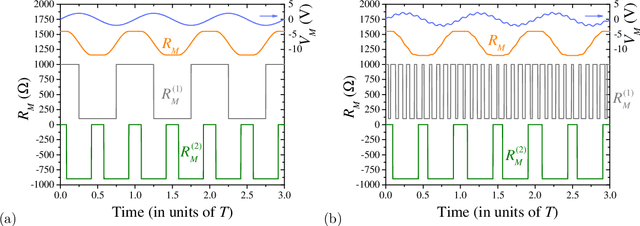
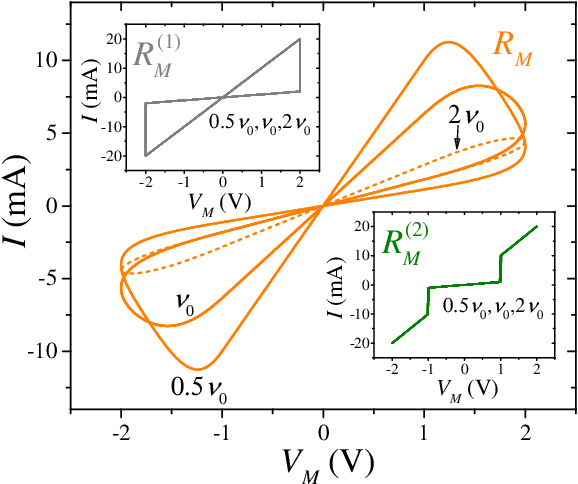
An analysis of the literature shows that there are two types of non-memristive models that have been widely used in the modeling of so-called "memristive" neural networks. Here, we demonstrate that such models have nothing in common with the concept of memristive elements: they describe either non-linear resistors or certain bi-state systems, which all are devices without memory. Therefore, the results presented in a significant number of publications are at least questionable, if not completely irrelevant to the actual field of memristive neural networks.

A Memcomputing Pascaline
Mar 16, 2015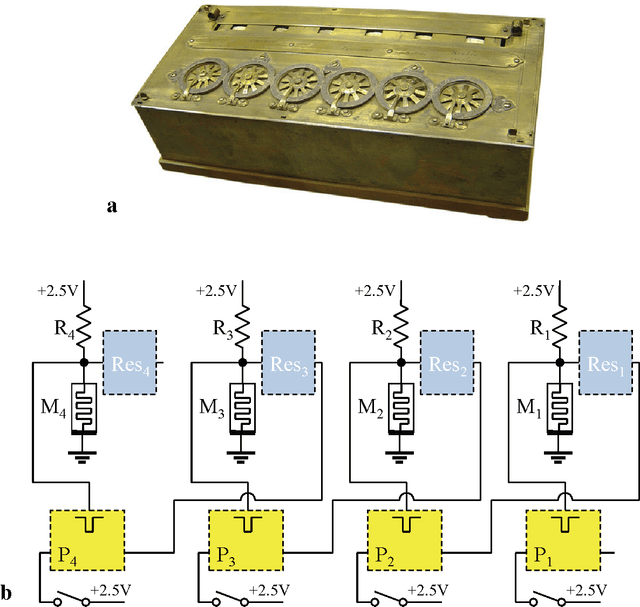
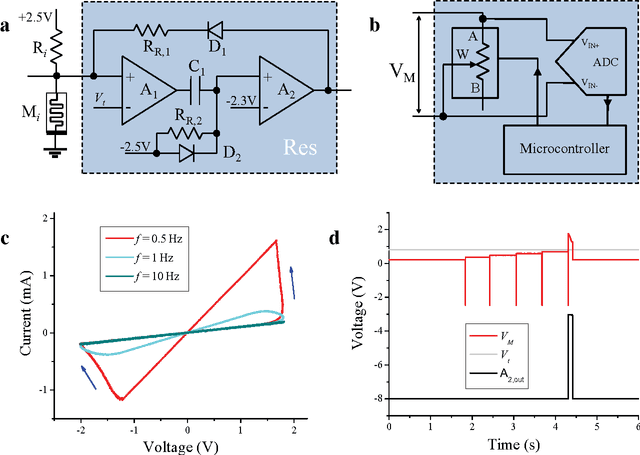
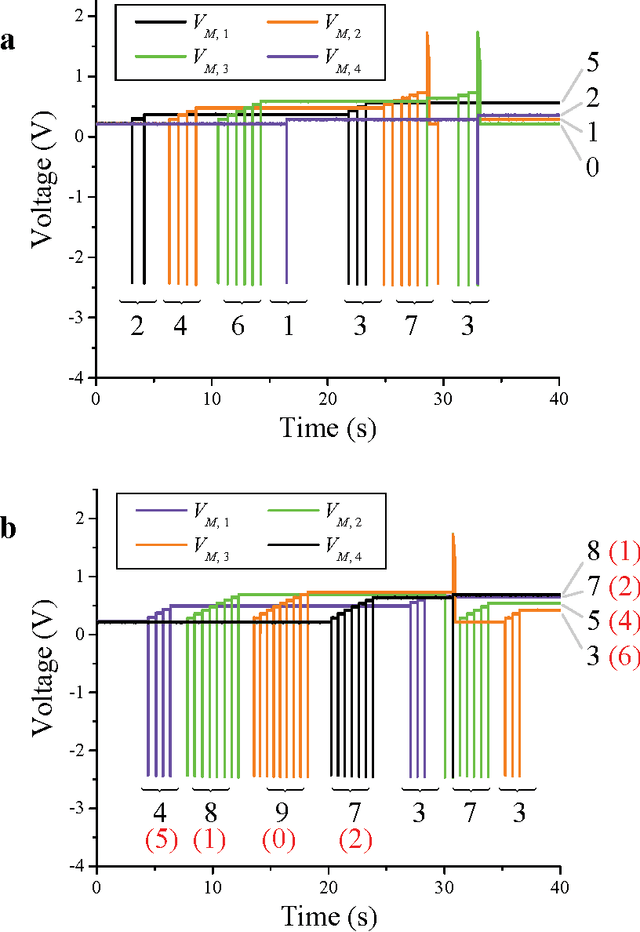
The original Pascaline was a mechanical calculator able to sum and subtract integers. It encodes information in the angles of mechanical wheels and through a set of gears, and aided by gravity, could perform the calculations. Here, we show that such a concept can be realized in electronics using memory elements such as memristive systems. By using memristive emulators we have demonstrated experimentally the memcomputing version of the mechanical Pascaline, capable of processing and storing the numerical results in the multiple levels of each memristive element. Our result is the first experimental demonstration of multidigit arithmetics with multi-level memory devices that further emphasizes the versatility and potential of memristive systems for future massively-parallel high-density computing architectures.
Memcomputing and Swarm Intelligence
Aug 28, 2014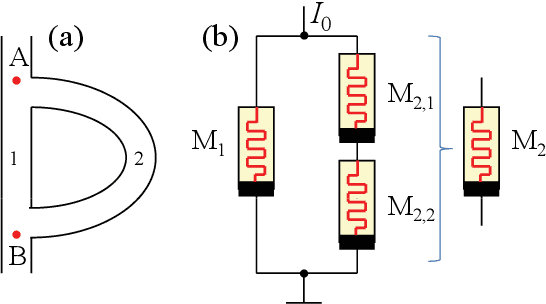
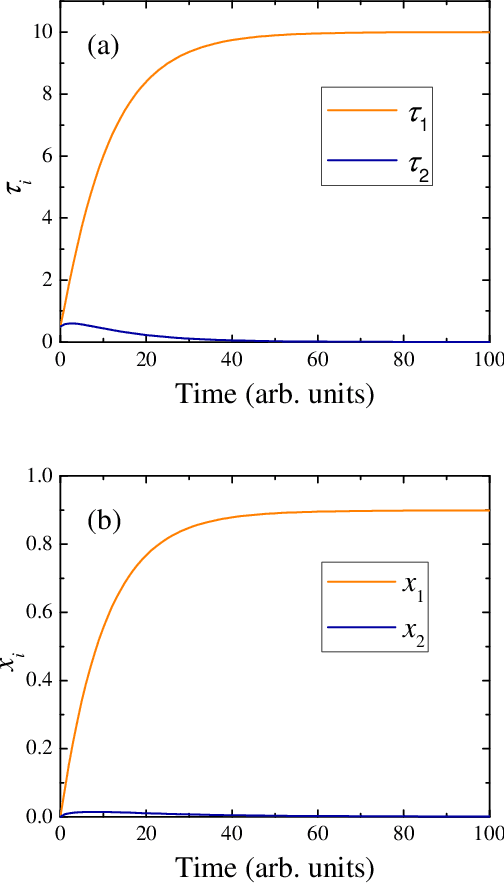
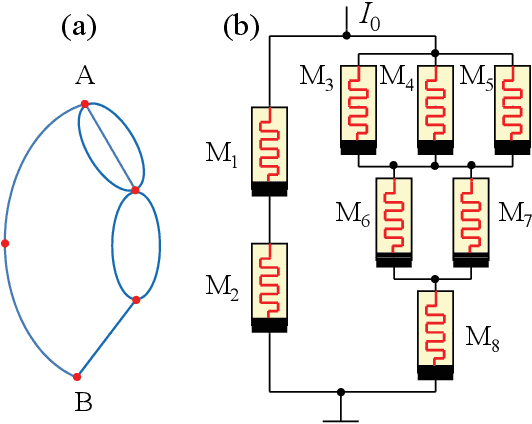
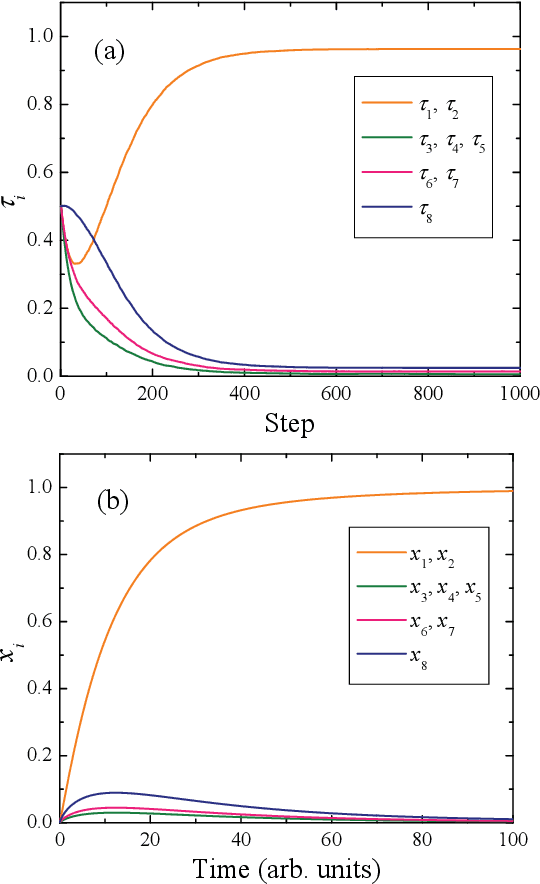
We explore the relation between memcomputing, namely computing with and in memory, and swarm intelligence algorithms. In particular, we show that one can design memristive networks to solve short-path optimization problems that can also be solved by ant-colony algorithms. By employing appropriate memristive elements one can demonstrate an almost one-to-one correspondence between memcomputing and ant colony optimization approaches. However, the memristive network has the capability of finding the solution in one deterministic step, compared to the stochastic multi-step ant colony optimization. This result paves the way for nanoscale hardware implementations of several swarm intelligence algorithms that are presently explored, from scheduling problems to robotics.
Memcapacitive neural networks
Jul 26, 2013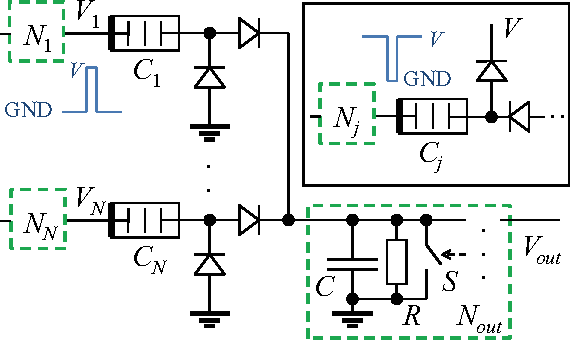
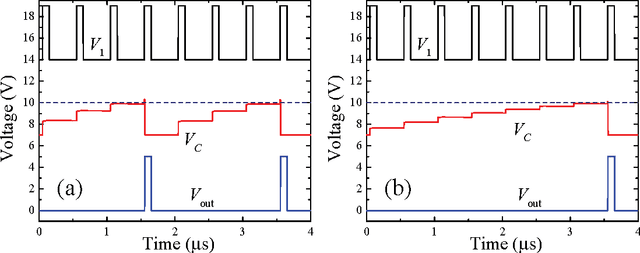
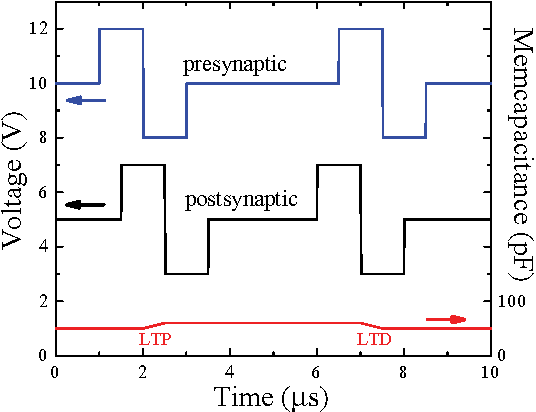
We show that memcapacitive (memory capacitive) systems can be used as synapses in artificial neural networks. As an example of our approach, we discuss the architecture of an integrate-and-fire neural network based on memcapacitive synapses. Moreover, we demonstrate that the spike-timing-dependent plasticity can be simply realized with some of these devices. Memcapacitive synapses are a low-energy alternative to memristive synapses for neuromorphic computation.