 Add to Chrome
 Add to Firefox
 Add to Edge
Multi-instance robust fitting for non-classical geometric models
Feb 05, 2026
Most existing robust fitting methods are designed for classical models, such as lines, circles, and planes. In contrast, fewer methods have been developed to robustly handle non-classical models, such as spiral curves, procedural character models, and free-form surfaces. Furthermore, existing methods primarily focus on reconstructing a single instance of a non-classical model. This paper aims to reconstruct multiple instances of non-classical models from noisy data. We formulate this multi-instance fitting task as an optimization problem, which comprises an estimator and an optimizer. Specifically, we propose a novel estimator based on the model-to-data error, capable of handling outliers without a predefined error threshold. Since the proposed estimator is non-differentiable with respect to the model parameters, we employ a meta-heuristic algorithm as the optimizer to seek the global optimum. The effectiveness of our method are demonstrated through experimental results on various non-classical models. The code is available at https://github.com/zhangzongliang/fitting.

Attack and defense techniques in large language models: A survey and new perspectives
May 02, 2025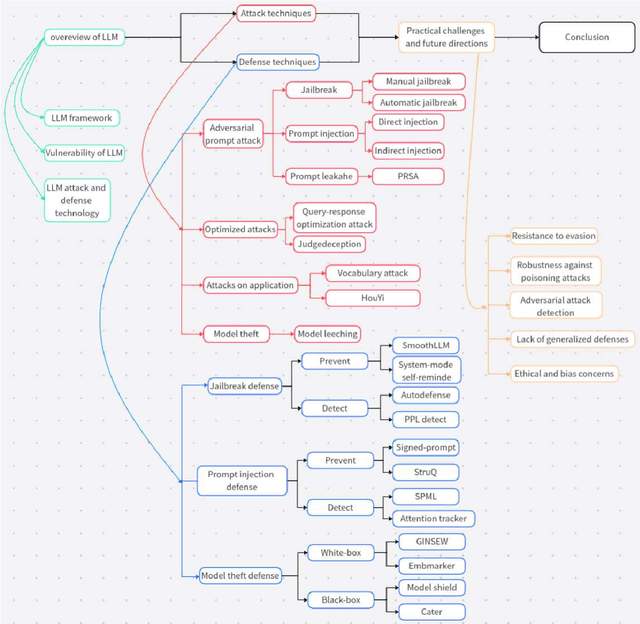
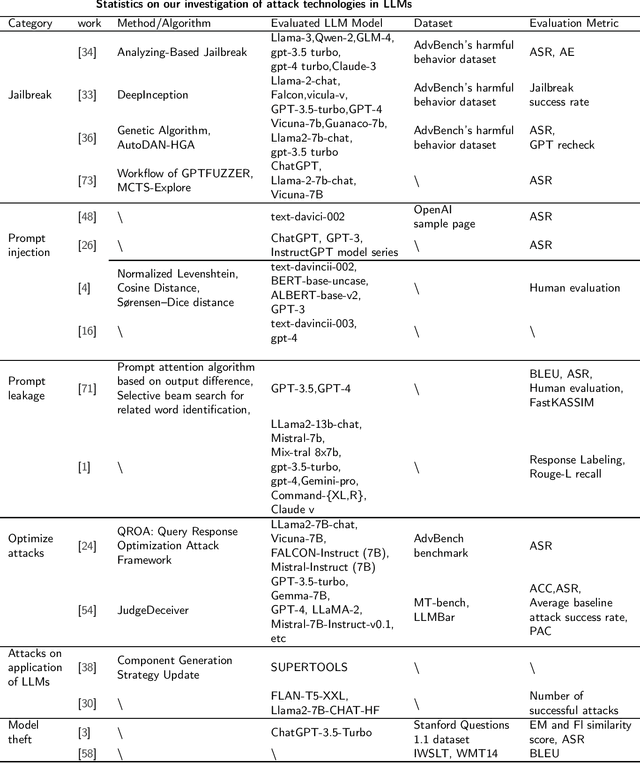
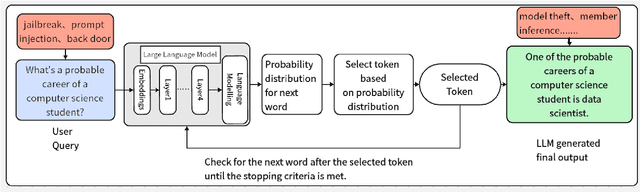
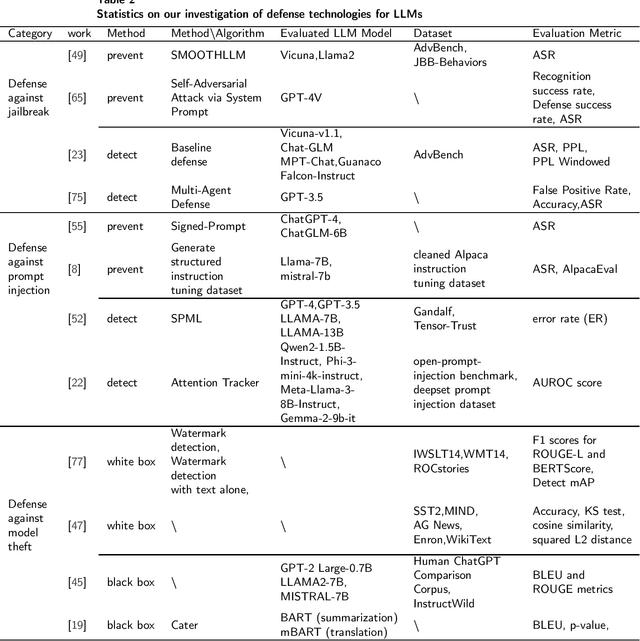
Large Language Models (LLMs) have become central to numerous natural language processing tasks, but their vulnerabilities present significant security and ethical challenges. This systematic survey explores the evolving landscape of attack and defense techniques in LLMs. We classify attacks into adversarial prompt attack, optimized attacks, model theft, as well as attacks on application of LLMs, detailing their mechanisms and implications. Consequently, we analyze defense strategies, including prevention-based and detection-based defense methods. Although advances have been made, challenges remain to adapt to the dynamic threat landscape, balance usability with robustness, and address resource constraints in defense implementation. We highlight open problems, including the need for adaptive scalable defenses, explainable security techniques, and standardized evaluation frameworks. This survey provides actionable insights and directions for developing secure and resilient LLMs, emphasizing the importance of interdisciplinary collaboration and ethical considerations to mitigate risks in real-world applications.