 Add to Chrome
 Add to Firefox
 Add to Edge
Nature-Inspired Optimization Algorithms: Challenges and Open Problems
Mar 08, 2020
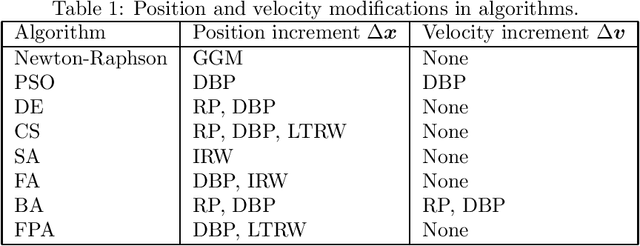
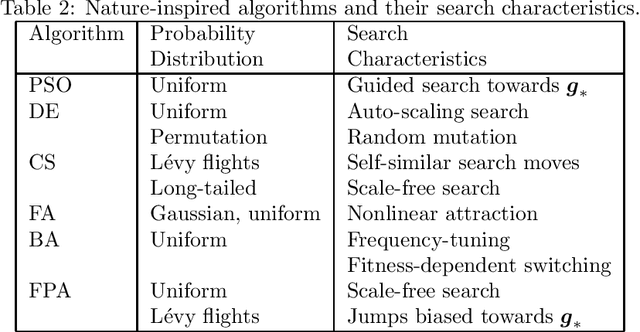
Many problems in science and engineering can be formulated as optimization problems, subject to complex nonlinear constraints. The solutions of highly nonlinear problems usually require sophisticated optimization algorithms, and traditional algorithms may struggle to deal with such problems. A current trend is to use nature-inspired algorithms due to their flexibility and effectiveness. However, there are some key issues concerning nature-inspired computation and swarm intelligence. This paper provides an in-depth review of some recent nature-inspired algorithms with the emphasis on their search mechanisms and mathematical foundations. Some challenging issues are identified and five open problems are highlighted, concerning the analysis of algorithmic convergence and stability, parameter tuning, mathematical framework, role of benchmarking and scalability. These problems are discussed with the directions for future research.
* 15 pages

Self-adaptive decision-making mechanisms to balance the execution of multiple tasks for a multi-robots team
Mar 27, 2019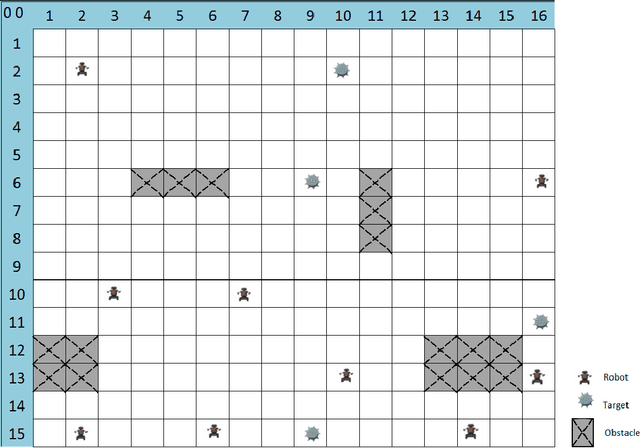
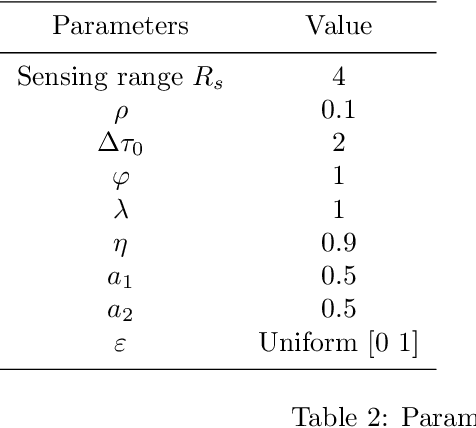
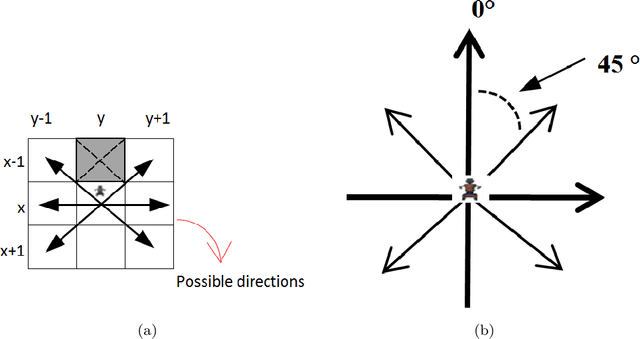
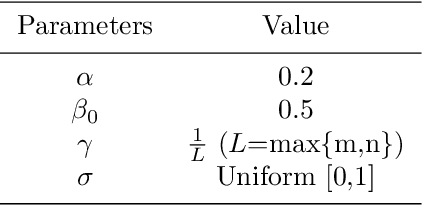
This work addresses the coordination problem of multiple robots with the goal of finding specific hazardous targets in an unknown area and dealing with them cooperatively. The desired behaviour for the robotic system entails multiple requirements, which may also be conflicting. The paper presents the problem as a constrained bi-objective optimization problem in which mobile robots must perform two specific tasks of exploration and at same time cooperation and coordination for disarming the hazardous targets. These objectives are opposed goals, in which one may be favored, but only at the expense of the other. Therefore, a good trade-off must be found. For this purpose, a nature-inspired approach and an analytical mathematical model to solve this problem considering a single equivalent weighted objective function are presented. The results of proposed coordination model, simulated in a two dimensional terrain, are showed in order to assess the behaviour of the proposed solution to tackle this problem. We have analyzed the performance of the approach and the influence of the weights of the objective function under different conditions: static and dynamic. In this latter situation, the robots may fail under the stringent limited budget of energy or for hazardous events. The paper concludes with a critical discussion of the experimental results.
* 40 pages
The Global Convergence Analysis of the Bat Algorithm Using a Markovian Framework and Dynamical System Theory
Mar 27, 2019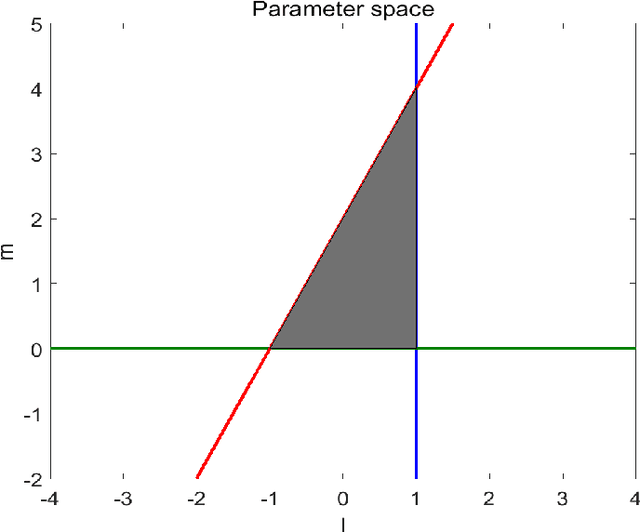
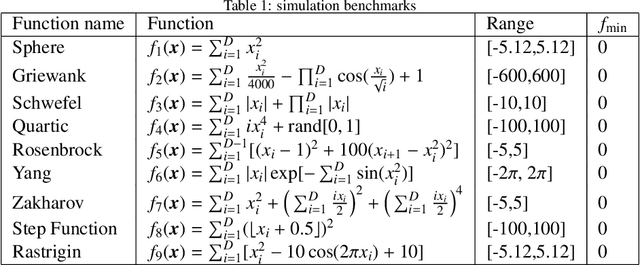
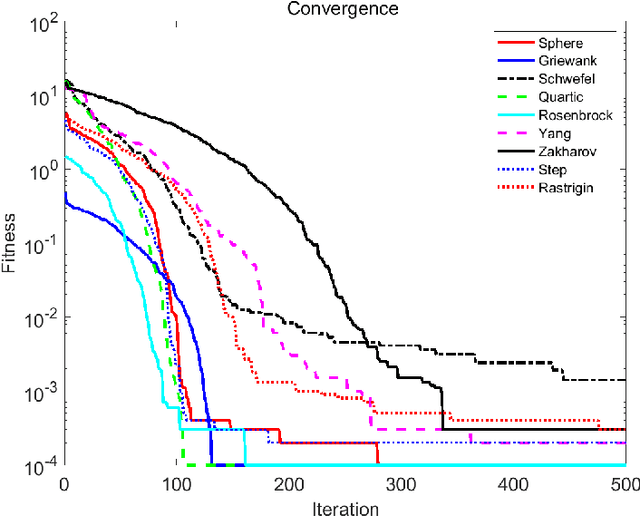
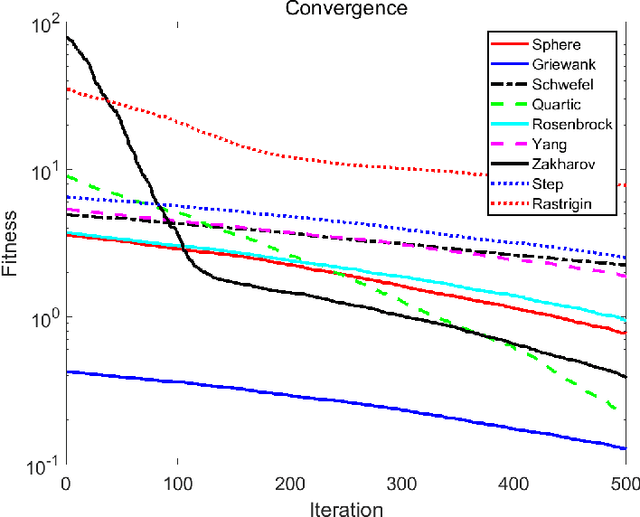
The bat algorithm (BA) has been shown to be effective to solve a wider range of optimization problems. However, there is not much theoretical analysis concerning its convergence and stability. In order to prove the convergence of the bat algorithm, we have built a Markov model for the algorithm and proved that the state sequence of the bat population forms a finite homogeneous Markov chain, satisfying the global convergence criteria. Then, we prove that the bat algorithm can have global convergence. In addition, in order to enhance the convergence performance of the algorithm, we have designed an updated model using the dynamical system theory in terms of a dynamic matrix, and the parameter ranges for the algorithm stability are then obtained. We then use some benchmark functions to demonstrate that BA can indeed achieve global optimality efficiently for these functions.
* 17 pages, 3 figures
Multi-Species Cuckoo Search Algorithm for Global Optimization
Mar 27, 2019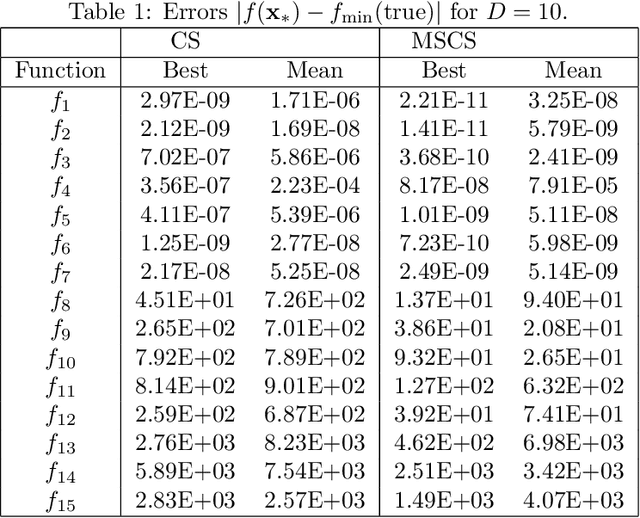
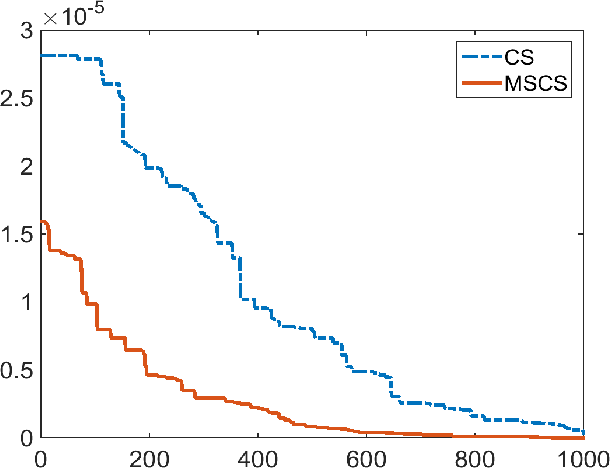
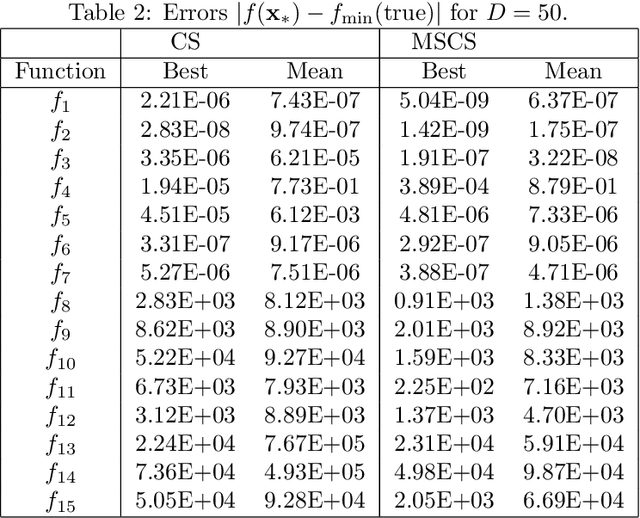
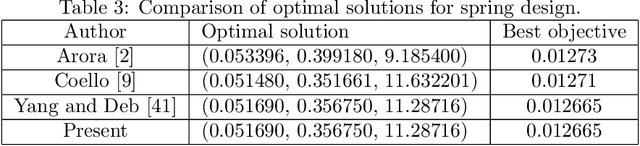
Many optimization problems in science and engineering are highly nonlinear, and thus require sophisticated optimization techniques to solve. Traditional techniques such as gradient-based algorithms are mostly local search methods, and often struggle to cope with such challenging optimization problems. Recent trends tend to use nature-inspired optimization algorithms. This work extends the standard cuckoo search (CS) by using the successful features of the cuckoo-host co-evolution with multiple interacting species, and the proposed multi-species cuckoo search (MSCS) intends to mimic the multiple species of cuckoos that compete for the survival of the fittest, and they co-evolve with host species with solution vectors being encoded as position vectors. The proposed algorithm is then validated by 15 benchmark functions as well as five nonlinear, multimodal design case studies in practical applications. Simulation results suggest that the proposed algorithm can be effective for finding optimal solutions and in this case all optimal solutions are achievable. The results for the test benchmarks are also compared with those obtained by other methods such as the standard cuckoo search and genetic algorithm, which demonstrated the efficiency of the present algorithm. Based on numerical experiments and case studies, we can conclude that the proposed algorithm can be more efficient in most cases, leading a potentially very effective tool for solving nonlinear optimization problems.
* 15 pages, 1 figures
Social Algorithms
Apr 22, 2018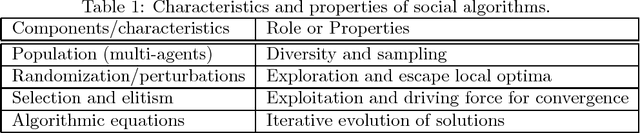
This article concerns the review of a special class of swarm intelligence based algorithms for solving optimization problems and these algorithms can be referred to as social algorithms. Social algorithms use multiple agents and the social interactions to design rules for algorithms so as to mimic certain successful characteristics of the social/biological systems such as ants, bees, bats, birds and animals.
Why the Firefly Algorithm Works?
Apr 22, 2018Firefly algorithm is a nature-inspired optimization algorithm and there have been significant developments since its appearance about ten years ago. This chapter summarizes the latest developments about the firefly algorithm and its variants as well as their diverse applications. Future research directions are also highlighted.
New directional bat algorithm for continuous optimization problems
Apr 22, 2018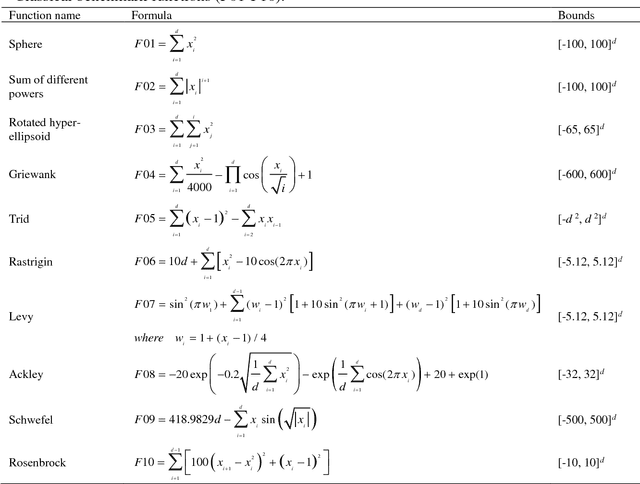
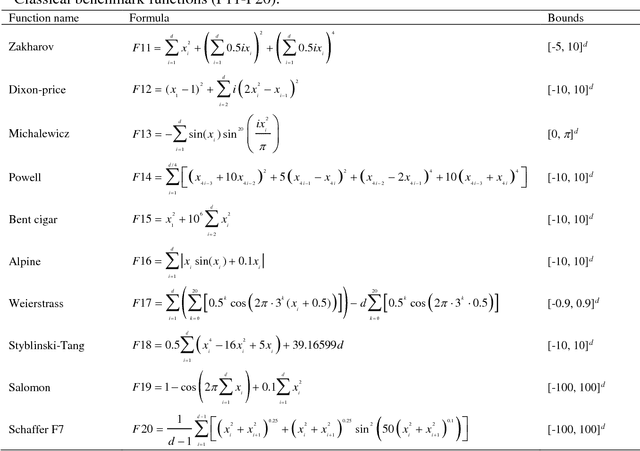
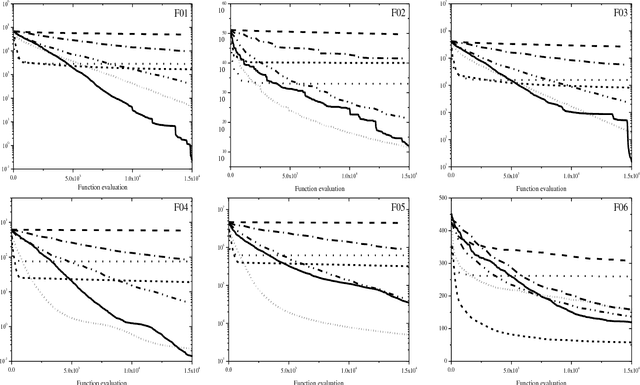
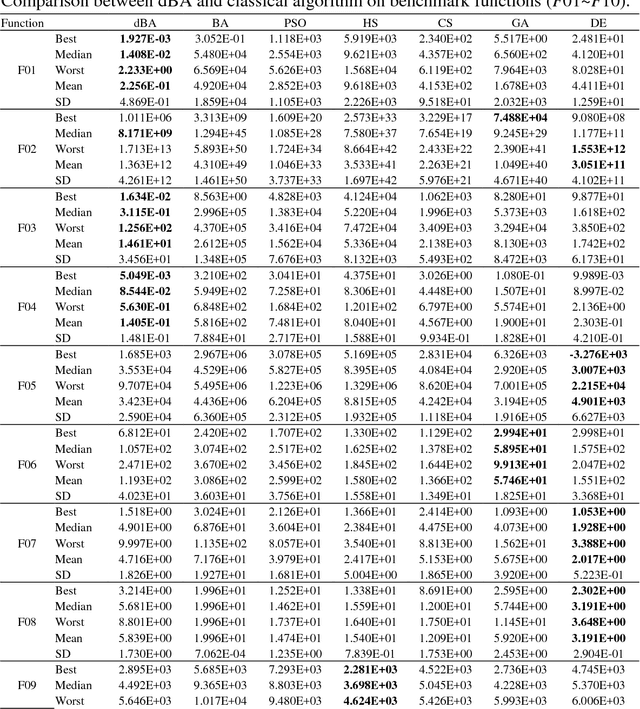
Bat algorithm (BA) is a recent optimization algorithm based on swarm intelligence and inspiration from the echolocation behavior of bats. One of the issues in the standard bat algorithm is the premature convergence that can occur due to the low exploration ability of the algorithm under some conditions. To overcome this deficiency, directional echolocation is introduced to the standard bat algorithm to enhance its exploration and exploitation capabilities. In addition to such directional echolocation, three other improvements have been embedded into the standard bat algorithm to enhance its performance. The new proposed approach, namely the directional Bat Algorithm (dBA), has been then tested using several standard and non-standard benchmarks from the CEC2005 benchmark suite. The performance of dBA has been compared with ten other algorithms and BA variants using non-parametric statistical tests. The statistical test results show the superiority of the directional bat algorithm.
Cuckoo Search: State-of-the-Art and Opportunities
Apr 22, 2018Since the development of cuckoo search (CS) by Yang and Deb in 2009, CS has been applied in a diverse range of applications. This paper first outlines the key features of the algorithm and its variants, and then briefly summarizes the state-of-the-art developments in many applications. The opportunities for further research are also identified.
Swarm Intelligence: Past, Present and Future
Apr 21, 2018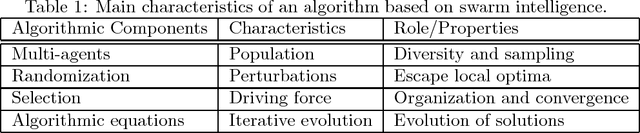

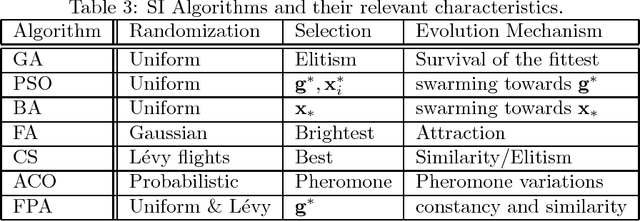
Many optimization problems in science and engineering are challenging to solve, and the current trend is to use swarm intelligence (SI) and SI-based algorithms to tackle such challenging problems. Some significant developments have been made in recent years, though there are still many open problems in this area. This paper provides a short but timely analysis about SI-based algorithms and their links with self-organization. Different characteristics and properties are analyzed here from both mathematical and qualitative perspectives. Future research directions are outlined and open questions are also highlighted.
Global Convergence Analysis of the Flower Pollination Algorithm: A Discrete-Time Markov Chain Approach
Apr 21, 2018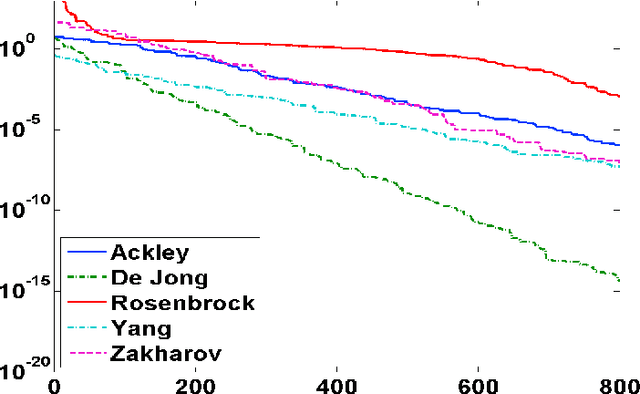
Flower pollination algorithm is a recent metaheuristic algorithm for solving nonlinear global optimization problems. The algorithm has also been extended to solve multiobjective optimization with promising results. In this work, we analyze this algorithm mathematically and prove its convergence properties by using Markov chain theory. By constructing the appropriate transition probability for a population of flower pollen and using the homogeneity property, it can be shown that the constructed stochastic sequences can converge to the optimal set. Under the two proper conditions for convergence, it is proved that the simplified flower pollination algorithm can indeed satisfy these convergence conditions and thus the global convergence of this algorithm can be guaranteed. Numerical experiments are used to demonstrate that the flower pollination algorithm can converge quickly in practice and can thus achieve global optimality efficiently.
* 8th Workshop on Computational Optimization, Modelling and Simulation at ICCS2017