 Add to Chrome
 Add to Firefox
 Add to Edge
A Foldable and Agile Soft Electromagnetic Robot for Multimodal Navigation in Confined and Unstructured Environments
Mar 30, 2026
Multimodal locomotion is crucial for an animal's adaptability in unstructured wild environments. Similarly, in the human gastrointestinal tract, characterized by viscoelastic mucus, complex rugae, and narrow sphincters like the cardia, multimodal locomotion is also essential for a small-scale soft robot to conduct tasks. Here, we introduce a small-scale compact, foldable, and robust soft electromagnetic robot (M-SEMR) with more than nine locomotion modes designed for such a scenario. Featuring a six-spoke elastomer body embedded with liquid metal channels and driven by Laplace forces under a static magnetic field, the M-SEMR is capable of rapid transitions (< 0.35 s) among different locomotion modes. It achieves exceptional agility, including high-speed rolling (818 mm/s, 26 BL/s), omnidirectional crawling, jumping, and swimming. Notably, the robot can fold to reduce its volume by 79%, enabling it to traverse confined spaces. We further validate its navigation capabilities on complex terrains, including discrete obstacles, viscoelastic gelatin surfaces, viscous fluids, and simulated biological tissues. This system offers a versatile strategy for developing high-mobility soft robots for future biomedical applications.

HiFiSeg: High-Frequency Information Enhanced Polyp Segmentation with Global-Local Vision Transformer
Oct 03, 2024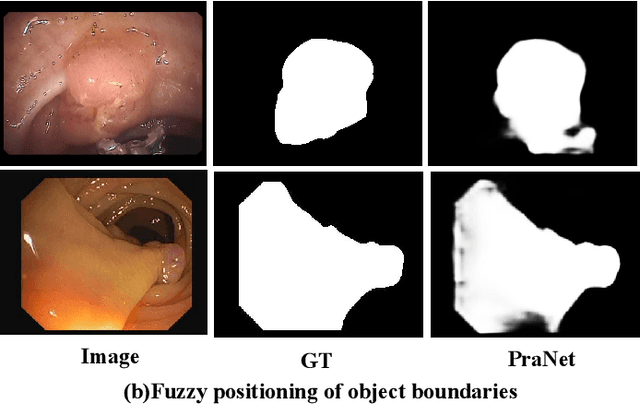
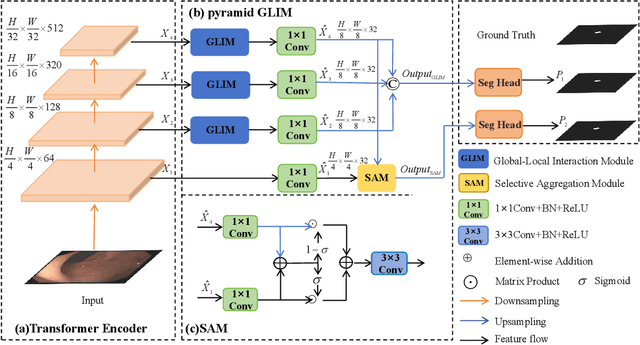
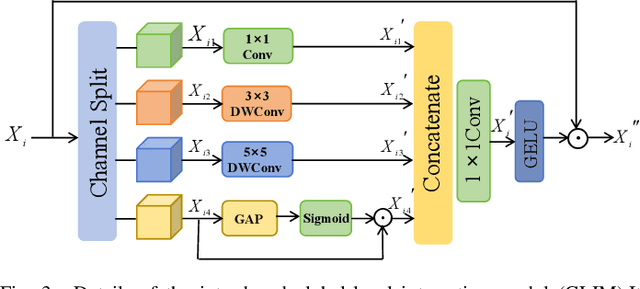
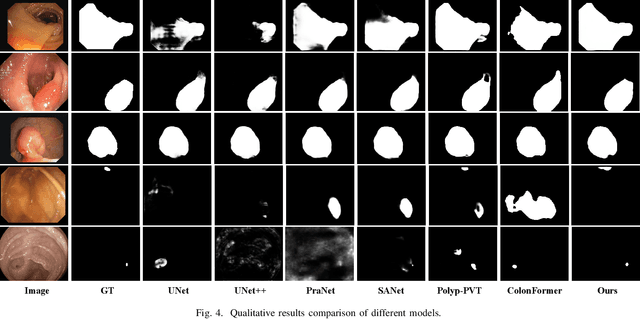
Numerous studies have demonstrated the strong performance of Vision Transformer (ViT)-based methods across various computer vision tasks. However, ViT models often struggle to effectively capture high-frequency components in images, which are crucial for detecting small targets and preserving edge details, especially in complex scenarios. This limitation is particularly challenging in colon polyp segmentation, where polyps exhibit significant variability in structure, texture, and shape. High-frequency information, such as boundary details, is essential for achieving precise semantic segmentation in this context. To address these challenges, we propose HiFiSeg, a novel network for colon polyp segmentation that enhances high-frequency information processing through a global-local vision transformer framework. HiFiSeg leverages the pyramid vision transformer (PVT) as its encoder and introduces two key modules: the global-local interaction module (GLIM) and the selective aggregation module (SAM). GLIM employs a parallel structure to fuse global and local information at multiple scales, effectively capturing fine-grained features. SAM selectively integrates boundary details from low-level features with semantic information from high-level features, significantly improving the model's ability to accurately detect and segment polyps. Extensive experiments on five widely recognized benchmark datasets demonstrate the effectiveness of HiFiSeg for polyp segmentation. Notably, the mDice scores on the challenging CVC-ColonDB and ETIS datasets reached 0.826 and 0.822, respectively, underscoring the superior performance of HiFiSeg in handling the specific complexities of this task.