 Add to Chrome
 Add to Firefox
 Add to Edge
Towards Affordable Energy: A Gymnasium Environment for Electric Utility Demand-Response Programs
May 12, 2026
Extreme weather and volatile wholesale electricity markets expose residential consumers to catastrophic financial risks, yet demand response at the distribution level remains an underutilized tool for grid flexibility and energy affordability. While a demand-response program can shield consumers by issuing financial credits during high-price periods, optimizing this sequential decision-making process presents a unique challenge for reinforcement learning despite the plentiful offline historical smart meter and wholesale pricing data available publicly. Offline historical data fails to capture the dynamic, interactive feedback loop between an electric utility's pricing signals and customer acceptance and adaptation to a demand-response program. To address this, we introduce DR-Gym, an open-source, online Gymnasium-compatible environment designed to train and evaluate demand-response from the electric utility's perspective. Unlike existing device-level energy simulators, our environment focuses on the market-level electric utility setting and provides a rich observational space relevant to the electric utility. The simulator additionally features a regime-switching wholesale price model calibrated to real-world extreme events, alongside physics-based building demand profiles. For our learning signal, we use a configurable, multi-objective reward function for specifying diverse learning objectives. We demonstrate through baseline strategies and data snapshots the capability of our simulator to create realistic and learnable environments.

Exploiting Defenses against GAN-Based Feature Inference Attacks in Federated Learning
Apr 27, 2020
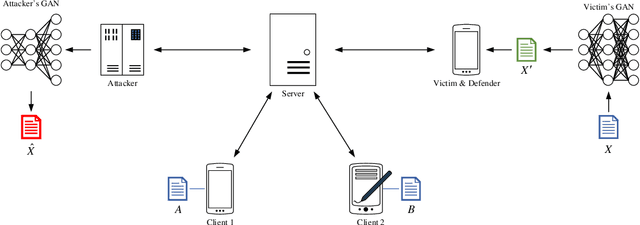
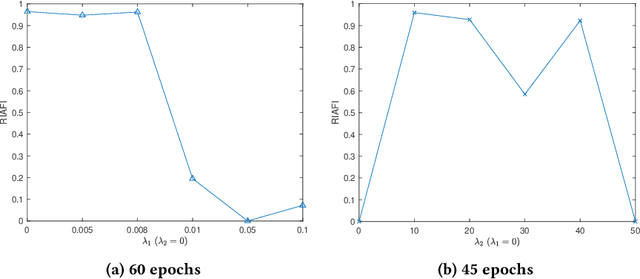
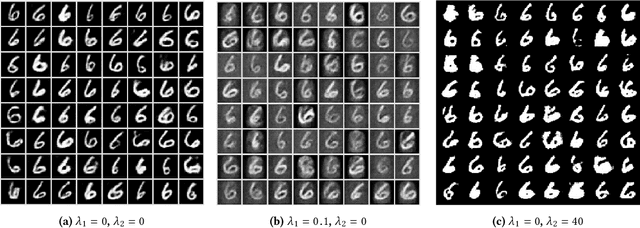
With the rapid increasing of computing power and dataset volume, machine learning algorithms have been widely adopted in classification and regression tasks. Though demonstrating superior performance than traditional algorithms, machine learning algorithms are vulnerable to adversarial attacks, such as model inversion and membership inference. To protect user privacy, federated learning is proposed for decentralized model training. Recent studies, however, show that Generative Adversarial Network (GAN) based attacks could be applied in federated learning to effectively reconstruct user-level privacy data. In this paper, we exploit defenses against GAN-based attacks in federated learning. Given that GAN could effectively learn the distribution of training data, GAN-based attacks aim to reconstruct human-distinguishable images from victim's personal dataset. To defense such attacks, we propose a framework, Anti-GAN, to prevent attackers from learning the real distribution of victim's data. More specifically, victims first project personal training data onto a GAN's generator, then feed the generated fake images into the global shared model for federated learning. In addition, we design a new loss function to encourage victim's GAN to generate images which not only have similar classification features with original training data, but also have indistinguishable visual features to prevent inference attack.