 Add to Chrome
 Add to Firefox
 Add to Edge
Tuning Derivatives for Causal Fairness in Machine Learning
May 07, 2026
Artificial-intelligence systems are becoming ubiquitous in society, yet their predictions typically inherit biases with respect to protected attributes such as race, gender, or age. Classical fairness notions, most notably Statistical Parity (SP), demand that predictions be independent of the protected attributes, but are overly restrictive when these attributes influence mediating variables that are considered business necessities. Recent causal formulations relax SP by distinguishing allowed from not-allowed causal paths and by complementing SP with Predictive Parity (PP), requiring the predictor to replicate the legitimate influence of business-necessities. Existing path-based definitions are mainly practical when applied to categorical attributes. This paper introduces a new framework for fairness in structural causal models that is tailored to continuous protected attributes. We formalize SP and PP through path-specific partial derivatives, establish conditions under which these criteria coincide with prior causal definitions, and characterize when a fair predictor, one that satisfies SP along not-allowed paths while achieving PP along allowed paths, exists. Building on this theory, we propose a fair tuning algorithm that either constructs such a predictor or, when not possible, allows for a trade-off between SP and PP. We present experiments on simulated and real data to evaluate our proposal, compare it with previously proposed methods, and show that it performs better when PP is considered.

Valid causal inference with unobserved confounding in high-dimensional settings
Jan 12, 2024
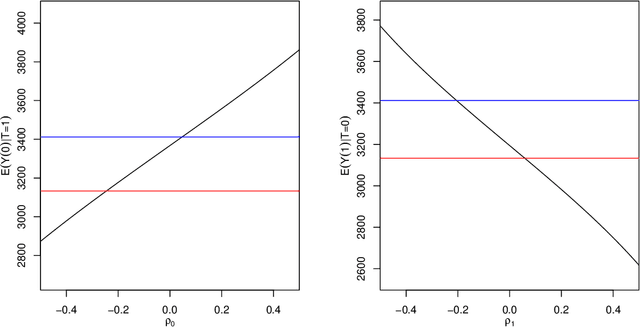
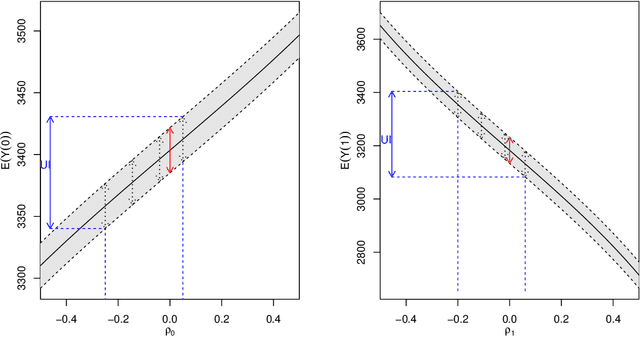
Various methods have recently been proposed to estimate causal effects with confidence intervals that are uniformly valid over a set of data generating processes when high-dimensional nuisance models are estimated by post-model-selection or machine learning estimators. These methods typically require that all the confounders are observed to ensure identification of the effects. We contribute by showing how valid semiparametric inference can be obtained in the presence of unobserved confounders and high-dimensional nuisance models. We propose uncertainty intervals which allow for unobserved confounding, and show that the resulting inference is valid when the amount of unobserved confounding is small relative to the sample size; the latter is formalized in terms of convergence rates. Simulation experiments illustrate the finite sample properties of the proposed intervals and investigate an alternative procedure that improves the empirical coverage of the intervals when the amount of unobserved confounding is large. Finally, a case study on the effect of smoking during pregnancy on birth weight is used to illustrate the use of the methods introduced to perform a sensitivity analysis to unobserved confounding.
Convolutional neural networks for valid and efficient causal inference
Jan 27, 2023Convolutional neural networks (CNN) have been successful in machine learning applications. Their success relies on their ability to consider space invariant local features. We consider the use of CNN to fit nuisance models in semiparametric estimation of the average causal effect of a treatment. In this setting, nuisance models are functions of pre-treatment covariates that need to be controlled for. In an application where we want to estimate the effect of early retirement on a health outcome, we propose to use CNN to control for time-structured covariates. Thus, CNN is used when fitting nuisance models explaining the treatment and the outcome. These fits are then combined into an augmented inverse probability weighting estimator yielding efficient and uniformly valid inference. Theoretically, we contribute by providing rates of convergence for CNN equipped with the rectified linear unit activation function and compare it to an existing result for feedforward neural networks. We also show when those rates guarantee uniformly valid inference. A Monte Carlo study is provided where the performance of the proposed estimator is evaluated and compared with other strategies. Finally, we give results on a study of the effect of early retirement on hospitalization using data covering the whole Swedish population.