 Add to Chrome
 Add to Firefox
 Add to Edge
Case study: proving sqrt(2) irrational with LPTP and an LLM
Jul 23, 2026
We present the interactions with an LLM (Large Language Model) aiming at proving that the square root of 2 is not a rational number in an LP (Logic Programming) context. We start from a few basic pure logic programming predicate definitions. We rely on the LPTP (Logic Program Theorem Prover) system for stating and proving properties about logic programs. As the proof language of LPTP is based on natural deduction, the proofs are human readable. In our case study, we sketch in LPTP the usual proof showing the irrationality of the square root of 2. Then we describe the interactions we had with the LLM. We end up with a complete formal proof, partially generated by an LLM and fully proof-checked by LPTP.
* In Proceedings ICLP 2026, arXiv:2607.17707

Case study: solving P-99 with LPTP and an LLM
Jul 23, 2026Ninety-Nine Prolog Problems (P-99) is a famous set of Prolog exercises. We solved the first thirty three just by prompting an LLM (Large Language Model). We used Claude from Anthropic. By solved we mean: generate the Prolog code and a test file, run the tests and check whether they pass, then formally prove types, groundness, termination, uniqueness, existence and also sometimes functional correctness with LPTP (Logic Program Theorem Prover). Hence our approach is an experiment in vibe-coding/vericoding of P-99. It is a vibe-coding experiment because we started from informal specifications written in English and let Claude generate the Prolog code. It also fits within vericoding because the LLM proved reliability guarantees on the generated Prolog code. Claude wrote 58 logic procedures, 508 tests, 257 lemmas for a total of 11800 proof lines. We manually checked each file generated by the LLM. We checked the Prolog code, ran the tests, examined the logical statements generated by Claude and proof-checked Claude's proofs with LPTP. This paper describes this experiment and provides the main details so that it can be reproduced by the interested reader.
* In Proceedings ICLP 2026, arXiv:2607.17707
Offline Specialisation in Prolog Using a Hand-Written Compiler Generator
Aug 07, 2002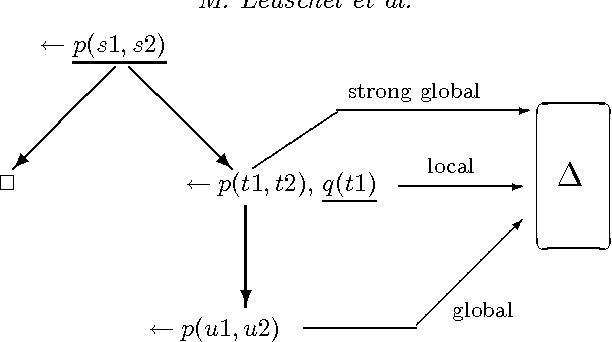
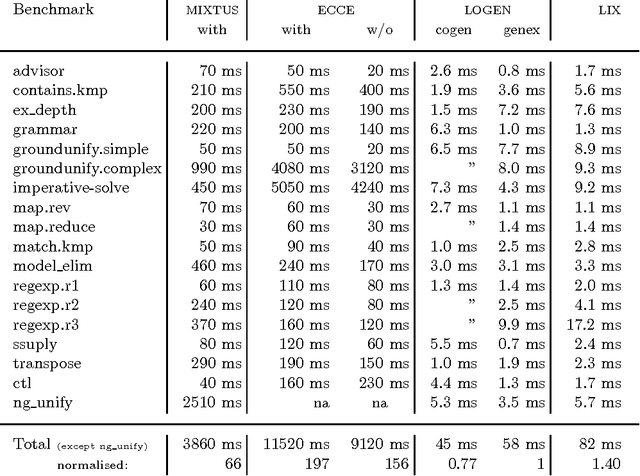
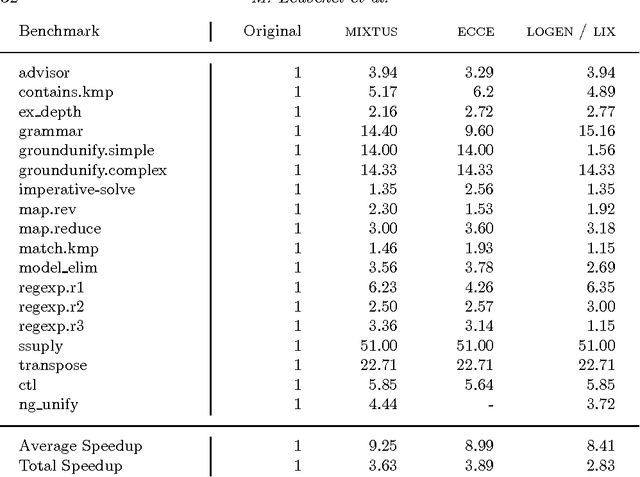
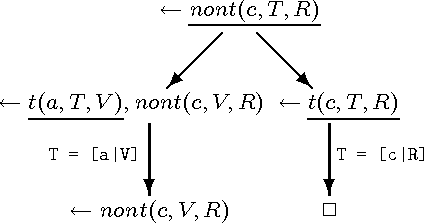
The so called ``cogen approach'' to program specialisation, writing a compiler generator instead of a specialiser, has been used with considerable success in partial evaluation of both functional and imperative languages. This paper demonstrates that the cogen approach is also applicable to the specialisation of logic programs (also called partial deduction) and leads to effective specialisers. Moreover, using good binding-time annotations, the speed-ups of the specialised programs are comparable to the speed-ups obtained with online specialisers. The paper first develops a generic approach to offline partial deduction and then a specific offline partial deduction method, leading to the offline system LIX for pure logic programs. While this is a usable specialiser by itself, it is used to develop the cogen system LOGEN. Given a program, a specification of what inputs will be static, and an annotation specifying which calls should be unfolded, LOGEN generates a specialised specialiser for the program at hand. Running this specialiser with particular values for the static inputs results in the specialised program. While this requires two steps instead of one, the efficiency of the specialisation process is improved in situations where the same program is specialised multiple times. The paper also presents and evaluates an automatic binding-time analysis that is able to derive the annotations. While the derived annotations are still suboptimal compared to hand-crafted ones, they enable non-expert users to use the LOGEN system in a fully automated way. Finally, LOGEN is extended so as to directly support a large part of Prolog's declarative and non-declarative features and so as to be able to perform so called mixline specialisations.