 Add to Chrome
 Add to Firefox
 Add to Edge
Accelerating Quantum Materials Characterization: Hybrid Active Learning for Autonomous Spin Wave Spectroscopy
Apr 26, 2026
Autonomous neutron spectroscopy must solve three distinct tasks: detection (where is the signal?), inference (which Hamiltonian governs it?), and refinement (what are the parameters?). No single controller solves all three equally well. We present TAS-AI, a hybrid agnostic-to-physics-informed framework for autonomous triple-axis spin-wave spectroscopy that separates these tasks explicitly. In blind reconstruction benchmarks, model-agnostic methods such as random sampling, coarse grids, and Gaussian-process mappers reach a global error threshold more reliably and with fewer measurements than physics-informed planning, supporting the claim that discovery and inference are distinct tasks requiring distinct controllers. Once signal structure is localized, the physics-informed stage performs in-loop Hamiltonian discrimination and parameter refinement: in a controlled square-lattice test between nearest-neighbor-only and J1-J2 Hamiltonians, TAS-AI reaches a decisive AIC-derived evidence ratio (>100) in fewer than 10 measurements, while motion-aware scheduling cuts wall-clock time by 32% at a fixed measurement budget. We also identify a failure mode of posterior-weighted design, algorithmic myopia, in which the planner over-refines the current leading model while under-sampling low-intensity falsification probes. A constrained falsification channel sharply reduces time spent committed to the wrong model and accelerates correct model selection without modifying the Bayesian inference engine. In controlled two-model ablations, both a deterministic top-two max-disagreement rule and an LLM-based audit committee achieve this gain under identical constraints. We demonstrate the full workflow in silico using a high-fidelity digital twin and provide an open-source Python implementation.

Data Science Education in Undergraduate Physics: Lessons Learned from a Community of Practice
Mar 01, 2024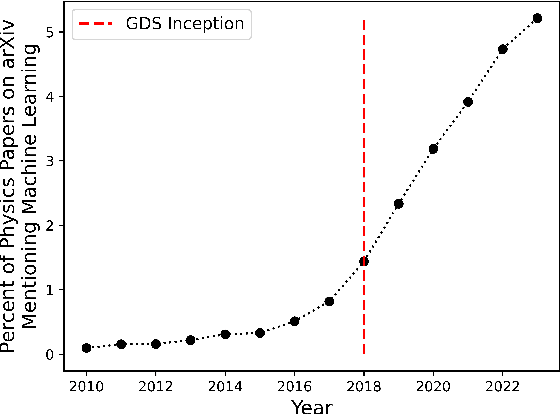
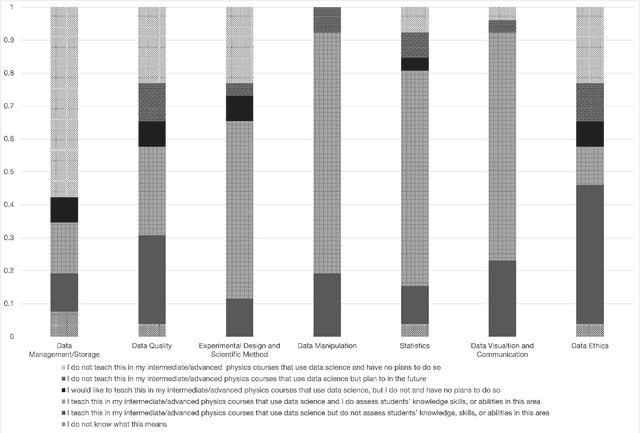
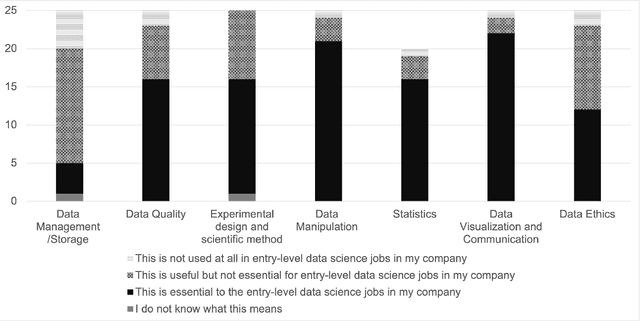
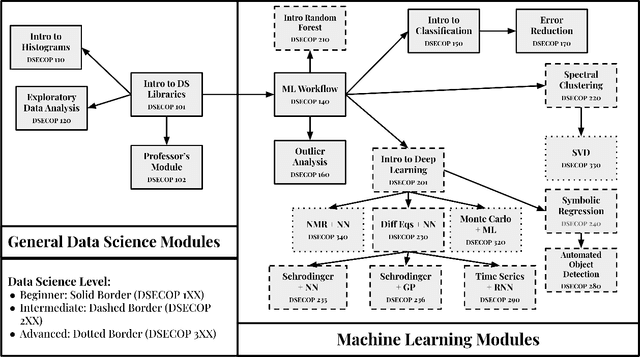
With the increasing availability of diverse datasets, ranging from small-scale experimental data points to large and complex data repositories and powerful data analysis tools, it is increasingly important that physics educators equip their students with the skills to work with data effectively. However, many educators may lack the necessary training and expertise in data science to teach these skills. To address this gap, we created the Data Science Education Community of Practice (DSECOP), bringing together graduate students and physics educators from different institutions and backgrounds to share best practices and lessons learned in integrating data science into undergraduate physics education. In this article, we present insights and experiences from this community of practice, highlighting key strategies and challenges in incorporating data science into the introductory physics curriculum. Our goal is to provide guidance and inspiration to educators who seek to integrate data science into their teaching, helping to prepare the next generation of physicists for a data-driven world.