 Add to Chrome
 Add to Firefox
 Add to Edge
Evolution & Foundation: AI Shares Creative Control
Jun 17, 2026
This paper investigates the creative process of automated design and artistic evaluation using an evolutionary system. We consider how a multimodal artificial intelligence (AI) model can communicate and guide a combined generative and evolutionary computational system. This creates a framework for the evolution of aesthetically pleasing complex 3D organic forms by integrating genetic algorithms with the visual reasoning capabilities of large-scale AI foundation models. The framework shifts the artist role from that of intensive direct selection to one of system design; transferring detailed step-by-step curation to an AI agent capable of multimodal aesthetic judgement. This framework enables the human artist/designer to rapidly traverse large areas of multi-dimensional evolutionary parameter space to find creative outcomes based on their semantic targets. Detailed audit trails of the AI's aesthetic reasoning are generated for each experiment. Interactive visualisation tools, together with AI-generated summaries and evolutionary narratives, enable deep exploration into each evolutionary experiment and providing a transparent insight into the AI-guided process.

NUVA: A Naming Utterance Verifier for Aphasia Treatment
Feb 10, 2021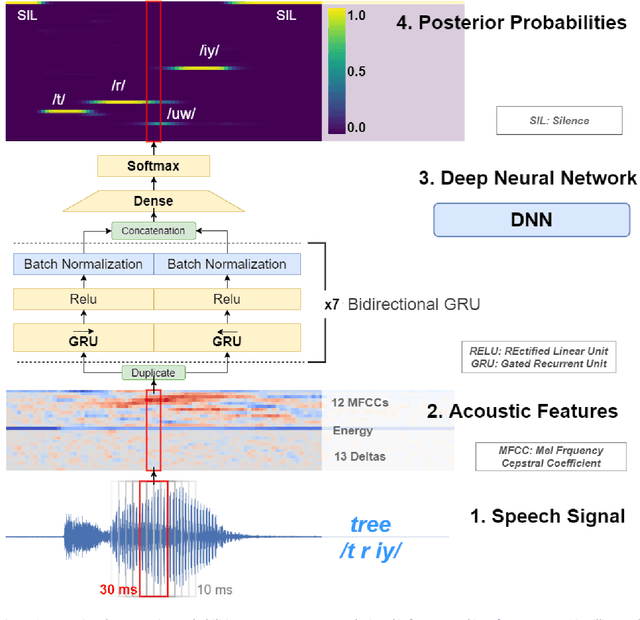
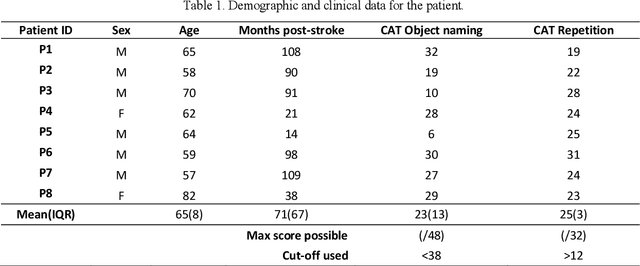
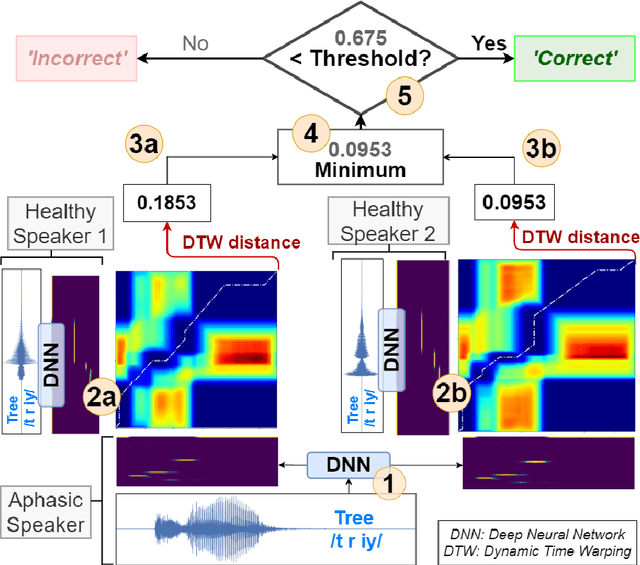
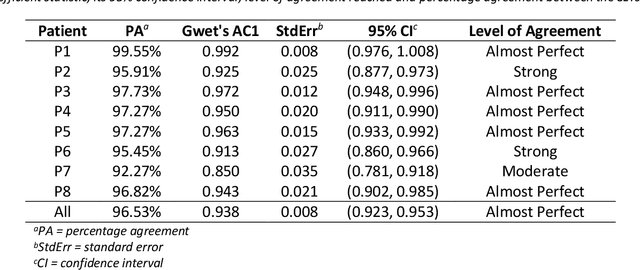
Anomia (word-finding difficulties) is the hallmark of aphasia, an acquired language disorder most commonly caused by stroke. Assessment of speech performance using picture naming tasks is a key method for both diagnosis and monitoring of responses to treatment interventions by people with aphasia (PWA). Currently, this assessment is conducted manually by speech and language therapists (SLT). Surprisingly, despite advancements in automatic speech recognition (ASR) and artificial intelligence with technologies like deep learning, research on developing automated systems for this task has been scarce. Here we present NUVA, an utterance verification system incorporating a deep learning element that classifies 'correct' versus' incorrect' naming attempts from aphasic stroke patients. When tested on eight native British-English speaking PWA the system's performance accuracy ranged between 83.6% to 93.6%, with a 10-fold cross-validation mean of 89.5%. This performance was not only significantly better than a baseline created for this study using one of the leading commercially available ASRs (Google speech-to-text service) but also comparable in some instances with two independent SLT ratings for the same dataset.