 Add to Chrome
 Add to Firefox
 Add to Edge
Divergence-Free Diffusion Models for Incompressible Fluid Flows
Jan 27, 2026
Generative diffusion models are extensively used in unsupervised and self-supervised machine learning with the aim to generate new samples from a probability distribution estimated with a set of known samples. They have demonstrated impressive results in replicating dense, real-world contents such as images, musical pieces, or human languages. This work investigates their application to the numerical simulation of incompressible fluid flows, with a view toward incorporating physical constraints such as incompressibility in the probabilistic forecasting framework enabled by generative networks. For that purpose, we explore different conditional, score-based diffusion models where the divergence-free constraint is imposed by the Leray spectral projector, and autoregressive conditioning is aimed at stabilizing the forecasted flow snapshots at distant time horizons. The proposed models are run on a benchmark turbulence problem, namely a Kolmogorov flow, which allows for a fairly detailed analytical and numerical treatment and thus simplifies the evaluation of the numerical methods used to simulate it. Numerical experiments of increasing complexity are performed in order to compare the advantages and limitations of the diffusion models we have implemented and appraise their performances, including: (i) in-distribution assessment over the same time horizons and for similar physical conditions as the ones seen during training; (ii) rollout predictions over time horizons unseen during training; and (iii) out-of-distribution tests for forecasting flows markedly different from those seen during training. In particular, these results illustrate the ability of diffusion models to reproduce the main statistical characteristics of Kolmogorov turbulence in scenarios departing from the ones they were trained on.

Autoregressive regularized score-based diffusion models for multi-scenarios fluid flow prediction
May 30, 2025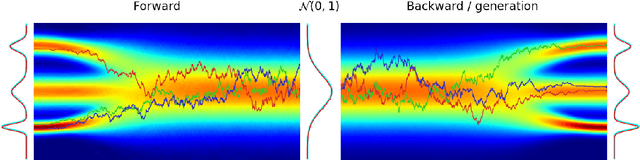
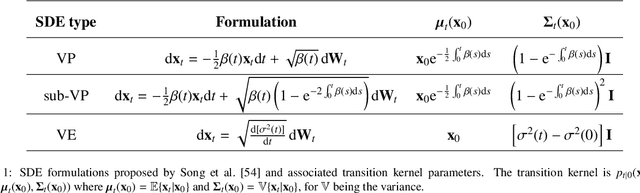
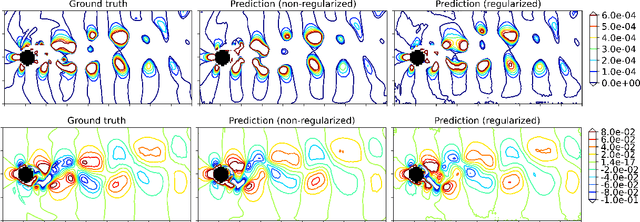
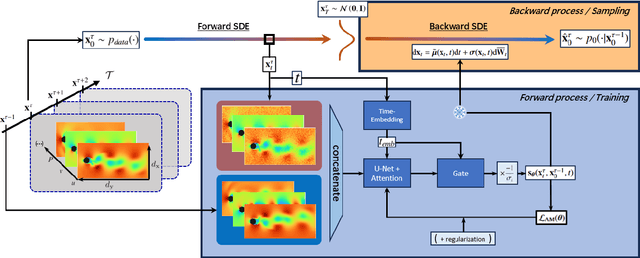
Building on recent advances in scientific machine learning and generative modeling for computational fluid dynamics, we propose a conditional score-based diffusion model designed for multi-scenarios fluid flow prediction. Our model integrates an energy constraint rooted in the statistical properties of turbulent flows, improving prediction quality with minimal training, while enabling efficient sampling at low cost. The method features a simple and general architecture that requires no problem-specific design, supports plug-and-play enhancements, and enables fast and flexible solution generation. It also demonstrates an efficient conditioning mechanism that simplifies training across different scenarios without demanding a redesign of existing models. We further explore various stochastic differential equation formulations to demonstrate how thoughtful design choices enhance performance. We validate the proposed methodology through extensive experiments on complex fluid dynamics datasets encompassing a variety of flow regimes and configurations. Results demonstrate that our model consistently achieves stable, robust, and physically faithful predictions, even under challenging turbulent conditions. With properly tuned parameters, it achieves accurate results across multiple scenarios while preserving key physical and statistical properties. We present a comprehensive analysis of stochastic differential equation impact and discuss our approach across diverse fluid mechanics tasks.