 Add to Chrome
 Add to Firefox
 Add to Edge
Hebbian Learning with Global Direction
Jan 29, 2026
Backpropagation algorithm has driven the remarkable success of deep neural networks, but its lack of biological plausibility and high computational costs have motivated the ongoing search for alternative training methods. Hebbian learning has attracted considerable interest as a biologically plausible alternative to backpropagation. Nevertheless, its exclusive reliance on local information, without consideration of global task objectives, fundamentally limits its scalability. Inspired by the biological synergy between neuromodulators and local plasticity, we introduce a novel model-agnostic Global-guided Hebbian Learning (GHL) framework, which seamlessly integrates local and global information to scale up across diverse networks and tasks. In specific, the local component employs Oja's rule with competitive learning to ensure stable and effective local updates. Meanwhile, the global component introduces a sign-based signal that guides the direction of local Hebbian plasticity updates. Extensive experiments demonstrate that our method consistently outperforms existing Hebbian approaches. Notably, on large-scale network and complex datasets like ImageNet, our framework achieves the competitive results and significantly narrows the gap with standard backpropagation.

Threshold Modulation for Online Test-Time Adaptation of Spiking Neural Networks
May 08, 2025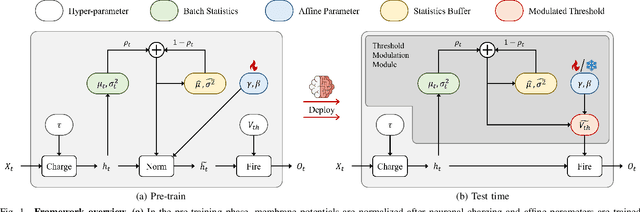
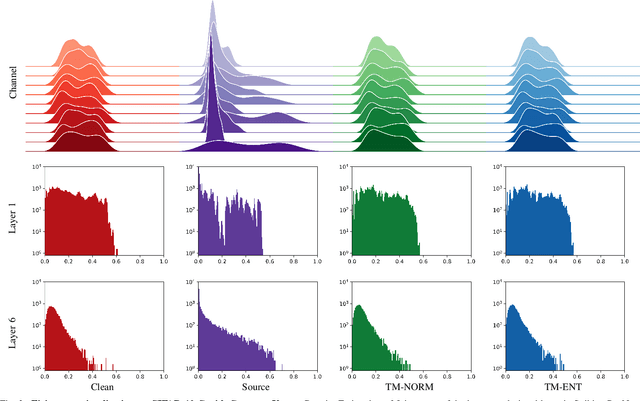
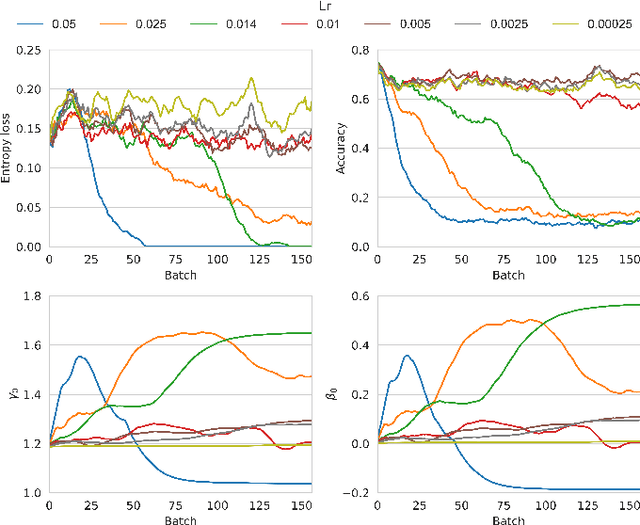
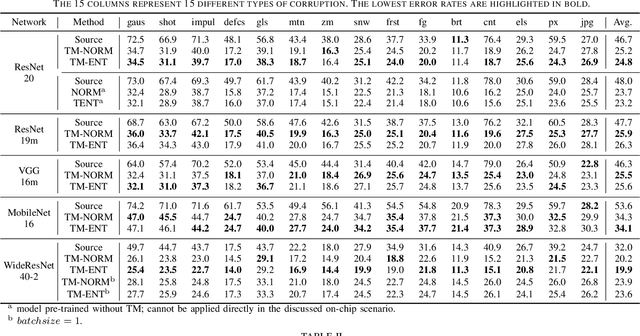
Recently, spiking neural networks (SNNs), deployed on neuromorphic chips, provide highly efficient solutions on edge devices in different scenarios. However, their ability to adapt to distribution shifts after deployment has become a crucial challenge. Online test-time adaptation (OTTA) offers a promising solution by enabling models to dynamically adjust to new data distributions without requiring source data or labeled target samples. Nevertheless, existing OTTA methods are largely designed for traditional artificial neural networks and are not well-suited for SNNs. To address this gap, we propose a low-power, neuromorphic chip-friendly online test-time adaptation framework, aiming to enhance model generalization under distribution shifts. The proposed approach is called Threshold Modulation (TM), which dynamically adjusts the firing threshold through neuronal dynamics-inspired normalization, being more compatible with neuromorphic hardware. Experimental results on benchmark datasets demonstrate the effectiveness of this method in improving the robustness of SNNs against distribution shifts while maintaining low computational cost. The proposed method offers a practical solution for online test-time adaptation of SNNs, providing inspiration for the design of future neuromorphic chips. The demo code is available at github.com/NneurotransmitterR/TM-OTTA-SNN.