 Add to Chrome
 Add to Firefox
 Add to Edge
Emotionally Vulnerable Subtype of Internet Gaming Disorder: Measuring and Exploring the Pathology of Problematic Generative AI Use
Oct 08, 2025
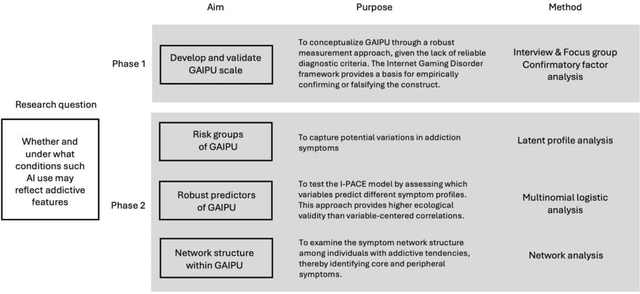
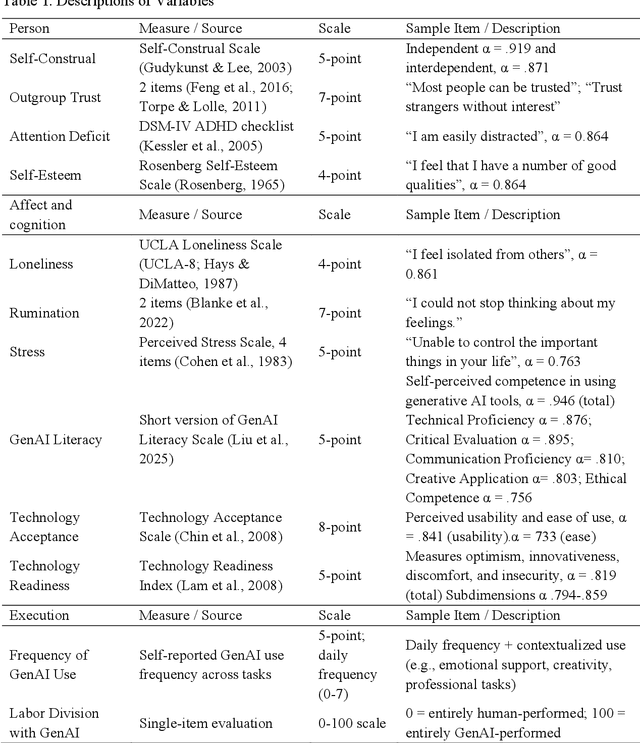
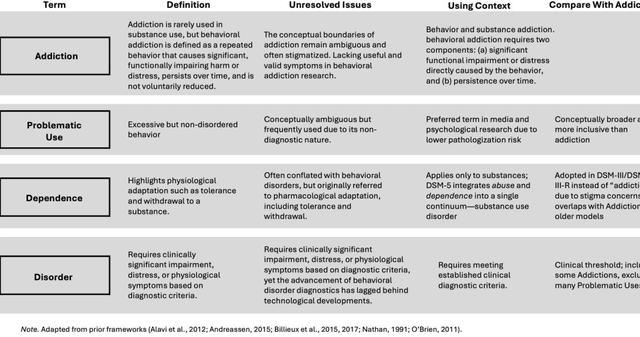

Concerns over the potential over-pathologization of generative AI (GenAI) use and the lack of conceptual clarity surrounding GenAI addiction call for empirical tools and theoretical refinement. This study developed and validated the PUGenAIS-9 (Problematic Use of Generative Artificial Intelligence Scale-9 items) and examined whether PUGenAIS reflects addiction-like patterns under the Internet Gaming Disorder (IGD) framework. Using samples from China and the United States (N = 1,508), we conducted confirmatory factor analysis and identified a robust 31-item structure across nine IGD-based dimensions. We then derived the PUGenAIS-9 by selecting the highest-loading items from each dimension and validated its structure in an independent sample (N = 1,426). Measurement invariance tests confirmed its stability across nationality and gender. Person-centered (latent profile analysis) and variable-centered (network analysis) approaches found that PUGenAIS matches the traits of the emotionally vulnerable subtype of IGD, not the competence-based kind. These results support using PUGenAIS-9 to identify problematic GenAI use and show the need to rethink digital addiction with an ICD (infrastructures, content, and device) model. This keeps addiction research responsive to new media while avoiding over-pathologizing.

Exploring Gender Biases in Language Patterns of Human-Conversational Agent Conversations
Jan 05, 2024With the rise of human-machine communication, machines are increasingly designed with humanlike characteristics, such as gender, which can inadvertently trigger cognitive biases. Many conversational agents (CAs), such as voice assistants and chatbots, default to female personas, leading to concerns about perpetuating gender stereotypes and inequality. Critiques have emerged regarding the potential objectification of females and reinforcement of gender stereotypes by these technologies. This research, situated in conversational AI design, aims to delve deeper into the impacts of gender biases in human-CA interactions. From a behavioral and communication research standpoint, this program focuses not only on perceptions but also the linguistic styles of users when interacting with CAs, as previous research has rarely explored. It aims to understand how pre-existing gender biases might be triggered by CAs' gender designs. It further investigates how CAs' gender designs may reinforce gender biases and extend them to human-human communication. The findings aim to inform ethical design of conversational agents, addressing whether gender assignment in CAs is appropriate and how to promote gender equality in design.