 Add to Chrome
 Add to Firefox
 Add to Edge
AEGIS: From Clues to Verdicts -- Graph-Guided Deep Vulnerability Reasoning via Dialectics and Meta-Auditing
Mar 21, 2026
Large Language Models (LLMs) are increasingly adopted for vulnerability detection, yet their reasoning remains fundamentally unsound. We identify a root cause shared by both major mitigation paradigms (agent-based debate and retrieval augmentation): reasoning in an ungrounded deliberative space that lacks a bounded, hypothesis-specific evidence base. Without such grounding, agents fabricate cross-function dependencies, and retrieval heuristics supply generic knowledge decoupled from the repository's data-flow topology. Consequently, the resulting conclusions are driven by rhetorical persuasiveness rather than verifiable facts. To ground this deliberation, we present AEGIS, a novel multi-agent framework that shifts detection from ungrounded speculation to forensic verification over a closed factual substrate. Guided by a "From Clue to Verdict" philosophy, AEGIS first identifies suspicious code anomalies (clues), then dynamically reconstructs per-variable dependency chains for each clue via on-demand slicing over a repository-level Code Property Graph. Within this closed evidence boundary, a Verifier Agent constructs competing dialectical arguments for and against exploitability, while an independent Audit Agent scrutinizes every claim against the trace, exercising veto power to prevent hallucinated verdicts. Evaluation on the rigorous PrimeVul dataset demonstrates that AEGIS establishes a new state-of-the-art, achieving 122 Pair-wise Correct Predictions. To our knowledge, this is the first approach to surpass 100 on this benchmark. It reduces the false positive rate by up to 54.40% compared to leading baselines, at an average cost of $0.09 per sample without any task-specific training.

EVALOOP: Assessing LLM Robustness in Programming from a Self-consistency Perspective
May 18, 2025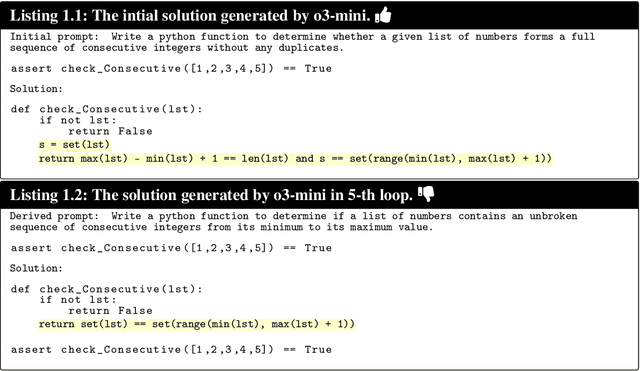
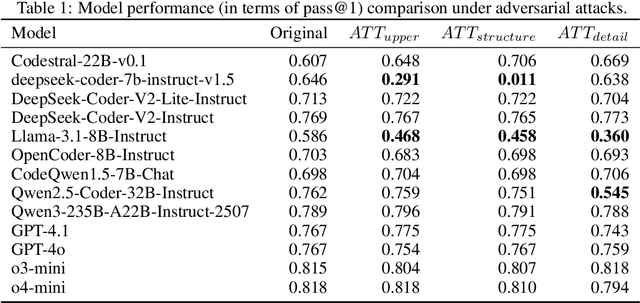
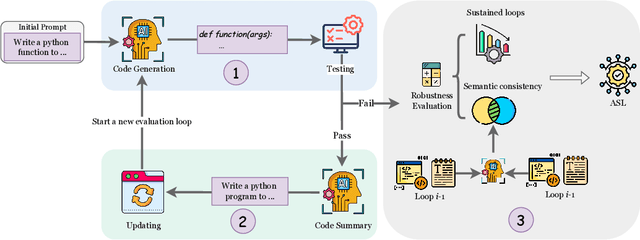
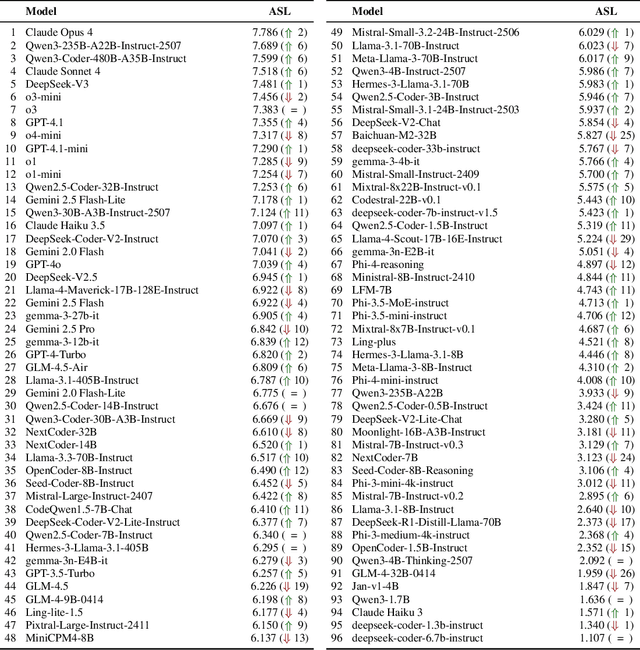
Assessing the programming capabilities of Large Language Models (LLMs) is crucial for their effective use in software engineering. Current evaluations, however, predominantly measure the accuracy of generated code on static benchmarks, neglecting the critical aspect of model robustness during programming tasks. While adversarial attacks offer insights on model robustness, their effectiveness is limited and evaluation could be constrained. Current adversarial attack methods for robustness evaluation yield inconsistent results, struggling to provide a unified evaluation across different LLMs. We introduce EVALOOP, a novel assessment framework that evaluate the robustness from a self-consistency perspective, i.e., leveraging the natural duality inherent in popular software engineering tasks, e.g., code generation and code summarization. EVALOOP initiates a self-contained feedback loop: an LLM generates output (e.g., code) from an input (e.g., natural language specification), and then use the generated output as the input to produce a new output (e.g., summarizes that code into a new specification). EVALOOP repeats the process to assess the effectiveness of EVALOOP in each loop. This cyclical strategy intrinsically evaluates robustness without rely on any external attack setups, providing a unified metric to evaluate LLMs' robustness in programming. We evaluate 16 prominent LLMs (e.g., GPT-4.1, O4-mini) on EVALOOP and found that EVALOOP typically induces a 5.01%-19.31% absolute drop in pass@1 performance within ten loops. Intriguingly, robustness does not always align with initial performance (i.e., one-time query); for instance, GPT-3.5-Turbo, despite superior initial code generation compared to DeepSeek-V2, demonstrated lower robustness over repeated evaluation loop.