 Add to Chrome
 Add to Firefox
 Add to Edge
Toward Generalizable Whole Brain Representations with High-Resolution Light-Sheet Data
Mar 31, 2026
Unprecedented visual details of biological structures are being revealed by subcellular-resolution whole-brain 3D microscopy data, enabled by recent advances in intact tissue processing and light-sheet fluorescence microscopy (LSFM). These volumetric data offer rich morphological and spatial cellular information, however, the lack of scalable data processing and analysis methods tailored to these petabyte-scale data poses a substantial challenge for accurate interpretation. Further, existing models for visual tasks such as object detection and classification struggle to generalize to this type of data. To accelerate the development of suitable methods and foundational models, we present CANVAS, a comprehensive set of high-resolution whole mouse brain LSFM benchmark data, encompassing six neuronal and immune cell-type markers, along with cell annotations and a leaderboard. We also demonstrate challenges in generalization of baseline models built on existing architectures, especially due to the heterogeneity in cellular morphology across phenotypes and anatomical locations in the brain. To the best of our knowledge, CANVAS is the first and largest LSFM benchmark that captures intact mouse brain tissue at subcellular level, and includes extensive annotations of cells throughout the brain.

NBA2Vec: Dense feature representations of NBA players
Feb 26, 2023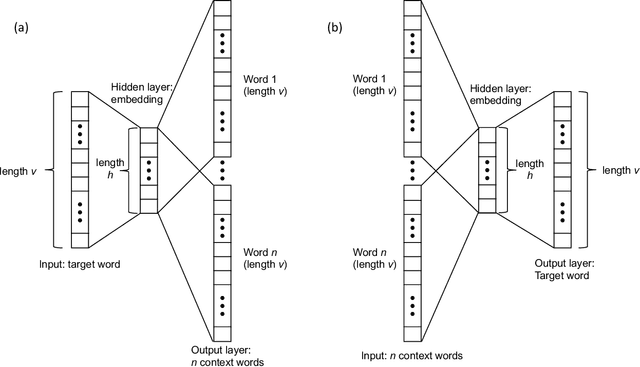
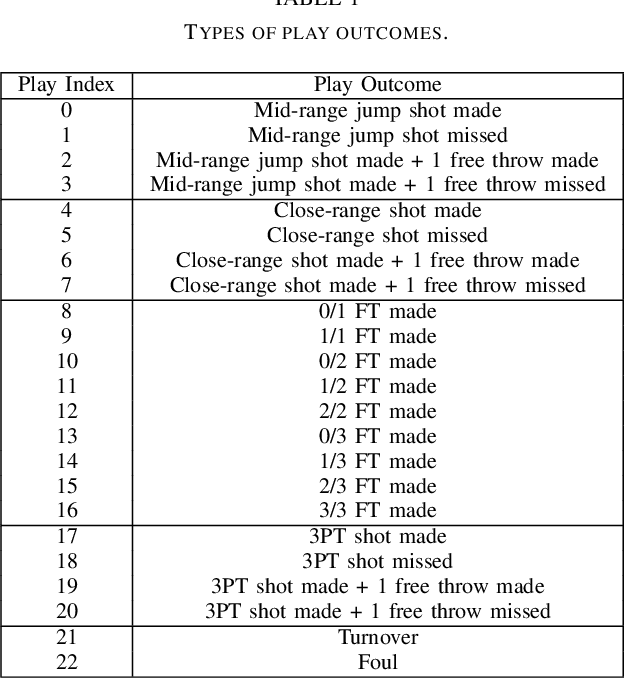
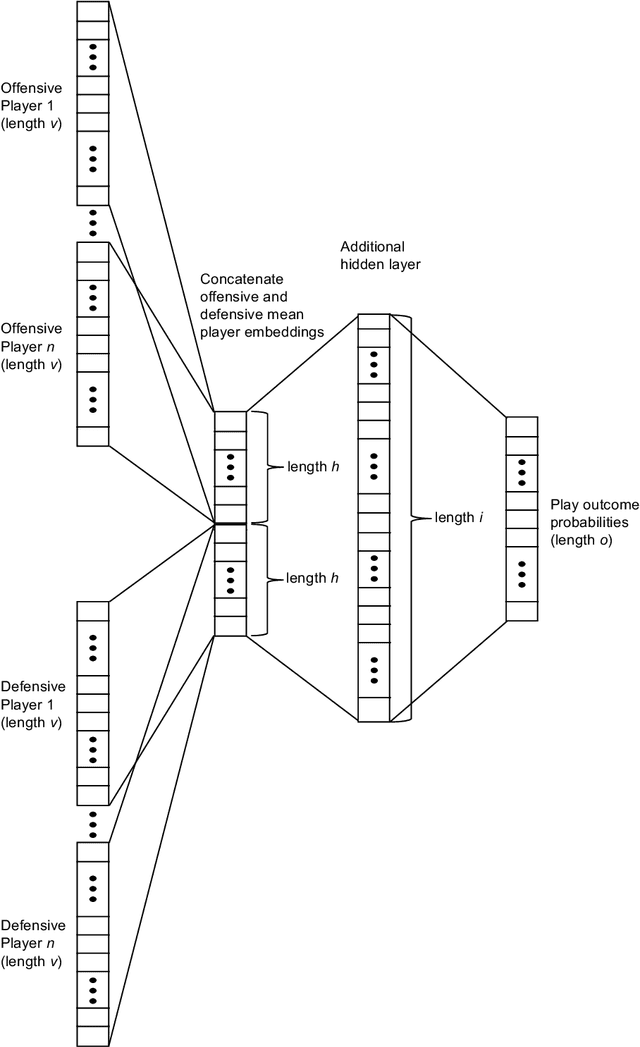
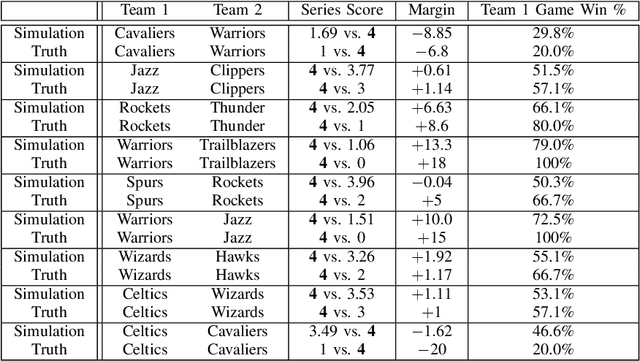
Understanding a player's performance in a basketball game requires an evaluation of the player in the context of their teammates and the opposing lineup. Here, we present NBA2Vec, a neural network model based on Word2Vec which extracts dense feature representations of each player by predicting play outcomes without the use of hand-crafted heuristics or aggregate statistical measures. Specifically, our model aimed to predict the outcome of a possession given both the offensive and defensive players on the court. By training on over 3.5 million plays involving 1551 distinct players, our model was able to achieve a 0.3 K-L divergence with respect to the empirical play-by-play distribution. The resulting embedding space is consistent with general classifications of player position and style, and the embedding dimensions correlated at a significant level with traditional box score metrics. Finally, we demonstrate that NBA2Vec accurately predicts the outcomes to various 2017 NBA Playoffs series, and shows potential in determining optimal lineup match-ups. Future applications of NBA2Vec embeddings to characterize players' style may revolutionize predictive models for player acquisition and coaching decisions that maximize team success.