 Add to Chrome
 Add to Firefox
 Add to Edge
Multi-Agent Object Detection Framework Based on Raspberry Pi YOLO Detector and Slack-Ollama Natural Language Interface
Apr 14, 2026
The paper presents design and prototype implementation of an edge based object detection system within the new paradigm of AI agents orchestration. It goes beyond traditional design approaches by leveraging on LLM based natural language interface for system control and communication and practically demonstrates integration of all system components into a single resource constrained hardware platform. The method is based on the proposed multi-agent object detection framework which tightly integrates different AI agents within the same task of providing object detection and tracking capabilities. The proposed design principles highlight the fast prototyping approach that is characteristic for transformational potential of generative AI systems, which are applied during both development and implementation stages. Instead of specialized communication and control interface, the system is made by using Slack channel chatbot agent and accompanying Ollama LLM reporting agent, which are both run locally on the same Raspberry Pi platform, alongside the dedicated YOLO based computer vision agent performing real time object detection and tracking. Agent orchestration is implemented through a specially designed event based message exchange subsystem, which represents an alternative to completely autonomous agent orchestration and control characteristic for contemporary LLM based frameworks like the recently proposed OpenClaw. Conducted experimental investigation provides valuable insights into limitations of the low cost testbed platforms in the design of completely centralized multi-agent AI systems. The paper also discusses comparative differences between presented approach and the solution that would require additional cloud based external resources.

Transforming faces into video stories -- VideoFace2.0
May 04, 2025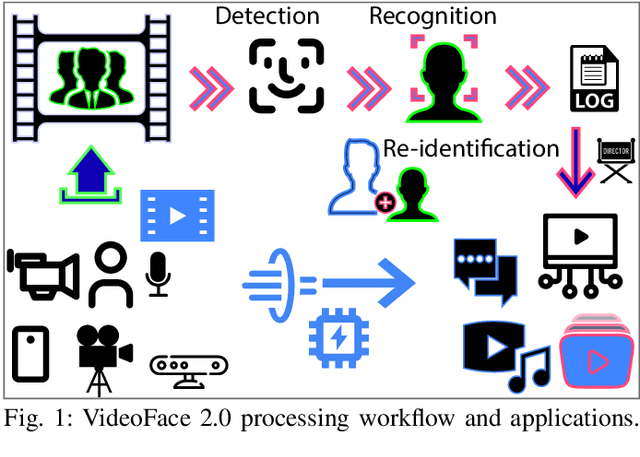
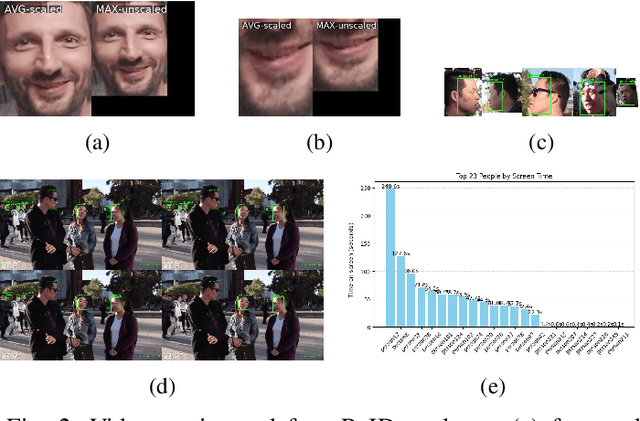
Face detection and face recognition have been in the focus of vision community since the very beginnings. Inspired by the success of the original Videoface digitizer, a pioneering device that allowed users to capture video signals from any source, we have designed an advanced video analytics tool to efficiently create structured video stories, i.e. identity-based information catalogs. VideoFace2.0 is the name of the developed system for spatial and temporal localization of each unique face in the input video, i.e. face re-identification (ReID), which also allows their cataloging, characterization and creation of structured video outputs for later downstream tasks. Developed near real-time solution is primarily designed to be utilized in application scenarios involving TV production, media analysis, and as an efficient tool for creating large video datasets necessary for training machine learning (ML) models in challenging vision tasks such as lip reading and multimodal speech recognition. Conducted experiments confirm applicability of the proposed face ReID algorithm that is combining the concepts of face detection, face recognition and passive tracking-by-detection in order to achieve robust and efficient face ReID. The system is envisioned as a compact and modular extensions of the existing video production equipment. We hope that the presented work and shared code will stimulate further interest in development of similar, application specific video analysis tools, and lower the entry barrier for production of high-quality multi-modal ML datasets in the future.