 Add to Chrome
 Add to Firefox
 Add to Edge
A Hybrid Method for Low-Resource Named Entity Recognition
May 06, 2026
Named Entity Recognition (NER) is a critical component of Natural Language Processing with diverse applications in information extraction and conversational AI. However, NER in specific domains for low-resource languages faces challenges such as limited annotated data and heterogeneous label sets. This study addresses these issues by proposing a hybrid neurosymbolic framework that integrates rule-based processing with deep learning models for Vietnamese NER. The core idea involves a two-stage pipeline: first, a rule-based component reduces label complexity by grouping relational and special categories; second, pre-trained language models are fine-tuned for high-precision extraction. A post-processing module is then utilized to restore fine-grained labels, preserving expressiveness for application-level usability. To mitigate data scarcity, a scalable data augmentation strategy leveraging Large Language Models (LLMs) is introduced to expand the label set without full re-annotation, which is a significant novelty of this work. The effectiveness of this method was evaluated across five specific-domain datasets, including logistics, wildlife, and healthcare. Experimental results demonstrate substantial improvements over strong RoBERTa-based baselines. Specifically, the proposed system achieved F1 scores of 90 percent in Customer Service, up from 83 percent; 84 percent in GAM, up from 73 percent; 83 percent in AI Fluent, up from 80 percent; 94 percent in PhoNER_Covid19, up from 91 percent; and 60 percent in Rare Wildlife, up from 36 percent. These findings confirm that the hybrid approach effectively captures the linguistic complexity of Vietnamese and contextual nuances in specialized domains, offering a robust contribution to low-resource NER research.
* Published in Journal of Applied Data Sciences, Volume 7, Issue 2, pages 999--1019, 2026. Open access under CC BY 4.0

Using Large Language Models for education managements in Vietnamese with low resources
Jan 25, 2025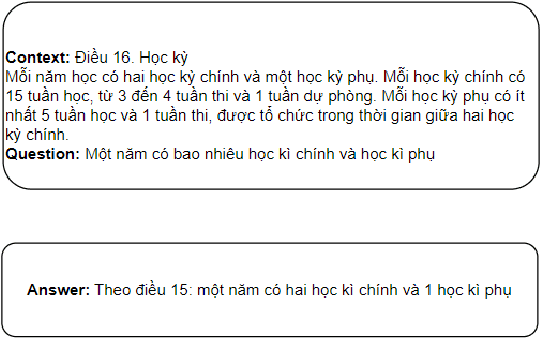
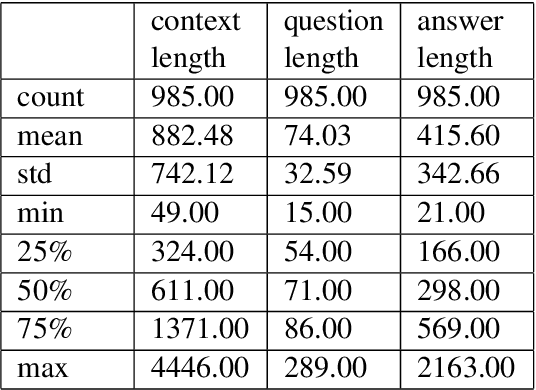
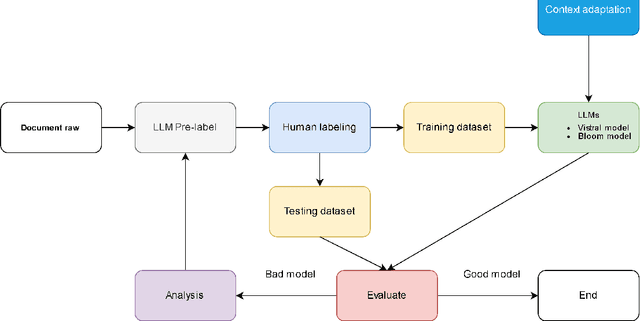
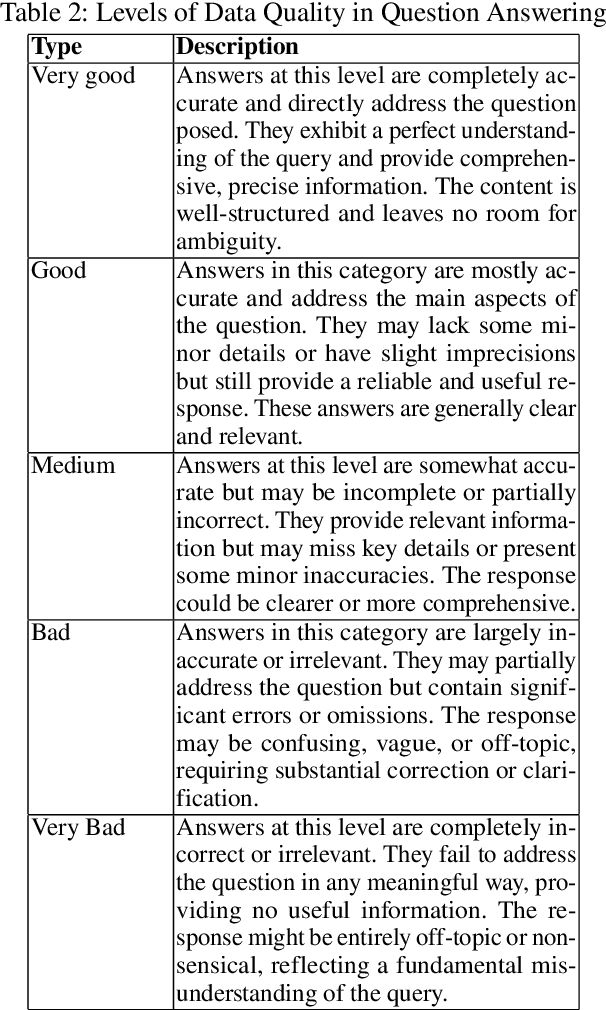
Large language models (LLMs), such as GPT-4, Gemini 1.5, Claude 3.5 Sonnet, and Llama3, have demonstrated significant advancements in various NLP tasks since the release of ChatGPT in 2022. Despite their success, fine-tuning and deploying LLMs remain computationally expensive, especially in resource-constrained environments. In this paper, we proposed VietEduFrame, a framework specifically designed to apply LLMs to educational management tasks in Vietnamese institutions. Our key contribution includes the development of a tailored dataset, derived from student education documents at Hanoi VNU, which addresses the unique challenges faced by educational systems with limited resources. Through extensive experiments, we show that our approach outperforms existing methods in terms of accuracy and efficiency, offering a promising solution for improving educational management in under-resourced environments. While our framework leverages synthetic data to supplement real-world examples, we discuss potential limitations regarding broader applicability and robustness in future implementations.