 Add to Chrome
 Add to Firefox
 Add to Edge
Designing Safe and Accountable GenAI as a Learning Companion with Women Banned from Formal Education
Apr 08, 2026
In gender-restrictive and surveilled contexts, where access to formal education may be restricted for women, pursuing education involves safety and privacy risks. When women are excluded from schools and universities, they often turn to online self-learning and generative AI (GenAI) to pursue their educational and career aspirations. However, we know little about what safe and accountable GenAI support is required in the context of surveillance, household responsibilities, and the absence of learning communities. We present a remote participatory design study with 20 women in Afghanistan, informed by a recruitment survey (n = 140), examining how participants envision GenAI for learning and employability. Participants describe using GenAI less as an information source and more as an always-available peer, mentor, and source of career guidance that helps compensate for the absence of learning communities. At the same time, they emphasize that this companionship is constrained by privacy and surveillance risks, contextually unrealistic and culturally unsafe support, and direct-answer interactions that can undermine learning by creating an illusion of progress. Beyond eliciting requirements, envisioning the future with GenAI through participatory design was positively associated with significant increases in participants' aspirations (p=.01), perceived agency (p=.01), and perceived avenues (p=.03). These outcomes show that accountable and safe GenAI is not only about harm reduction but can also actively enable women to imagine and pursue viable learning and employment futures. Building on this, we translate participants' proposals into accountability-focused design directions that center on safety-first interaction and user control, context-grounded support under constrained resources, and offer pedagogically aligned assistance that supports genuine learning rather than quick answers.

Hope, Aspirations, and the Impact of LLMs on Female Programming Learners in Afghanistan
Nov 09, 2025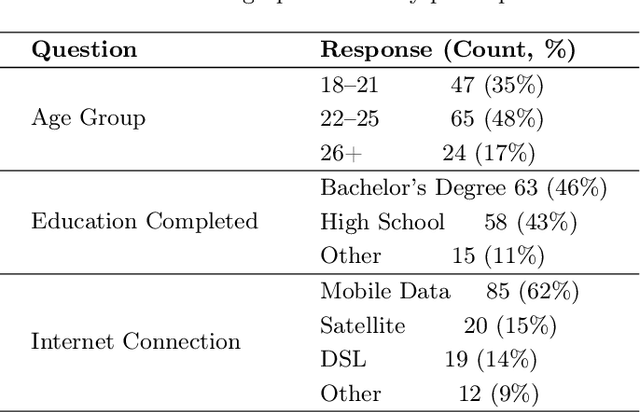
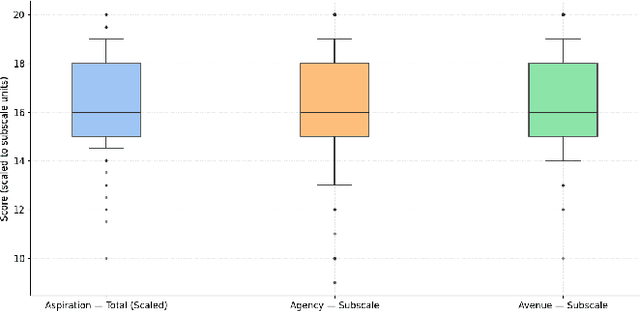
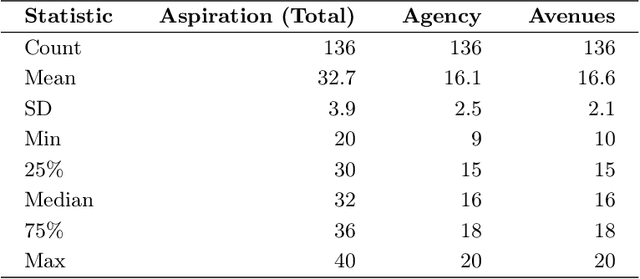
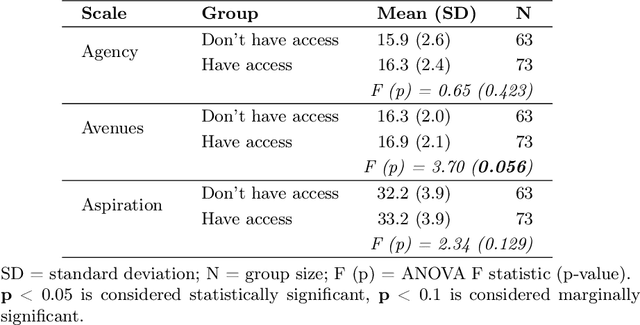
Designing impactful educational technologies in contexts of socio-political instability requires a nuanced understanding of educational aspirations. Currently, scalable metrics for measuring aspirations are limited. This study adapts, translates, and evaluates Snyder's Hope Scale as a metric for measuring aspirations among 136 women learning programming online during a period of systemic educational restrictions in Afghanistan. The adapted scale demonstrated good reliability (Cronbach's α = 0.78) and participants rated it as understandable and relevant. While overall aspiration-related scores did not differ significantly by access to Large Language Models (LLMs), those with access reported marginally higher scores on the Avenues subscale (p = .056), suggesting broader perceived pathways to achieving educational aspirations. These findings support the use of the adapted scale as a metric for aspirations in contexts of socio-political instability. More broadly, the adapted scale can be used to evaluate the impact of aspiration-driven design of educational technologies.