 Add to Chrome
 Add to Firefox
 Add to Edge
Mechanistic Tomography: Designed Measurement for Control-Oriented Interpretability
Aug 19, 2026
Mechanistic interpretability seeks quantities that models do not expose directly: represented states, component effects, interactions, and responses to interventions. Patching, gradients, Hessian-vector products, and subset interventions provide different measurements under different access assumptions and may target different quantities. We formulate their shared measurement structure as mechanistic tomography: designed measurement for recovering internal mechanisms and intervention effects. For a chosen basis and intervention family, measurements take the form y = Ax + w, where A describes the interventions, x is the target map, and w contains nonlinear response, sampling error, and basis misspecification. This language gives a practical procedure: start with the least costly measurements, test on held-out interventions at the intended scale, calibrate simple mismatch, and expand the measurement family when structured residuals remain. Control provides a demanding validation setting because an estimate that guides an intervention acts as an observer. In a two-HMM model, control error rises with observer error, while target improvement can hide nuisance-state movement. Under forward-only access, sparse aggregate measurements recover a finite-effect map with fewer interventions than coordinate patching. With gradient access, finite probes improve a local attribution map. Lifted measurements and Hessian-vector products recover interactions missed by first-order maps, while Tracr shows that the required family depends on the basis. On GPT-2-small IOI, the Name Mover-Negative Name Mover interaction is the largest held-out predictive term among three tested cross-group pairs. On Qwen-2.5-7B, finite calibration makes an additive refusal-response map adequate, so held-out error does not support pairwise lifting.

Divide and Conquer: Partitioning Online Social Networks
May 29, 2009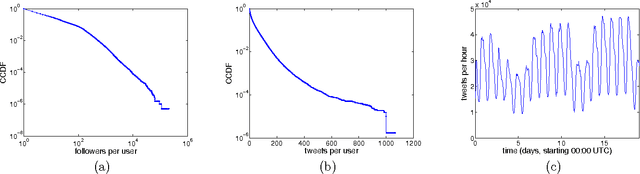

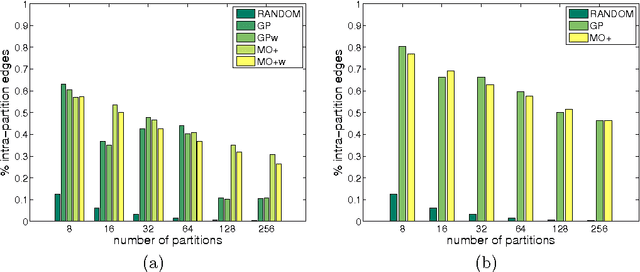
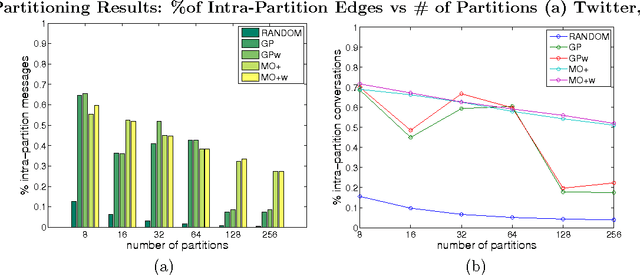
Online Social Networks (OSNs) have exploded in terms of scale and scope over the last few years. The unprecedented growth of these networks present challenges in terms of system design and maintenance. One way to cope with this is by partitioning such large networks and assigning these partitions to different machines. However, social networks possess unique properties that make the partitioning problem non-trivial. The main contribution of this paper is to understand different properties of social networks and how these properties can guide the choice of a partitioning algorithm. Using large scale measurements representing real OSNs, we first characterize different properties of social networks, and then we evaluate qualitatively different partitioning methods that cover the design space. We expose different trade-offs involved and understand them in light of properties of social networks. We show that a judicious choice of a partitioning scheme can help improve performance.