 Add to Chrome
 Add to Firefox
 Add to Edge
Fault Detection in Electrical Distribution System using Autoencoders
Feb 16, 2026
In recent times, there has been considerable interest in fault detection within electrical power systems, garnering attention from both academic researchers and industry professionals. Despite the development of numerous fault detection methods and their adaptations over the past decade, their practical application remains highly challenging. Given the probabilistic nature of fault occurrences and parameters, certain decision-making tasks could be approached from a probabilistic standpoint. Protective systems are tasked with the detection, classification, and localization of faulty voltage and current line magnitudes, culminating in the activation of circuit breakers to isolate the faulty line. An essential aspect of designing effective fault detection systems lies in obtaining reliable data for training and testing, which is often scarce. Leveraging deep learning techniques, particularly the powerful capabilities of pattern classifiers in learning, generalizing, and parallel processing, offers promising avenues for intelligent fault detection. To address this, our paper proposes an anomaly-based approach for fault detection in electrical power systems, employing deep autoencoders. Additionally, we utilize Convolutional Autoencoders (CAE) for dimensionality reduction, which, due to its fewer parameters, requires less training time compared to conventional autoencoders. The proposed method demonstrates superior performance and accuracy compared to alternative detection approaches by achieving an accuracy of 97.62% and 99.92% on simulated and publicly available datasets.

A Comprehensive Metric for Resilience Evaluation of Power Distribution Systems under Cyber Attacks
Jan 21, 2025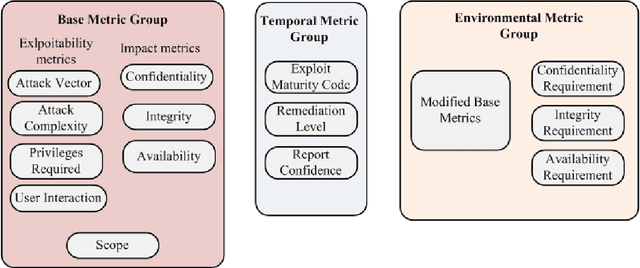

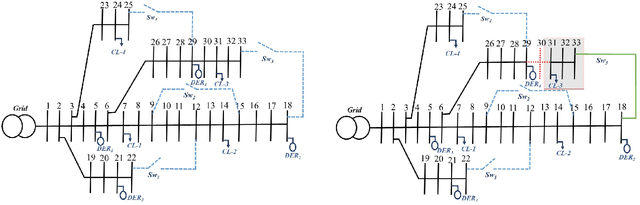
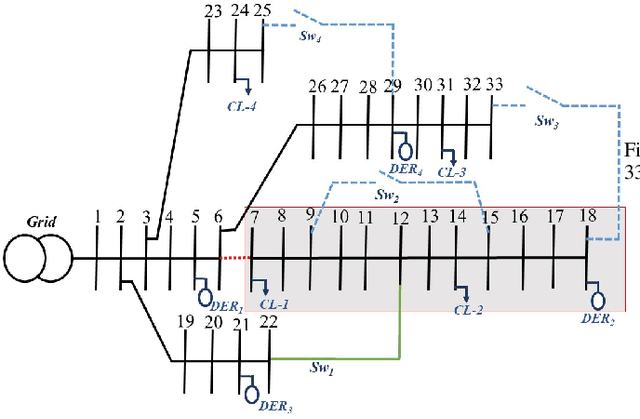
Power distribution systems (PDS) serve as the backbone of our modern society, ensuring electricity reaches homes, businesses, and critical infrastructure. However, the increasing digitization and interconnectivity of these systems have exposed them to cyber threats. This study presents a comprehensive approach to evaluate and enhance the resilience of PDS under cyber attacks using the Common Vulnerability Scoring System (CVSS) and complex network parameters. By systematically assessing vulnerabilities and computing resilience once critical CVSS thresholds are reached, this work identifies key resilience metrics including the critical loads service requirements. The proposed methodology improves system resilience through strategic tie-line switching, which is validated on the modified IEEE 33-bus system. Four case studies are conducted, illustrating the performance of the proposed methodology under various cyber attack scenarios. The results demonstrate the effectiveness of the approach in quantifying and enhancing resilience, offering a valuable tool for PDS operators to mitigate risks and ensure continuous service delivery to critical loads during the exploitation of cyber threats.