 Add to Chrome
 Add to Firefox
 Add to Edge
Improving Wind and Solar Power Prediction with Efficient Wrapper-based Feature Selection: An Empirical Study
Jul 15, 2026
With rising global energy demand and growing awareness of climate change and its impacts, the share of renewable energies in the global energy mix continues to grow. Unlike conventional power generation, the output of renewable energy sources cannot be controlled as consistently due to their dependence on environmental conditions. Therefore, reliable prediction of current and future energy production is essential. In this paper, we report findings from two structured literature reviews on real-world renewable energy prediction tasks: wind turbine power curve modeling and photovoltaic power prediction. For the former, we conducted a comprehensive literature review ourselves, while for the latter, we synthesize the key findings regarding frequently selected input features based on an existing survey. Across both domains, our analysis reveals that despite the large number of available monitoring and environmental variables, only limited or unsystematic methods for feature selection exist. To address this gap, we propose Cluster-based Sequential Feature Selection (CSFS), a novel, model-agnostic, clustering-based wrapper method for automatic, efficient, and reliable feature selection in renewable energy prediction pipelines. To support reproducibility and reuse, we provide an open-source implementation of CSFS on GitHub. We empirically evaluate the proposed approach on both use cases and compare it with established feature selection techniques such as wrapper-based sequential feature selection (SFS), filter-based methods, and Random Forest's embedded feature importance. The results show that the wrapper-based methods overall provide better-performing selections of features. CSFS achieves a predictive performance comparable to SFS while reducing computational cost by an average of 21%.

Time Series Representation Models
May 28, 2024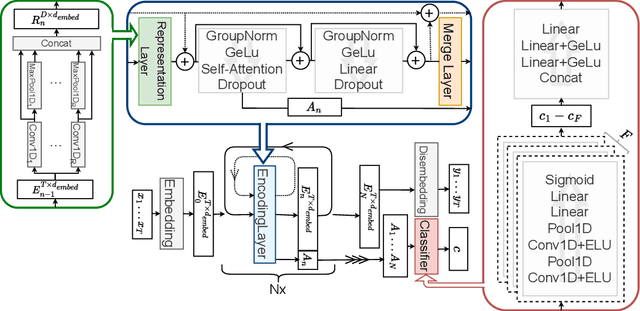
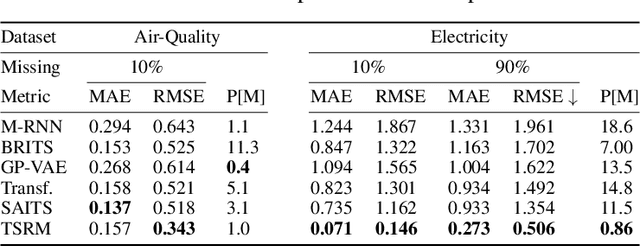
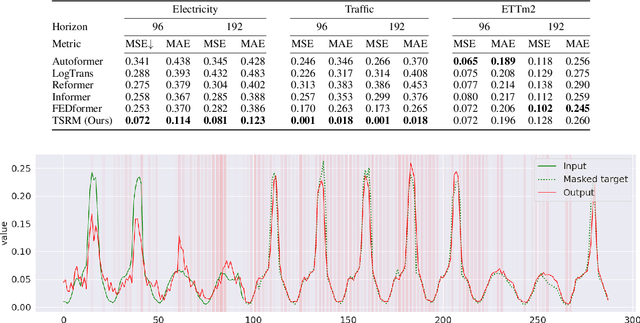
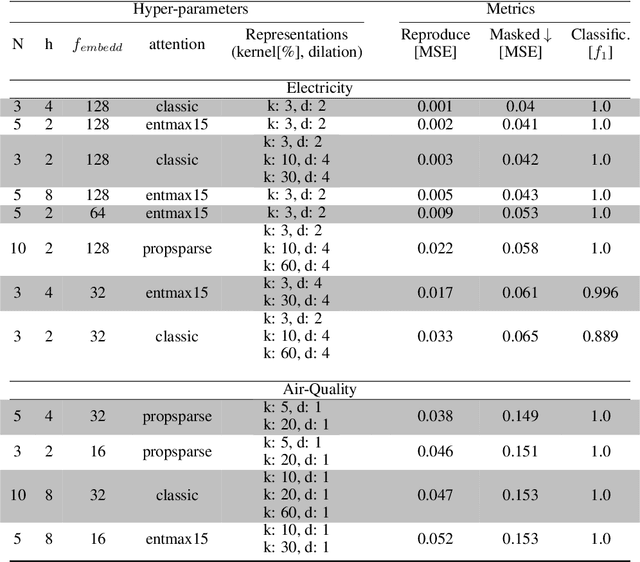
Time series analysis remains a major challenge due to its sparse characteristics, high dimensionality, and inconsistent data quality. Recent advancements in transformer-based techniques have enhanced capabilities in forecasting and imputation; however, these methods are still resource-heavy, lack adaptability, and face difficulties in integrating both local and global attributes of time series. To tackle these challenges, we propose a new architectural concept for time series analysis based on introspection. Central to this concept is the self-supervised pretraining of Time Series Representation Models (TSRMs), which once learned can be easily tailored and fine-tuned for specific tasks, such as forecasting and imputation, in an automated and resource-efficient manner. Our architecture is equipped with a flexible and hierarchical representation learning process, which is robust against missing data and outliers. It can capture and learn both local and global features of the structure, semantics, and crucial patterns of a given time series category, such as heart rate data. Our learned time series representation models can be efficiently adapted to a specific task, such as forecasting or imputation, without manual intervention. Furthermore, our architecture's design supports explainability by highlighting the significance of each input value for the task at hand. Our empirical study using four benchmark datasets shows that, compared to investigated state-of-the-art baseline methods, our architecture improves imputation and forecasting errors by up to 90.34% and 71.54%, respectively, while reducing the required trainable parameters by up to 92.43%. The source code is available at https://github.com/RobertLeppich/TSRM.
A Case Study of Vehicle Route Optimization
Nov 17, 2021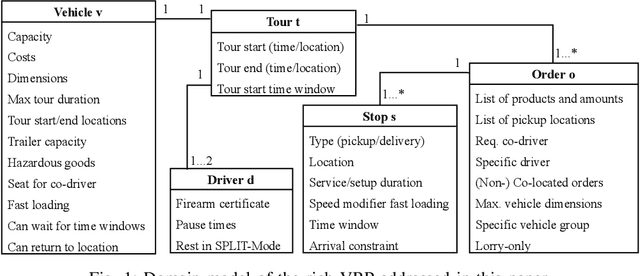
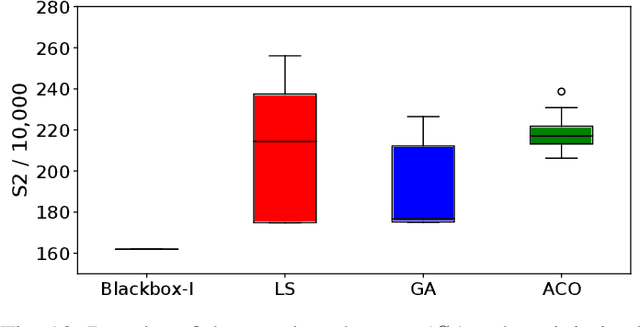
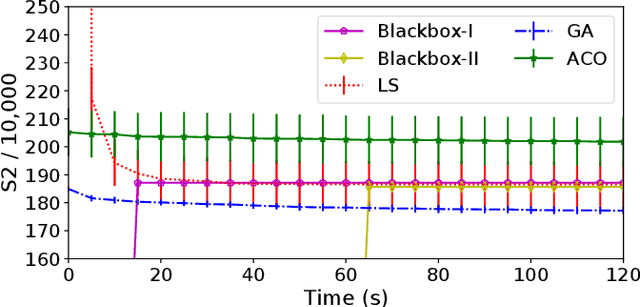
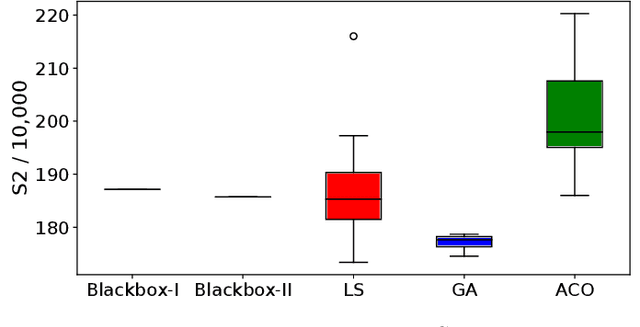
In the last decades, the classical Vehicle Routing Problem (VRP), i.e., assigning a set of orders to vehicles and planning their routes has been intensively researched. As only the assignment of order to vehicles and their routes is already an NP-complete problem, the application of these algorithms in practice often fails to take into account the constraints and restrictions that apply in real-world applications, the so called rich VRP (rVRP) and are limited to single aspects. In this work, we incorporate the main relevant real-world constraints and requirements. We propose a two-stage strategy and a Timeline algorithm for time windows and pause times, and apply a Genetic Algorithm (GA) and Ant Colony Optimization (ACO) individually to the problem to find optimal solutions. Our evaluation of eight different problem instances against four state-of-the-art algorithms shows that our approach handles all given constraints in a reasonable time.
A Survey on Predictive Maintenance for Industry 4.0
Feb 05, 2020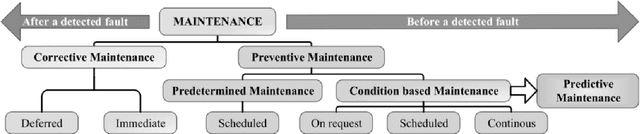
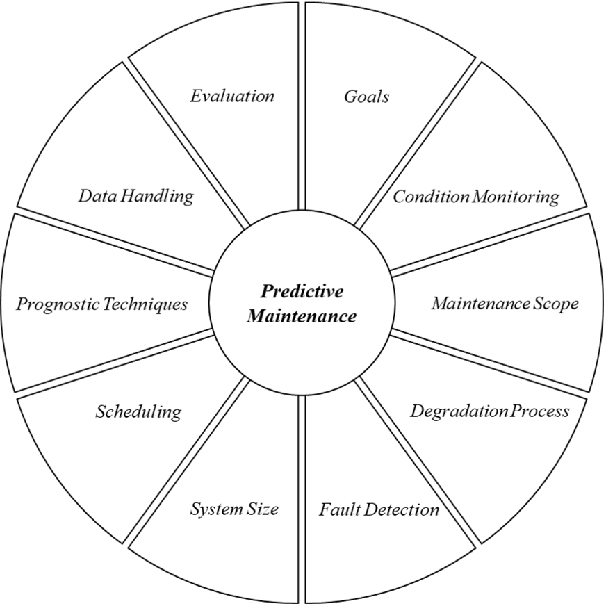
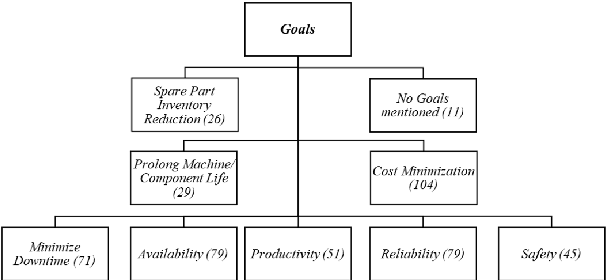
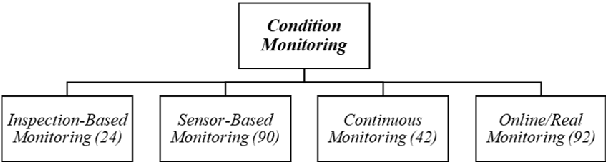
Production issues at Volkswagen in 2016 lead to dramatic losses in sales of up to 400 million Euros per week. This example shows the huge financial impact of a working production facility for companies. Especially in the data-driven domains of Industry 4.0 and Industrial IoT with intelligent, connected machines, a conventional, static maintenance schedule seems to be old-fashioned. In this paper, we present a survey on the current state of the art in predictive maintenance for Industry 4.0. Based on a structured literate survey, we present a classification of predictive maintenance in the context of Industry 4.0 and discuss recent developments in this area.