 Add to Chrome
 Add to Firefox
 Add to Edge
Synergy between Observation Systems Oceanic in Turbulent Regions
Jan 27, 2021

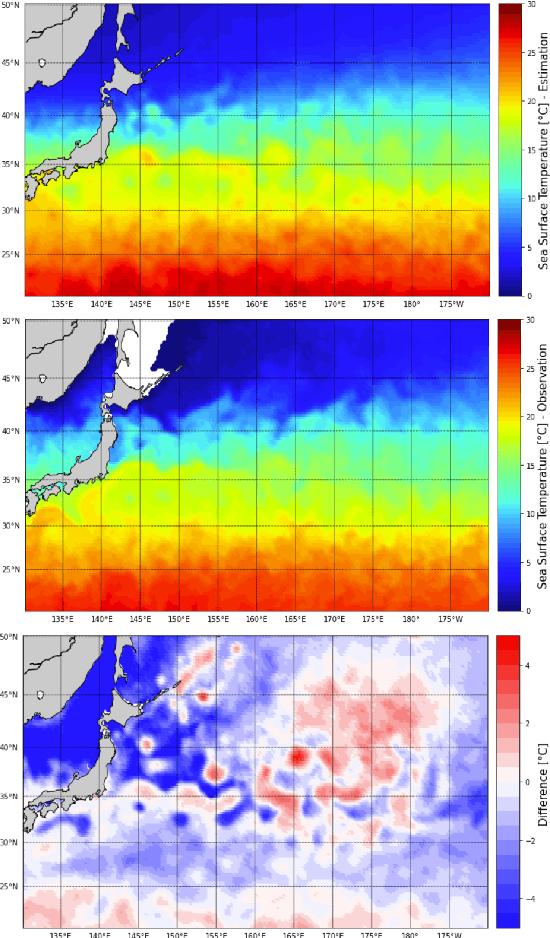


Ocean dynamics constitute a source of incertitude in determining the ocean's role in complex climatic phenomena. Current observation systems have limitations in achieving sufficiently statistical precision for three-dimensional oceanic data. It is crucial knowledge to describe the behavior of internal ocean structures. We present the data-driven approaches which explore latent class regressions and deep regression neural networks in modeling ocean dynamics in the extensions of Gulf Stream and Kuroshio currents. The obtained results show a promising data-driven direction for understanding the ocean's characteristics, including salinity and temperature, in both spatial and temporal dimensions in the turbulent regions. Our source codes are publicly available at https://github.com/v18nguye/gulfstream-lrm and at https://github.com/sagudelor/Kuroshio.

Unveiling Real-Life Effects of Online Photo Sharing
Dec 24, 2020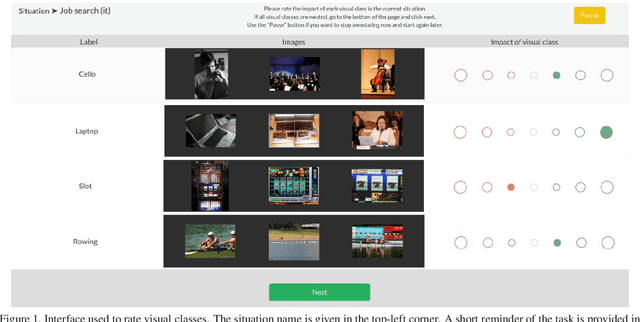

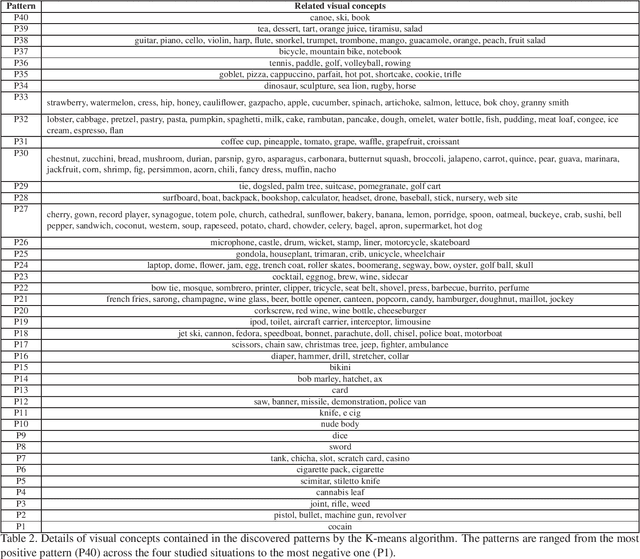
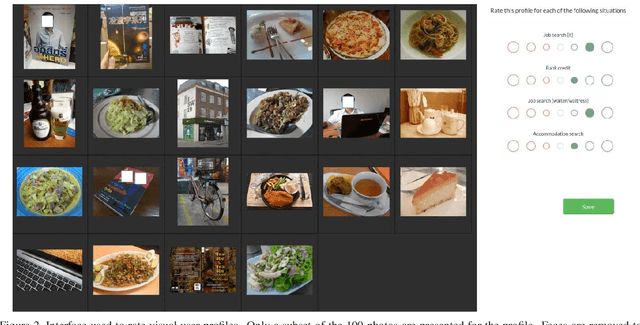
Social networks give free access to their services in exchange for the right to exploit their users' data. Data sharing is done in an initial context which is chosen by the users. However, data are used by social networks and third parties in different contexts which are often not transparent. We propose a new approach which unveils potential effects of data sharing in impactful real-life situations. Focus is put on visual content because of its strong influence in shaping online user profiles. The approach relies on three components: (1) a set of concepts with associated situation impact ratings obtained by crowdsourcing, (2) a corresponding set of object detectors used to analyze users' photos and (3) a ground truth dataset made of 500 visual user profiles which are manually rated for each situation. These components are combined in LERVUP, a method which learns to rate visual user profiles in each situation. LERVUP exploits a new image descriptor which aggregates concept ratings and object detections at user level. It also uses an attention mechanism to boost the detections of highly-rated concepts to prevent them from being overwhelmed by low-rated ones. Performance is evaluated per situation by measuring the correlation between the automatic ranking of profile ratings and a manual ground truth. Results indicate that LERVUP is effective since a strong correlation of the two rankings is obtained. This finding indicates that providing meaningful automatic situation-related feedback about the effects of data sharing is feasible.