 Add to Chrome
 Add to Firefox
 Add to Edge
Exploring Machine Learning, Deep Learning, and Explainable AI Methods for Seasonal Precipitation Prediction in South America
Dec 15, 2025
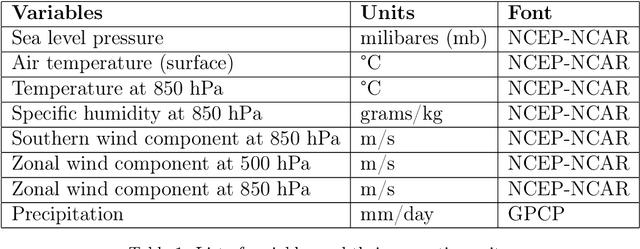
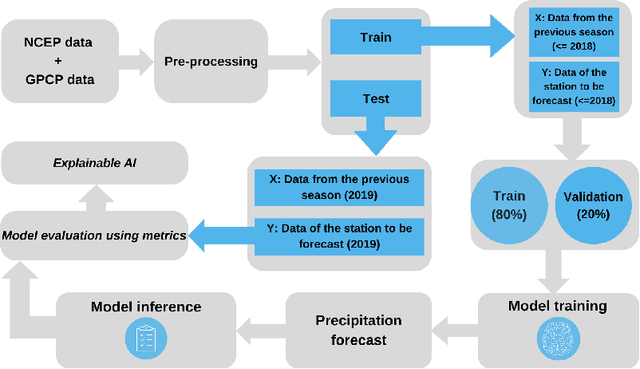
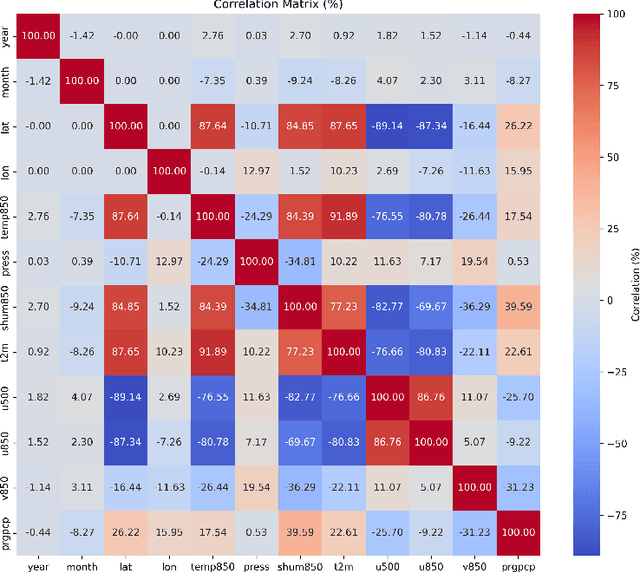
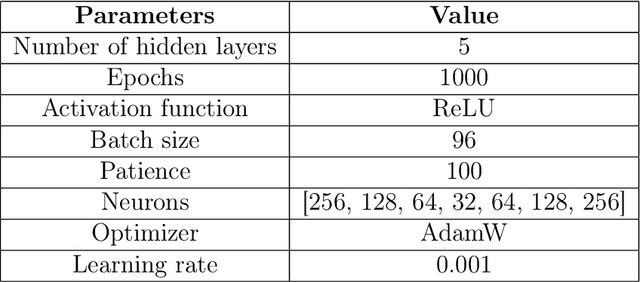
Forecasting meteorological variables is challenging due to the complexity of their processes, requiring advanced models for accuracy. Accurate precipitation forecasts are vital for society. Reliable predictions help communities mitigate climatic impacts. Based on the current relevance of artificial intelligence (AI), classical machine learning (ML) and deep learning (DL) techniques have been used as an alternative or complement to dynamic modeling. However, there is still a lack of broad investigations into the feasibility of purely data-driven approaches for precipitation forecasting. This study aims at addressing this issue where different classical ML and DL approaches for forecasting precipitation in South America, taking into account all 2019 seasons, are considered in a detailed investigation. The selected classical ML techniques were Random Forests and extreme gradient boosting (XGBoost), while the DL counterparts were a 1D convolutional neural network (CNN 1D), a long short-term memory (LSTM) model, and a gated recurrent unit (GRU) model. Additionally, the Brazilian Global Atmospheric Model (BAM) was used as a representative of the traditional dynamic modeling approach. We also relied on explainable artificial intelligence (XAI) to provide some explanations for the models behaviors. LSTM showed strong predictive performance while BAM, the traditional dynamic model representative, had the worst results. Despite presented the higher latency, LSTM was most accurate for heavy precipitation. If cost is a concern, XGBoost offers lower latency with slightly accuracy loss. The results of this research confirm the viability of DL models for climate forecasting, solidifying a global trend in major meteorological and climate forecasting centers.

Deep learning techniques for blind image super-resolution: A high-scale multi-domain perspective evaluation
Jun 15, 2023Despite several solutions and experiments have been conducted recently addressing image super-resolution (SR), boosted by deep learning (DL) techniques, they do not usually design evaluations with high scaling factors, capping it at 2x or 4x. Moreover, the datasets are generally benchmarks which do not truly encompass significant diversity of domains to proper evaluate the techniques. It is also interesting to remark that blind SR is attractive for real-world scenarios since it is based on the idea that the degradation process is unknown, and hence techniques in this context rely basically on low-resolution (LR) images. In this article, we present a high-scale (8x) controlled experiment which evaluates five recent DL techniques tailored for blind image SR: Adaptive Pseudo Augmentation (APA), Blind Image SR with Spatially Variant Degradations (BlindSR), Deep Alternating Network (DAN), FastGAN, and Mixture of Experts Super-Resolution (MoESR). We consider 14 small datasets from five different broader domains which are: aerial, fauna, flora, medical, and satellite. Another distinctive characteristic of our evaluation is that some of the DL approaches were designed for single-image SR but others not. Two no-reference metrics were selected, being the classical natural image quality evaluator (NIQE) and the recent transformer-based multi-dimension attention network for no-reference image quality assessment (MANIQA) score, to assess the techniques. Overall, MoESR can be regarded as the best solution although the perceptual quality of the created HR images of all the techniques still needs to improve. Supporting code: https://github.com/vsantjr/DL_BlindSR. Datasets: https://www.kaggle.com/datasets/valdivinosantiago/dl-blindsr-datasets.