 Add to Chrome
 Add to Firefox
 Add to Edge
HoF-Bench: Rediscovering Real AI-Discovered CVEs Without Frontier Models
Jul 29, 2026
LLM-based analyzers have begun finding real vulnerabilities in mature open-source projects: AISLE's analyzer is credited with more than 280 CVEs across 78 projects, including OpenSSL, curl, and GnuTLS. We introduce HoF-Bench (named after AISLE's public Hall of Fame), a benchmark built from 95 of these public AI-discovered CVEs across eight repositories pinned at vulnerable commits. Analyzers receive source and target-file scope but not CVE identifiers, descriptions, fixes, or expected mechanisms; a detector-blinded frontier-model judge credits only findings that identify the same code path, root cause, attack condition, and impact. A deliberately minimal LLM-based analyzer rediscovers up to 65 of the 95 CVEs (68%) under this strict protocol. No frontier model performs detection anywhere in the study. The ten detector backbones are five open-weight models (21B--284B total parameters, 3--13B active) and five proprietary small or "flash"-tier models. All of them run in the fixed scaffold with four repeated passes, an optional generated-context stage, and a replayable multi-round triage stage (7,600 model--CVE pass records). Difficulty is strongly structured by language; the CVEs missed by every model concentrate in C infrastructure code. HoF-Bench provides a compact test bed for comparing vulnerability scanners, their reliability across repeated runs, and the candidate volume they create. The dataset is available at https://huggingface.co/datasets/aisleinc/HoF-Bench.

The Minecraft Kernel: Modelling correlated Gaussian Processes in the Fourier domain
Mar 11, 2021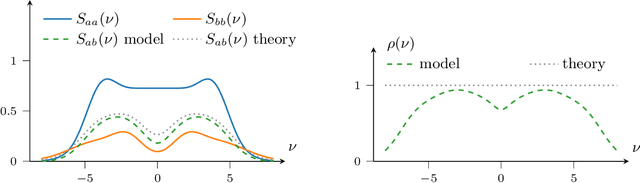
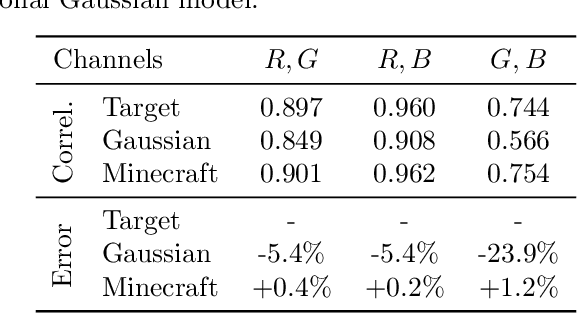
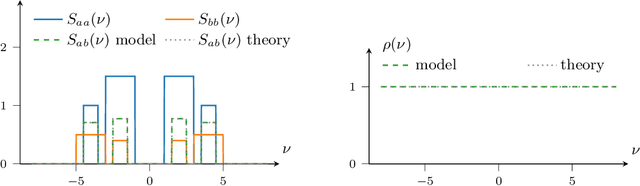
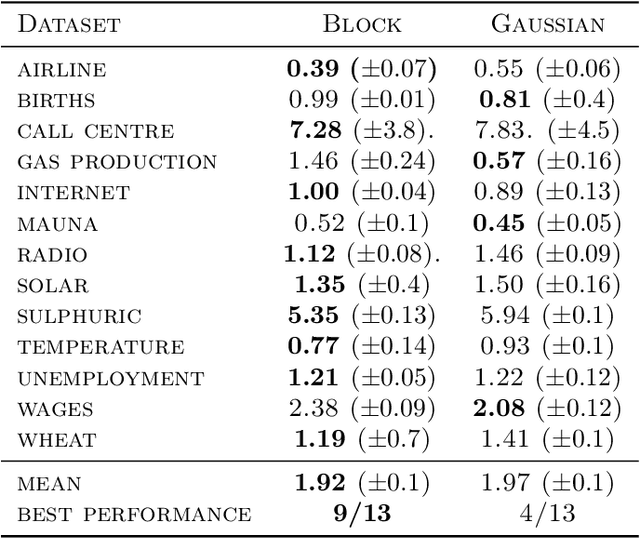
In the univariate setting, using the kernel spectral representation is an appealing approach for generating stationary covariance functions. However, performing the same task for multiple-output Gaussian processes is substantially more challenging. We demonstrate that current approaches to modelling cross-covariances with a spectral mixture kernel possess a critical blind spot. For a given pair of processes, the cross-covariance is not reproducible across the full range of permitted correlations, aside from the special case where their spectral densities are of identical shape. We present a solution to this issue by replacing the conventional Gaussian components of a spectral mixture with block components of finite bandwidth (i.e. rectangular step functions). The proposed family of kernel represents the first multi-output generalisation of the spectral mixture kernel that can approximate any stationary multi-output kernel to arbitrary precision.