 Add to Chrome
 Add to Firefox
 Add to Edge
Generalizable VLA Finetuning via Representation Anchoring and Language-Action Alignment
Jul 15, 2026
Finetuning a pretrained vision-language model (VLM) on robot demonstrations via behavior cloning (BC) has become the standard recipe for vision-language-action (VLA) policies. However, BC finetuning progressively overwrites the pretrained representations that support visual and semantic generalization. Co-training on web image-text data, a common remedy, does not prevent this; it applies language and action losses to separate observations, leaving VLAs with language-action misalignment that standard manipulation benchmarks do not expose. We propose Anchor-Align, which augments BC with two objectives: Vision-Language Anchoring distills layer-wise representations from a frozen VLM copy to prevent this drift, while Language-Action Alignment converts each action target into a discrete motion-direction label and jointly trains language and action prediction on the same robot observation. On a physical xArm7 robot, across two widely used VLA architectures, Anchor-Align improves real-robot success on both (28% to 54% and 37% to 60%). At scale in simulation, we demonstrate consistent improvements on OOD perturbations, perceptual robustness, and long-horizon control across LIBERO-PRO, LIBERO-Plus, and CALVIN, respectively, suggesting that preserving pretrained representations and effective action learning are not fundamentally at odds. Project page: anchoralignvla.github.io

GRAFT: Graph-Based Affordance Transfer via Part Correspondence
Jun 23, 2026Generalizing robotic manipulation to unseen objects remains challenging, as learning-based approaches require many demonstrations and fail in few-shot settings. Prior work transfers affordances through semantic retrieval, but semantics alone neglect geometric similarity, which is critical for manipulation. We propose GRAFT, a geometry-aware correspondence framework for zero-shot manipulation transfer using only one demonstration per object. Objects are represented as part-based graphs, where part-level descriptors support global instance retrieval and part correspondence, and vertex-level descriptors enable fine-grained contact point matching. For an unseen object, our method first retrieves the most functionally and geometrically similar instance from the demonstration buffer with aligned functional parts, and finally propagates the contact points through point-wise correspondence.
City Navigation in the Wild: Exploring Emergent Navigation from Web-Scale Knowledge in MLLMs
Dec 17, 2025Leveraging multimodal large language models (MLLMs) to develop embodied agents offers significant promise for addressing complex real-world tasks. However, current evaluation benchmarks remain predominantly language-centric or heavily reliant on simulated environments, rarely probing the nuanced, knowledge-intensive reasoning essential for practical, real-world scenarios. To bridge this critical gap, we introduce the task of Sparsely Grounded Visual Navigation, explicitly designed to evaluate the sequential decision-making abilities of MLLMs in challenging, knowledge-intensive real-world environments. We operationalize this task with CityNav, a comprehensive benchmark encompassing four diverse global cities, specifically constructed to assess raw MLLM-driven agents in city navigation. Agents are required to rely solely on visual inputs and internal multimodal reasoning to sequentially navigate 50+ decision points without additional environmental annotations or specialized architectural modifications. Crucially, agents must autonomously achieve localization through interpreting city-specific cues and recognizing landmarks, perform spatial reasoning, and strategically plan and execute routes to their destinations. Through extensive evaluations, we demonstrate that current state-of-the-art MLLMs and standard reasoning techniques (e.g., Chain-of-Thought, Reflection) significantly underperform in this challenging setting. To address this, we propose Verbalization of Path (VoP), which explicitly grounds the agent's internal reasoning by probing an explicit cognitive map (key landmarks and directions toward the destination) from the MLLMs, substantially enhancing navigation success. Project Webpage: https://dwipddalal.github.io/AgentNav/
ClassiFIM: An Unsupervised Method To Detect Phase Transitions
Aug 06, 2024
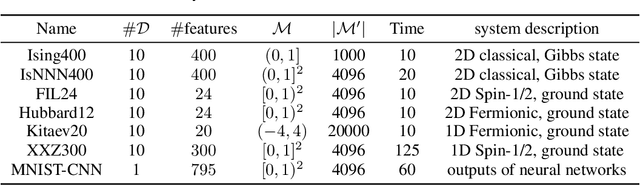
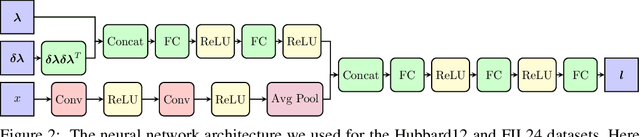
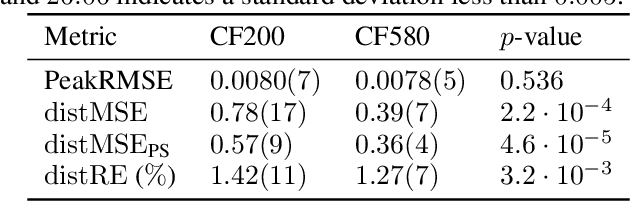
Estimation of the Fisher Information Metric (FIM-estimation) is an important task that arises in unsupervised learning of phase transitions, a problem proposed by physicists. This work completes the definition of the task by defining rigorous evaluation metrics distMSE, distMSEPS, and distRE and introduces ClassiFIM, a novel machine learning method designed to solve the FIM-estimation task. Unlike existing methods for unsupervised learning of phase transitions, ClassiFIM directly estimates a well-defined quantity (the FIM), allowing it to be rigorously compared to any present and future other methods that estimate the same. ClassiFIM transforms a dataset for the FIM-estimation task into a dataset for an auxiliary binary classification task and involves selecting and training a model for the latter. We prove that the output of ClassiFIM approaches the exact FIM in the limit of infinite dataset size and under certain regularity conditions. We implement ClassiFIM on multiple datasets, including datasets describing classical and quantum phase transitions, and find that it achieves a good ground truth approximation with modest computational resources. Furthermore, we independently implement two alternative state-of-the-art methods for unsupervised estimation of phase transition locations on the same datasets and find that ClassiFIM predicts such locations at least as well as these other methods. To emphasize the generality of our method, we also propose and generate the MNIST-CNN dataset, which consists of the output of CNNs trained on MNIST for different hyperparameter choices. Using ClassiFIM on this dataset suggests there is a phase transition in the distribution of image-prediction pairs for CNNs trained on MNIST, demonstrating the broad scope of FIM-estimation beyond physics.