 Add to Chrome
 Add to Firefox
 Add to Edge
Privacy-Preserving Feature Valuation in Vertical Federated Learning Using Shapley-CMI and PSI Permutation
Dec 16, 2025
Federated Learning (FL) is an emerging machine learning paradigm that enables multiple parties to collaboratively train models without sharing raw data, ensuring data privacy. In Vertical FL (VFL), where each party holds different features for the same users, a key challenge is to evaluate the feature contribution of each party before any model is trained, particularly in the early stages when no model exists. To address this, the Shapley-CMI method was recently proposed as a model-free, information-theoretic approach to feature valuation using Conditional Mutual Information (CMI). However, its original formulation did not provide a practical implementation capable of computing the required permutations and intersections securely. This paper presents a novel privacy-preserving implementation of Shapley-CMI for VFL. Our system introduces a private set intersection (PSI) server that performs all necessary feature permutations and computes encrypted intersection sizes across discretized and encrypted ID groups, without the need for raw data exchange. Each party then uses these intersection results to compute Shapley-CMI values, computing the marginal utility of their features. Initial experiments confirm the correctness and privacy of the proposed system, demonstrating its viability for secure and efficient feature contribution estimation in VFL. This approach ensures data confidentiality, scales across multiple parties, and enables fair data valuation without requiring the sharing of raw data or training models.

Deep learning models for predictive maintenance: a survey, comparison, challenges and prospect
Oct 07, 2020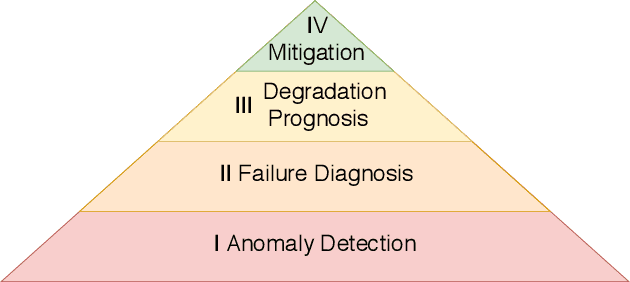
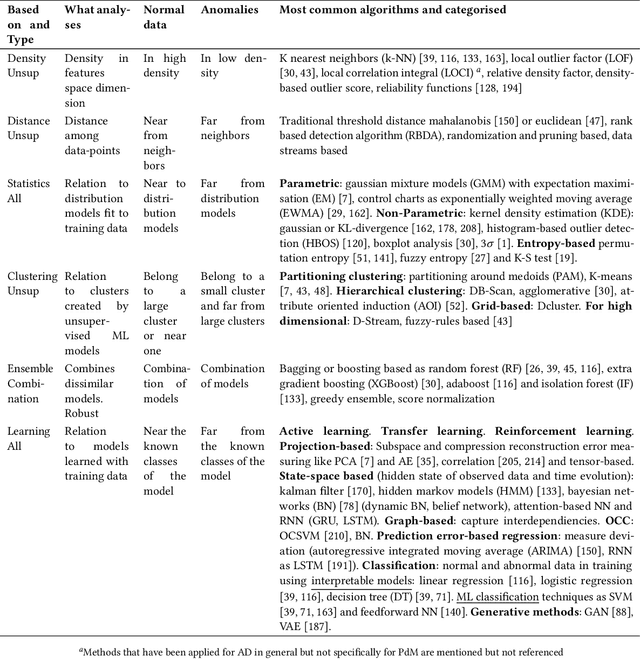
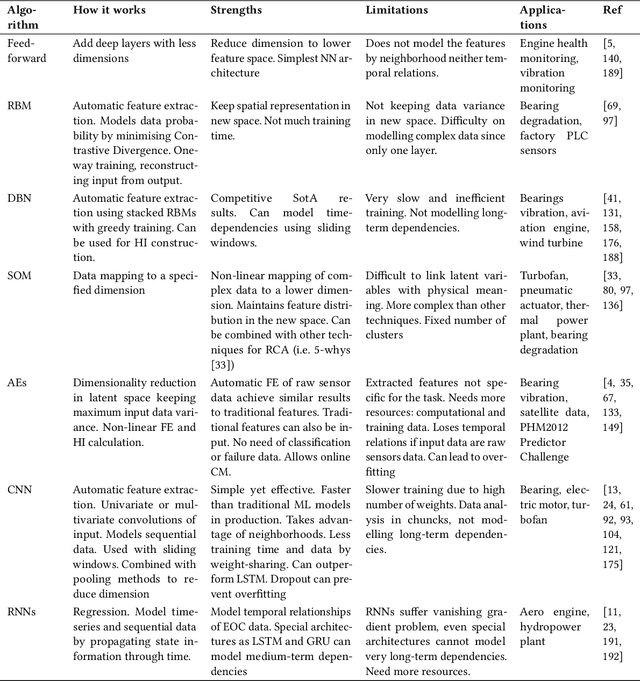
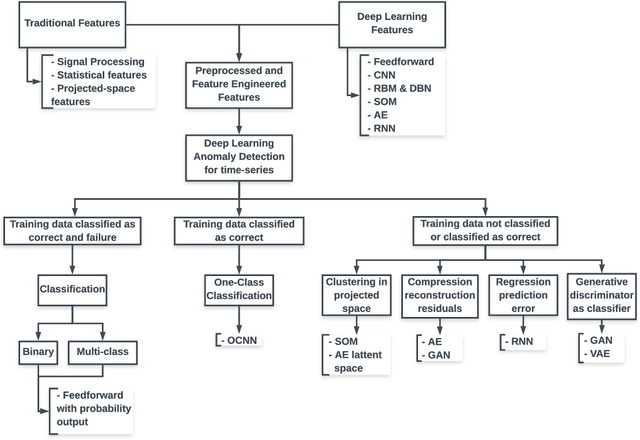
Given the growing amount of industrial data spaces worldwide, deep learning solutions have become popular for predictive maintenance, which monitor assets to optimise maintenance tasks. Choosing the most suitable architecture for each use-case is complex given the number of examples found in literature. This work aims at facilitating this task by reviewing state-of-the-art deep learning architectures, and how they integrate with predictive maintenance stages to meet industrial companies' requirements (i.e. anomaly detection, root cause analysis, remaining useful life estimation). They are categorised and compared in industrial applications, explaining how to fill their gaps. Finally, open challenges and future research paths are presented.