 Add to Chrome
 Add to Firefox
 Add to Edge
Enterprise AI Canvas -- Integrating Artificial Intelligence into Business
Sep 18, 2020

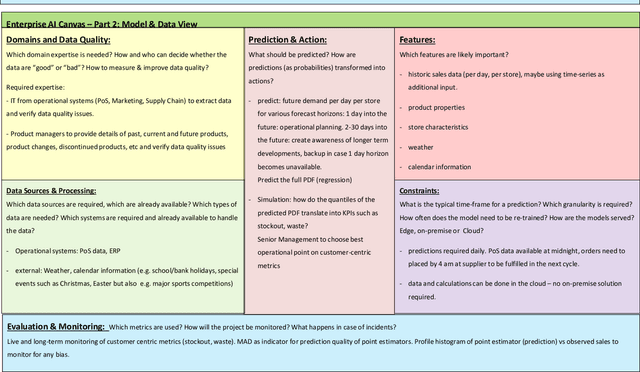
Artificial Intelligence (AI) and Machine Learning have enormous potential to transform businesses and disrupt entire industry sectors. However, companies wishing to integrate algorithmic decisions into their face multiple challenges: They have to identify use-cases in which artificial intelligence can create value, as well as decisions that can be supported or executed automatically. Furthermore, the organization will need to be transformed to be able to integrate AI based systems into their human work-force. Furthermore, the more technical aspects of the underlying machine learning model have to be discussed in terms of how they impact the various units of a business: Where do the relevant data come from, which constraints have to be considered, how is the quality of the data and the prediction evaluated? The Enterprise AI canvas is designed to bring Data Scientist and business expert together to discuss and define all relevant aspects which need to be clarified in order to integrate AI based systems into a digital enterprise. It consists of two parts where part one focuses on the business view and organizational aspects, whereas part two focuses on the underlying machine learning model and the data it uses.

Demand Forecasting of individual Probability Density Functions with Machine Learning
Sep 15, 2020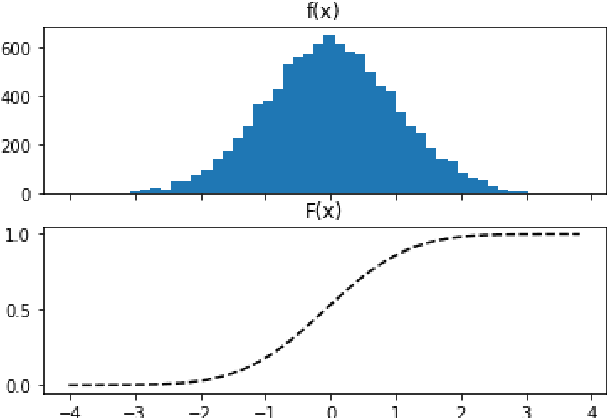
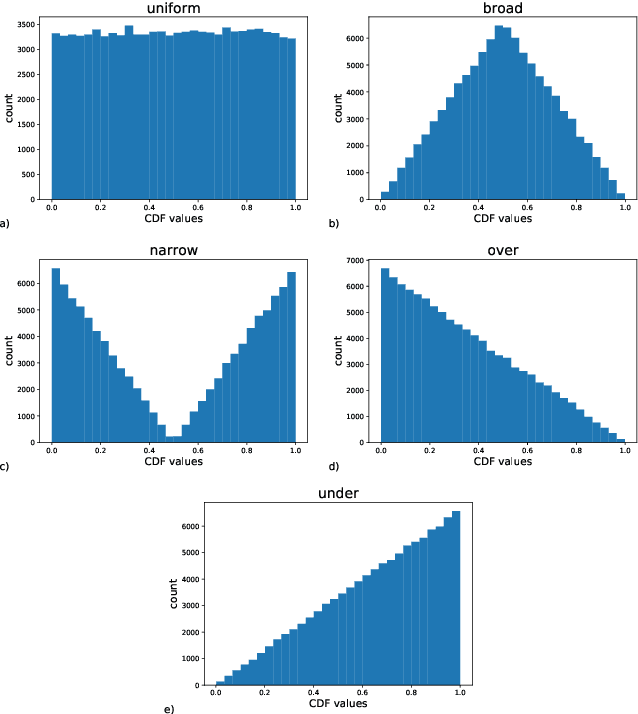
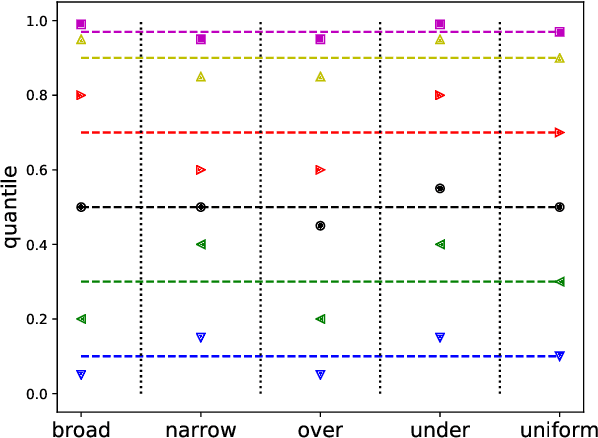
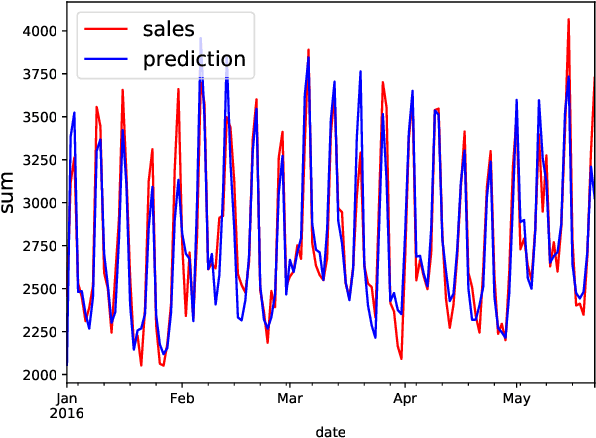
Demand forecasting is a central component for many aspects of supply chain operations, as it provides crucial input for subsequent decision making like ordering processes. While machine learning methods can significantly improve prediction accuracy over traditional time series forecasting, the calculated predictions are often just point estimations for the conditional mean of the underlying probability distribution, and the most powerful approaches, like deep learning, are usually opaque in terms of how its individual predictions can be interpreted. Using the novel supervised machine learning method "Cyclic Boosting", complete individual probability density functions can be predicted instead of single numbers. While metrics evaluating point estimates are widely used, methods for assessing the accuracy of predicted distributions are rare and this work proposes new techniques for both qualitative and quantitative evaluation methods. Additionally, each single prediction obtained with this framework is explainable. This is a major benefit in particular for practitioners, as this allows them to avoid "black-box" models and understand the contributing factors for each individual prediction.