 Add to Chrome
 Add to Firefox
 Add to Edge
QUPID: A Partitioned Quantum Neural Network for Anomaly Detection in Smart Grid
Jan 16, 2026
Smart grid infrastructures have revolutionized energy distribution, but their day-to-day operations require robust anomaly detection methods to counter risks associated with cyber-physical threats and system faults potentially caused by natural disasters, equipment malfunctions, and cyber attacks. Conventional machine learning (ML) models are effective in several domains, yet they struggle to represent the complexities observed in smart grid systems. Furthermore, traditional ML models are highly susceptible to adversarial manipulations, making them increasingly unreliable for real-world deployment. Quantum ML (QML) provides a unique advantage, utilizing quantum-enhanced feature representations to model the intricacies of the high-dimensional nature of smart grid systems while demonstrating greater resilience to adversarial manipulation. In this work, we propose QUPID, a partitioned quantum neural network (PQNN) that outperforms traditional state-of-the-art ML models in anomaly detection. We extend our model to R-QUPID that even maintains its performance when including differential privacy (DP) for enhanced robustness. Moreover, our partitioning framework addresses a significant scalability problem in QML by efficiently distributing computational workloads, making quantum-enhanced anomaly detection practical in large-scale smart grid environments. Our experimental results across various scenarios exemplifies the efficacy of QUPID and R-QUPID to significantly improve anomaly detection capabilities and robustness compared to traditional ML approaches.

Analysis of Privacy Leakage in Federated Large Language Models
Mar 02, 2024

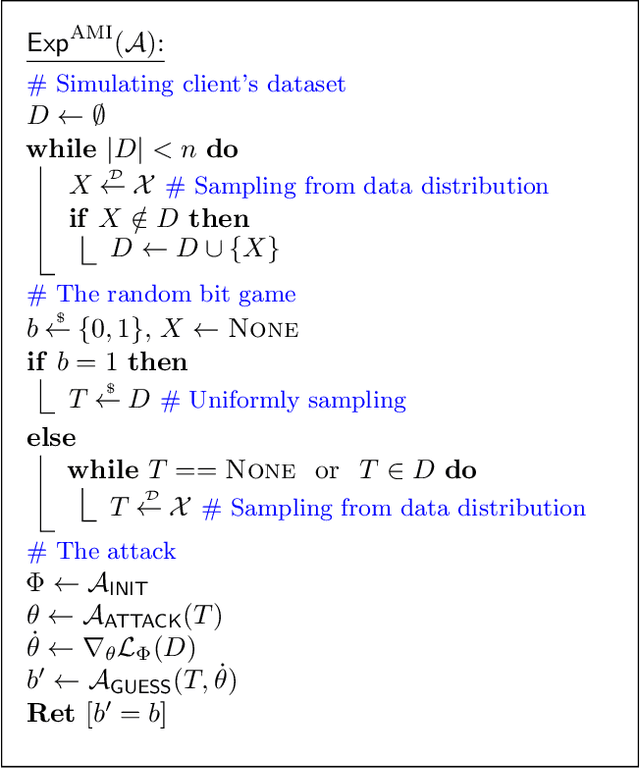

With the rapid adoption of Federated Learning (FL) as the training and tuning protocol for applications utilizing Large Language Models (LLMs), recent research highlights the need for significant modifications to FL to accommodate the large-scale of LLMs. While substantial adjustments to the protocol have been introduced as a response, comprehensive privacy analysis for the adapted FL protocol is currently lacking. To address this gap, our work delves into an extensive examination of the privacy analysis of FL when used for training LLMs, both from theoretical and practical perspectives. In particular, we design two active membership inference attacks with guaranteed theoretical success rates to assess the privacy leakages of various adapted FL configurations. Our theoretical findings are translated into practical attacks, revealing substantial privacy vulnerabilities in popular LLMs, including BERT, RoBERTa, DistilBERT, and OpenAI's GPTs, across multiple real-world language datasets. Additionally, we conduct thorough experiments to evaluate the privacy leakage of these models when data is protected by state-of-the-art differential privacy (DP) mechanisms.
OASIS: Offsetting Active Reconstruction Attacks in Federated Learning
Nov 23, 2023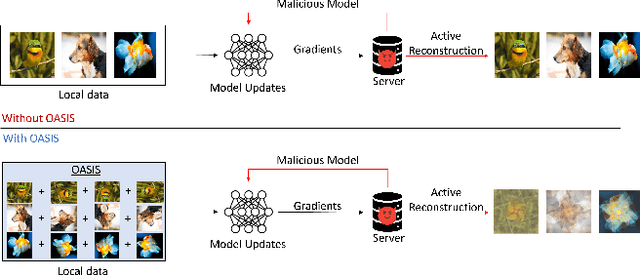
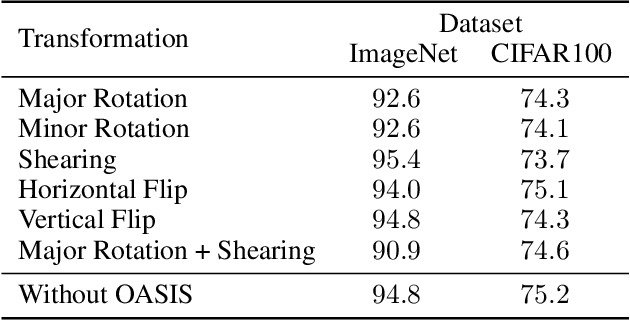


Federated Learning (FL) has garnered significant attention for its potential to protect user privacy while enhancing model training efficiency. However, recent research has demonstrated that FL protocols can be easily compromised by active reconstruction attacks executed by dishonest servers. These attacks involve the malicious modification of global model parameters, allowing the server to obtain a verbatim copy of users' private data by inverting their gradient updates. Tackling this class of attack remains a crucial challenge due to the strong threat model. In this paper, we propose OASIS, a defense mechanism based on image augmentation that effectively counteracts active reconstruction attacks while preserving model performance. We first uncover the core principle of gradient inversion that enables these attacks and theoretically identify the main conditions by which the defense can be robust regardless of the attack strategies. We then construct OASIS with image augmentation showing that it can undermine the attack principle. Comprehensive evaluations demonstrate the efficacy of OASIS highlighting its feasibility as a solution.
Blockchain-based Secure Client Selection in Federated Learning
May 11, 2022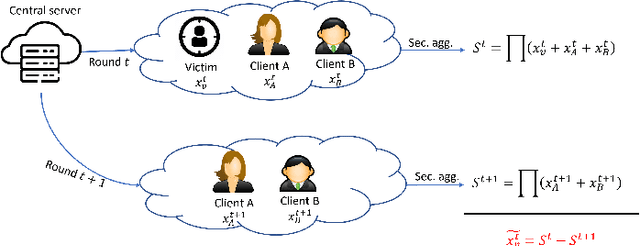
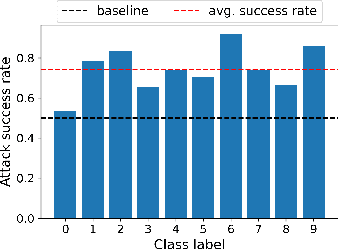
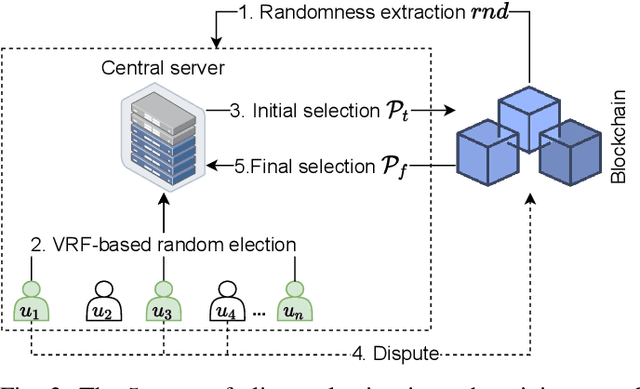
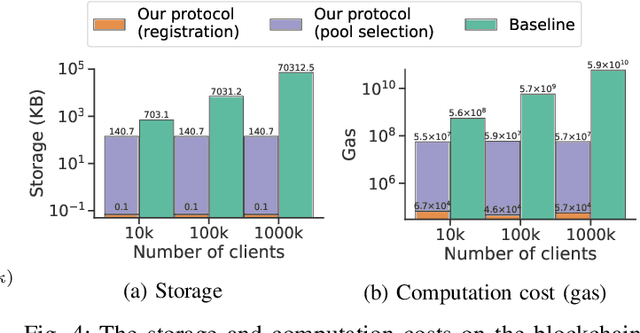
Despite the great potential of Federated Learning (FL) in large-scale distributed learning, the current system is still subject to several privacy issues due to the fact that local models trained by clients are exposed to the central server. Consequently, secure aggregation protocols for FL have been developed to conceal the local models from the server. However, we show that, by manipulating the client selection process, the server can circumvent the secure aggregation to learn the local models of a victim client, indicating that secure aggregation alone is inadequate for privacy protection. To tackle this issue, we leverage blockchain technology to propose a verifiable client selection protocol. Owing to the immutability and transparency of blockchain, our proposed protocol enforces a random selection of clients, making the server unable to control the selection process at its discretion. We present security proofs showing that our protocol is secure against this attack. Additionally, we conduct several experiments on an Ethereum-like blockchain to demonstrate the feasibility and practicality of our solution.