 Add to Chrome
 Add to Firefox
 Add to Edge
Comprehensive Evaluation of Rule-Based, Machine Learning, and Deep Learning in Human Estimation Using Radio Wave Sensing: Accuracy, Spatial Generalization, and Output Granularity Trade-offs
Dec 15, 2025
This study presents the first comprehensive comparison of rule-based methods, traditional machine learning models, and deep learning models in radio wave sensing with frequency modulated continuous wave multiple input multiple output radar. We systematically evaluated five approaches in two indoor environments with distinct layouts: a rule-based connected component method; three traditional machine learning models, namely k-nearest neighbors, random forest, and support vector machine; and a deep learning model combining a convolutional neural network and long short term memory. In the training environment, the convolutional neural network long short term memory model achieved the highest accuracy, while traditional machine learning models provided moderate performance. In a new layout, however, all learning based methods showed significant degradation, whereas the rule-based method remained stable. Notably, for binary detection of presence versus absence of people, all models consistently achieved high accuracy across layouts. These results demonstrate that high capacity models can produce fine grained outputs with high accuracy in the same environment, but they are vulnerable to domain shift. In contrast, rule-based methods cannot provide fine grained outputs but exhibit robustness against domain shift. Moreover, regardless of the model type, a clear trade off was revealed between spatial generalization performance and output granularity.

Comprehensive Deployment-Oriented Assessment for Cross-Environment Generalization in Deep Learning-Based mmWave Radar Sensing
Dec 15, 2025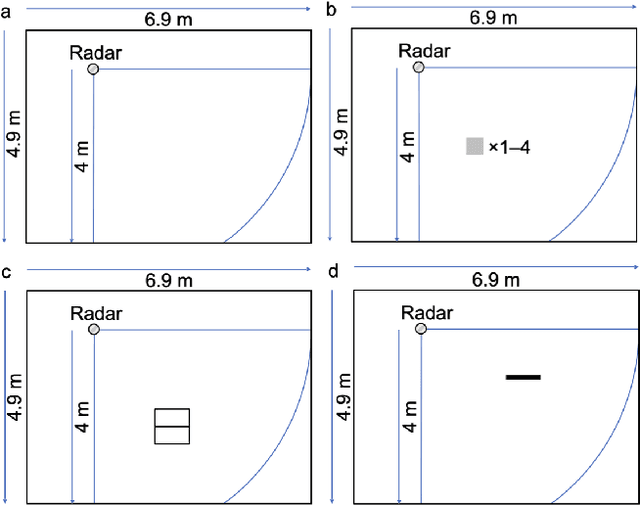
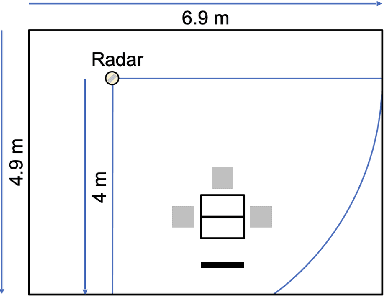
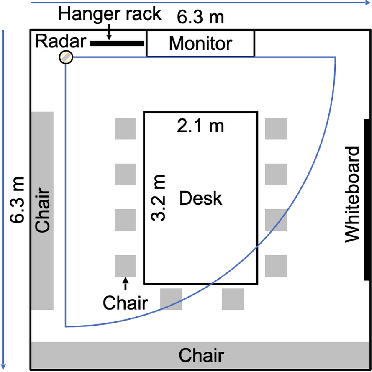
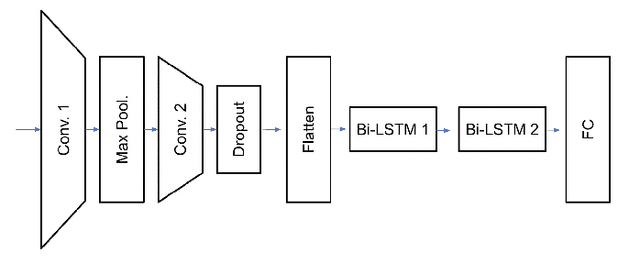
This study presents the first comprehensive evaluation of spatial generalization techniques, which are essential for the practical deployment of deep learning-based radio-frequency (RF) sensing. Focusing on people counting in indoor environments using frequency-modulated continuous-wave (FMCW) multiple-input multiple-output (MIMO) radar, we systematically investigate a broad set of approaches, including amplitude-based statistical preprocessing (sigmoid weighting and threshold zeroing), frequency-domain filtering, autoencoder-based background suppression, data augmentation strategies, and transfer learning. Experimental results collected across two environments with different layouts demonstrate that sigmoid-based amplitude weighting consistently achieves superior cross-environment performance, yielding 50.1% and 55.2% reductions in root-mean-square error (RMSE) and mean absolute error (MAE), respectively, compared with baseline methods. Data augmentation provides additional though modest benefits, with improvements up to 8.8% in MAE. By contrast, transfer learning proves indispensable for large spatial shifts, achieving 82.1% and 91.3% reductions in RMSE and MAE, respectively, with 540 target-domain samples. Taken together, these findings establish a highly practical direction for developing radar sensing systems capable of maintaining robust accuracy under spatial variations by integrating deep learning models with amplitude-based preprocessing and efficient transfer learning.