 Add to Chrome
 Add to Firefox
 Add to Edge
Optimal Multispectral Imaging using RGB Cameras
Apr 21, 2026
We present a physics-driven framework for accurate evaluation of discrete spectral bands using a low-cost multispectral setup built from off-the-shelf RGB cameras and narrow multi-band optical filters. The approach starts by explicitly formulating a linear measurement model. The camera responses are expressed as linear mixtures of unknown spectral components, with mixing coefficients determined by the overlap between the camera spectral sensitivities and the filter transmittances. For a multi-camera configuration, the per-camera models are stacked into a single global system whose structure is fully determined by the allocation of target wavelengths across the camera--filter units. We pose wavelength allocation as a deterministic design problem and select the configuration that minimizes the spectral condition number of the resulting system matrix. Guided by a frame-theoretic interpretation, this criterion promotes numerical stability, maximizes worst-case output signal-to-noise ratio, and improves the robustness of spectral reconstruction. The design space is finite, enabling the evaluation of all feasible configurations under practical constraints. We demonstrate the method on a representative example with 12 target wavelengths and four triband filters, and identify the wavelength allocation that yields the most stable and noise-robust recovery. The proposed framework includes redundant configurations, in which individual wavelengths are measured by multiple cameras, thereby providing additional degrees of freedom that further improve noise robustness.

Accurate 2D Reconstruction for PET Scanners based on the Analytical White Image Model
Jun 30, 2023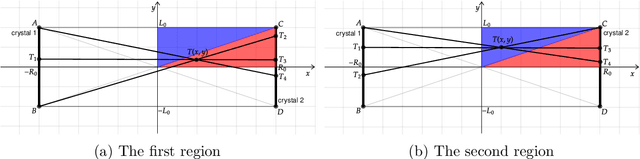

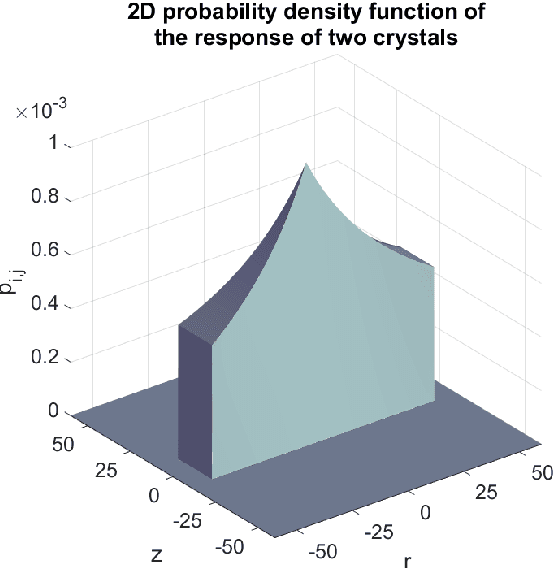
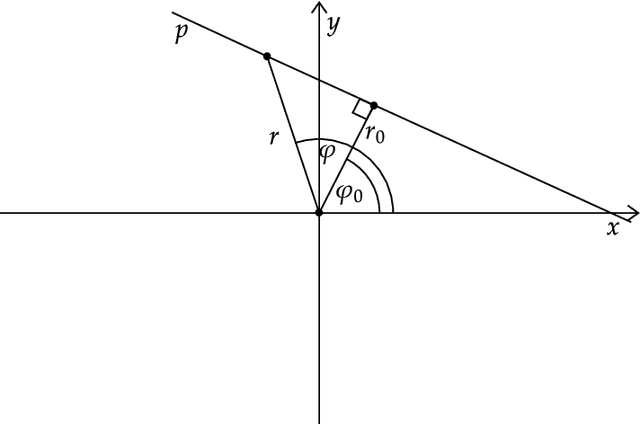
In this paper, we provide a precise mathematical model of crystal-to-crystal response which is used to generate the white image - a necessary compensation model needed to overcome the physical limitations of the PET scanner. We present a closed-form solution, as well as several accurate approximations, due to the complexity of the exact mathematical expressions. We prove, experimentally and analytically, that the difference between the best approximations and real crystal-to-crystal response is insignificant. The obtained responses are used to generate the white image compensation model. It can be written as a single closed-form expression making it easy to implement in known reconstruction methods. The maximum likelihood expectation maximization (MLEM) algorithm is modified and our white image model is integrated into it. The modified MLEM algorithm is not based on the system matrix, rather it is based on ray-driven projections and back-projections. The compensation model provides all necessary information about the system. Finally, we check our approach on synthetic and real data. For the real-world acquisition, we use the Raytest ClearPET camera for small animals and the NEMA NU 4-2008 phantom. The proposed approach overperforms competitive, non-compensated reconstruction methods.
Accurate PET Reconstruction from Reduced Set of Measurements based on GMM
Jun 29, 2023In this paper, we provide a novel method for the estimation of unknown parameters of the Gaussian Mixture Model (GMM) in Positron Emission Tomography (PET). A vast majority of PET imaging methods are based on reconstruction model that is defined by values on some pixel/voxel grid. Instead, we propose a continuous parametric GMM model. Usually, Expectation-Maximization (EM) iterations are used to obtain the GMM model parameters from some set of point-wise measurements. The challenge of PET reconstruction is that the measurement is represented by the so called lines of response (LoR), instead of points. The goal is to estimate the unknown parameters of the Gaussian mixture directly from a relatively small set of LoR-s. Estimation of unknown parameters relies on two facts: the marginal distribution theorem of the multivariate normal distribution; and the properties of the marginal distribution of LoR-s. We propose an iterative algorithm that resembles the maximum-likelihood method to determine the unknown parameters. Results show that the estimated parameters follow the correct ones with a great accuracy. The result is promising, since the high-quality parametric reconstruction model can be obtained from lower dose measurements, and is directly suitable for further processing.
Estimating Uncertainty in PET Image Reconstruction via Deep Posterior Sampling
Jun 07, 2023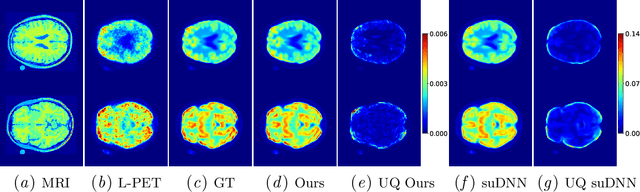

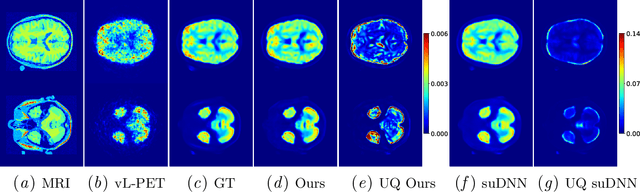

Positron emission tomography (PET) is an important functional medical imaging technique often used in the evaluation of certain brain disorders, whose reconstruction problem is ill-posed. The vast majority of reconstruction methods in PET imaging, both iterative and deep learning, return a single estimate without quantifying the associated uncertainty. Due to ill-posedness and noise, a single solution can be misleading or inaccurate. Thus, providing a measure of uncertainty in PET image reconstruction can help medical practitioners in making critical decisions. This paper proposes a deep learning-based method for uncertainty quantification in PET image reconstruction via posterior sampling. The method is based on training a conditional generative adversarial network whose generator approximates sampling from the posterior in Bayesian inversion. The generator is conditioned on reconstruction from a low-dose PET scan obtained by a conventional reconstruction method and a high-quality magnetic resonance image and learned to estimate a corresponding standard-dose PET scan reconstruction. We show that the proposed model generates high-quality posterior samples and yields physically-meaningful uncertainty estimates.