 Add to Chrome
 Add to Firefox
 Add to Edge
Agreement, Diversity, and Polarization Indices for Approval Elections
May 14, 2026
An index is a function that given an election outputs a value between 0 and 1, indicating the extent to which this election has a particular feature. We seek indices that capture agreement, diversity, and polarization among voters in approval elections, and that are normalized with respect to saturation. By the latter we mean that if two elections differ by the fraction of candidates approved by an average voter, but otherwise are of similar nature, then they should have similar index values. We propose several indices, analyze their properties, and use them to (a) derive a new map of approval elections, and (b) show similarities and differences between various real-life elections from Pabulib, Preflib and other sources.

Outer Diversity of Structured Domains
Feb 17, 2026An ordinal preference domain is a subset of preference orders that the voters are allowed to cast in an election. We introduce and study the notion of outer diversity of a domain and evaluate its value for a number of well-known structured domains, such as the single-peaked, single-crossing, group-separable, and Euclidean ones.
Diversity of Structured Domains via k-Kemeny Scores
Sep 19, 2025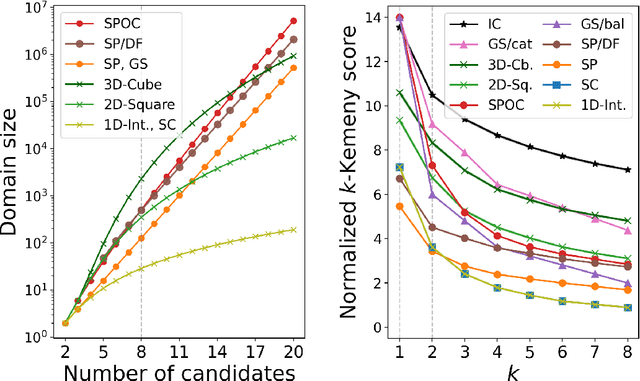
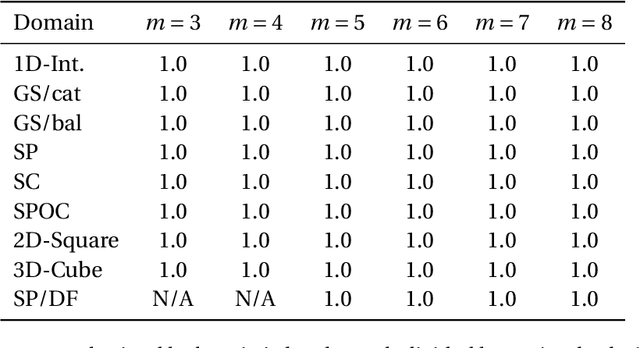
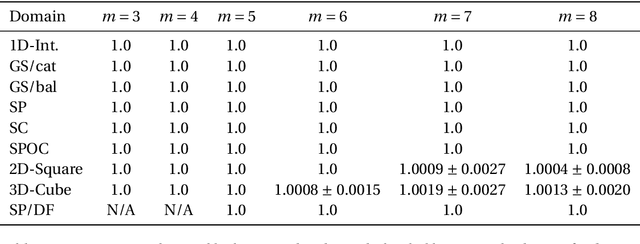
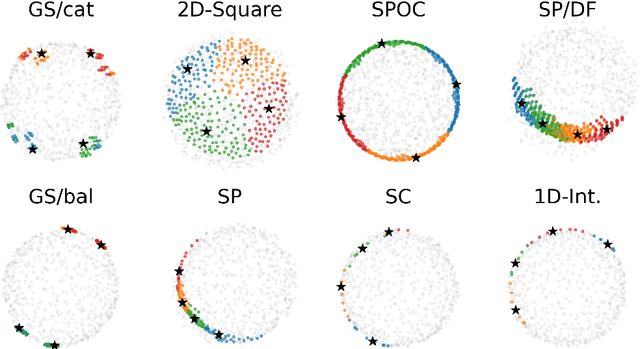
In the k-Kemeny problem, we are given an ordinal election, i.e., a collection of votes ranking the candidates from best to worst, and we seek the smallest number of swaps of adjacent candidates that ensure that the election has at most k different rankings. We study this problem for a number of structured domains, including the single-peaked, single-crossing, group-separable, and Euclidean ones. We obtain two kinds of results: (1) We show that k-Kemeny remains intractable under most of these domains, even for k=2, and (2) we use k-Kemeny to rank these domains in terms of their diversity.
Strengthening Proportionality in Temporal Voting
May 28, 2025We study proportional representation in the framework of temporal voting with approval ballots. Prior work adapted basic proportional representation concepts -- justified representation (JR), proportional JR (PJR), and extended JR (EJR) -- from the multiwinner setting to the temporal setting. Our work introduces and examines ways of going beyond EJR. Specifically, we consider stronger variants of JR, PJR, and EJR, and introduce temporal adaptations of more demanding multiwinner axioms, such as EJR+, full JR (FJR), full proportional JR (FPJR), and the Core. For each of these concepts, we investigate its existence and study its relationship to existing notions, thereby establishing a rich hierarchy of proportionality concepts. Notably, we show that two of our proposed axioms -- EJR+ and FJR -- strengthen EJR while remaining satisfiable in every temporal election.
Proportional Selection in Networks
Feb 05, 2025
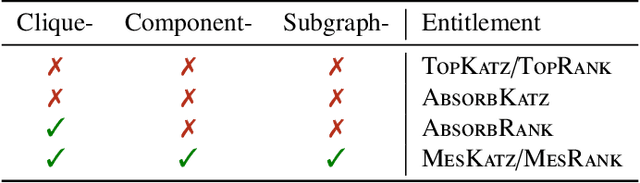

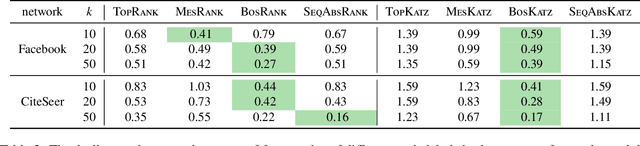
We address the problem of selecting $k$ representative nodes from a network, aiming to achieve two objectives: identifying the most influential nodes and ensuring the selection proportionally reflects the network's diversity. We propose two approaches to accomplish this, analyze them theoretically, and demonstrate their effectiveness through a series of experiments.